Summary

This blog explains why strong data quality is essential within a data governance framework, detailing how establishing standards and processes for accuracy, consistency, and monitoring ensures reliable, compliant, and actionable data across the organization.

  • Core dimensions define trusted data – Data quality relies on metrics like accuracy, completeness, consistency, timeliness, conformance, uniqueness, and usability, each requiring governance policies and validation processes to maintain trust.
  • Governance tools and automation streamline quality – Automated profiling, validation, and cleansing integrate with governance frameworks to proactively surface anomalies, reduce manual rework, and free up teams for strategic initiatives.
  • Governance + quality = AI-ready, compliant data – Combining clear standards, metadata management, and continuous monitoring ensures data is reliable, compliant, and fit for advanced analytics like AI and ML.

The ability to make informed decisions hinges on the quality and reliability of the underlying data. As organizations strive to extract maximum value from their data assets, the critical interplay between data quality and data governance has emerged as a fundamental imperative. The symbiotic relationship between these two pillars of data management can unlock unprecedented insights, drive operational efficiency, and, ultimately, position enterprises for sustained success.

Understanding Data Quality

At the heart of any data-driven initiative lies the fundamental need for accurate, complete, and timely information. Data quality encompasses a multifaceted set of attributes that determine the trustworthiness and fitness-for-purpose of data. From ensuring data integrity and consistency to minimizing errors and inconsistencies, a robust data quality framework is essential for unlocking the true potential of an organization’s data assets.

Organizations can automate data profiling, validation, and standardization by leveraging advanced data quality tools. This improves the overall quality of the information and streamlines data management processes, freeing up valuable resources for strategic initiatives.

How Data Quality Relates to Data Governance

Data quality is a fundamental pillar of data governance, ensuring that data is accurate, complete, consistent, and reliable for business use. A strong data governance framework establishes policies, processes, and accountability to maintain high data quality across an organization. This includes defining data standards, validation rules, monitoring processes, and data cleansing techniques to prevent errors, redundancies, and inconsistencies.

Without proper governance, data quality issues such as inaccuracies, duplicates, and inconsistencies can lead to poor decision-making, compliance risks, and inefficiencies. By integrating data quality management into data governance, organizations can ensure that their data remains trustworthy, well-structured, and optimized for analytics, reporting, and operational success.

The Key Dimensions of Data Quality in Data Governance

Effective data governance hinges on understanding and addressing the critical dimensions of data quality. These dimensions guide how organizations define, manage, and maintain data to ensure it is useful, accurate, and accessible. Below are the essential aspects of data quality that should be considered when creating a data governance strategy:

  • Accuracy: Data must accurately reflect the real-world entities it represents. Inaccurate data leads to faulty conclusions, making it crucial for governance policies to verify and maintain correctness throughout the data lifecycle.
  • Completeness: Data should capture all necessary attributes required for decision-making. Missing or incomplete information can compromise insights and analyses, so governance practices should ensure comprehensive data coverage across all relevant systems and processes.
  • Consistency: Data needs to be presented in a uniform way across various platforms and departments. Inconsistent data can create confusion and hinder integration, which is why governance should enforce standards for formatting and data structures.
  • Timeliness: The value of data diminishes over time, so it’s essential that data is up-to-date and relevant for current analysis. Governance efforts should ensure real-time updates and schedules for periodic data refreshes to maintain data’s usefulness.
  • Conformance: Data should comply with predefined syntax rules and meet specific business logic requirements. Without conformance, data could lead to process errors, so governance should focus on maintaining compliance with validation rules and predefined formats.
  • Uniqueness: To avoid redundancies, data should be free from duplicate entries or redundant records. A strong data governance framework helps establish processes to ensure data integrity and prevents unnecessary duplication that could skew analytics.
  • Usability: Data must be easily accessible, understandable, and actionable for users. Governance frameworks should prioritize user-friendly interfaces, clear documentation, and efficient data retrieval systems to ensure that data is not only accurate but also usable for business needs.

Addressing these key dimensions through a comprehensive data governance framework helps organizations maintain high-quality data that is reliable, consistent, and actionable, ensuring that data becomes a strategic asset for informed decision-making.

How to Achieve Data Quality in Data Governance

Achieving high data quality within a data governance framework is essential for making informed, reliable decisions and maintaining compliance. It involves implementing structured processes, tools, and roles to ensure that data is accurate, consistent, and accessible across the organization.

Let’s explore key strategies for ensuring data quality, such as defining standards, using data profiling techniques, and setting up monitoring and validation processes.

Define Clear Standards

One of the most effective strategies for ensuring data quality is to define clear standards for how data should be structured, processed, and maintained. Data standards establish consistent rules and guidelines that govern everything from data formats and definitions to data collection and entry processes. These standards help eliminate discrepancies and ensure that data across the organization is uniform and can be easily integrated for analysis.

For instance, organizations can set standards for data accuracy, defining acceptable levels of error, or for data completeness, specifying which fields must always be populated. Additionally, creating data dictionaries or data catalogs allows teams to agree on terminology and definitions, ensuring everyone uses the same language when working with data. By defining these standards early in the data governance process, organizations create a solid foundation for maintaining high-quality, consistent data that can be relied upon for decision-making and reporting.

Profile Data With Precision

The first step in achieving data quality is understanding the underlying data structures and patterns. Automated data profiling tools, such as those offered by Actian, empower organizations to quickly and easily analyze their data, uncovering potential quality issues and identifying areas for improvement. By leveraging advanced algorithms and intelligent pattern recognition, these solutions enable businesses to tailor data quality rules to their specific requirements, ensuring that data meets the necessary standards.

Validate and Standardize Data

With a clear understanding of data quality, the next step is implementing robust data validation and standardization processes. Data quality solutions provide a comprehensive suite of tools to cleanse, standardize, and deduplicate data, ensuring that information is consistent, accurate, and ready for analysis. Organizations can improve data insights and make more informed, data-driven decisions by integrating these capabilities.

The Importance of Data Governance

While data quality is the foundation for reliable and trustworthy information, data governance provides the overarching framework to ensure that data is effectively managed, secured, and leveraged across the enterprise. Data governance encompasses a range of policies, processes, and technologies that enable organizations to define data ownership, establish data-related roles and responsibilities, and enforce data-related controls and compliance.

Unlocking the Power of Metadata Management

Metadata management is central to effective data governance. Solutions like the Actian Data Intelligence Platform provide a centralized hub for cataloging, organizing, and managing metadata across an organization’s data ecosystem. These platforms enable enterprises to create a comprehensive, 360-degree view of their data assets and associated relationships by connecting to a wide range of data sources and leveraging advanced knowledge graph technologies.

Driving Compliance and Risk Mitigation

Data governance is critical in ensuring compliance with industry standards and data privacy regulations. Robust data governance frameworks, underpinned by powerful metadata management capabilities, empower organizations to implement effective data controls, monitor data usage, and mitigate the risk of data breaches and/or non-compliance.

The Synergistic Relationship Between Data Quality and Data Governance

While data quality and data governance are distinct disciplines, they are inextricably linked and interdependent. Robust data quality underpins the effectiveness of data governance, ensuring that the policies, processes, and controls are applied to data to extract reliable, trustworthy information. Conversely, a strong data governance framework helps to maintain and continuously improve data quality, creating a virtuous cycle of data-driven excellence.

Organizations can streamline the data discovery and access process by integrating data quality and governance. Coupled with data quality assurance, this approach ensures that users can access trusted data, and use it to make informed decisions and drive business success.

Why Data Quality Matters in Data Governance

As organizations embrace transformative technologies like artificial intelligence (AI) and machine learning (ML), the need for reliable, high-quality data becomes even more pronounced. Data governance and data quality work in tandem to ensure that the data feeding these advanced analytics solutions is accurate, complete, and fit-for-purpose, unlocking the full potential of these emerging technologies to drive strategic business outcomes.

In the age of data-driven transformation, the synergistic relationship between data quality and data governance is a crucial competitive advantage. By seamlessly integrating these two pillars of data management, organizations can unlock unprecedented insights, enhance operational efficiency, and position themselves for long-term success.


Blog | AI & ML | | 5 min read

Using Data to Build Democratized AI Applications: The Actian Approach

blue graphic showcasing using data to build democratized AI applications

Artificial intelligence (AI) has become a cornerstone of modern technology, powering innovations from personalized recommendations to self-driving cars. Traditionally, AI development was limited to tech giants and specialized experts.

However, the concept of democratized AI aims to broaden access, making it possible for a wider audience to develop and use AI applications. In this post, we’ll explore the pivotal role data plays in democratizing AI and how Actian’s cutting-edge solutions are enabling this shift.

What is Democratized AI?

Democratized AI is all about making AI tools and technologies accessible to a broad range of users—whether they’re analysts at small businesses, individual developers, or even those without technical backgrounds. It’s about breaking down the barriers to AI development and enabling more people to incorporate AI into their projects and business operations to transform ideas into actionable solutions, accelerate innovation, and deliver desired business outcomes faster. Actian is a key player in this movement, offering tools that simplify data management and integration for AI applications.

The Role of Data in AI Democratization

Data is essential to AI. It trains AI models and informs their predictions and decisions. When it comes to democratized AI, data serves several critical functions, including these four:

  1. Training Resources: Open datasets and pre-trained models empower developers to create AI applications without needing extensive proprietary data.
  2. Personalization: User-generated data allows even small applications to deliver personalized AI experiences.
  3. Transparency: Open data practices enhance the transparency of AI systems, which is vital for building trust.
  4. Continuous Improvement: User feedback data helps refine AI models over time, making them more accurate and relevant.

Actian’s DataConnect and Actian Data Platform are central to these processes, providing powerful, easy-to-use tools for data integration, management, and analysis.

5 Key Components of Data-Driven, Democratized AI Applications

  1. User-Friendly AI Platforms: Tools like AutoML simplify the creation and deployment of AI models.
  2. Data Integration and Management: Actian’s DataConnect excels here, offering robust extract, transform, and load (ETL) capabilities that make it easy to prepare data for AI.
  3. Scalable Data Processing: Actian Data Platform offers high-performance data processing, essential for handling the large datasets required in AI.
  4. Cloud-Based AI Services: API-based services provide pre-trained models for common AI tasks like image recognition or natural language processing.
  5. Collaborative Platforms: These spaces allow developers to share models, datasets, and knowledge, fostering community-driven AI development.

Actian’s Role in Democratizing AI

Actian’s products play a crucial role in democratizing AI by addressing some of the most challenging aspects of AI development, including these four:

  1. Data Integration With Actian’s DataConnect: This tool simplifies the process of aggregating data from various sources, a critical step in preparing datasets for AI. Its intuitive interface and robust capabilities make it accessible to users with varying levels of technical expertise.
  2. Scalable Data Processing With the Actian Data Platform: This platform provides the necessary infrastructure to manage large-scale data processing tasks, enabling businesses of all sizes to extract insights from their data—a fundamental step in AI applications.
  3. Real-time Data Analytics: Actian’s solutions support real-time data analytics, crucial for AI applications that require immediate decisions or predictions.
  4. Hybrid and Multi-Cloud Support: Actian’s flexible deployment options span on-premises, cloud, and hybrid, allowing organizations to build AI applications that align with their infrastructure and data governance needs.

3 Examples of Democratized AI Applications Powered by Actian

  1. Predictive Maintenance for Small Manufacturers: By using Actian’s DataConnect to integrate sensor data and the Actian Data Platform for analysis, small manufacturing businesses can implement AI-driven predictive maintenance systems.
  2. Customer Behavior Analysis: Retailers can use Actian’s tools to integrate point-of-sale data with online customer interactions, feeding this data into AI models for highly personalized marketing strategies.
  3. Supply Chain Optimization: Actian’s solutions allow businesses to integrate and analyze data from multiple supply chain points, facilitating AI-driven optimization strategies.

Understanding Challenges and Considerations

While democratized AI offers significant potential, it also presents four primary challenges:

  1. Data Quality and Bias: Ensuring high-quality, representative data is crucial. Actian’s DataConnect’s data profiling and cleansing/data quality features help address this issue.
  2. Privacy and Security: As AI becomes more accessible, safeguarding data privacy and security becomes increasingly important. Actian’s solutions include robust security features to protect sensitive information.
  3. Ethical Use: The widespread adoption of AI requires education on its ethical implications and responsible usage.
  4. Technical Limitations: While tools are becoming more user-friendly, there’s still a learning curve. Actian provides comprehensive support to help users overcome these challenges.

The future of democratized AI is bright, with several key trends on the horizon:

  1. No-Code/Low-Code AI Platforms: Expect more intuitive platforms that make AI development accessible without coding expertise.
  2. Edge AI: Bringing AI capabilities to resource-constrained devices will become more prevalent.
  3. Explainable AI: Emphasizing transparency in AI decisions will help build trust.
  4. Growth of AI Communities: Expanding communities and knowledge-sharing platforms will foster collaborative AI development.
  5. AI Integration in Everyday Tools: AI will become increasingly embedded in common software and tools.

Actian is well-positioned to support these trends with ongoing advancements in its data management and analytics solutions to meet the evolving needs of AI applications.

Empowering Innovation With Accessible AI

Democratized AI, driven by accessible data and tools, has the potential to revolutionize our interaction with technology. By making AI accessible to a diverse group of creators, we unlock new possibilities for innovation.

Actian’s suite of products, including DataConnect and the Actian Data Platform, plays a crucial role in this democratization by simplifying the essential steps of data integration, management, and analysis in the AI development process. These products also ensure data is properly prepped for AI.

As we continue to democratize AI, it’s essential to prioritize responsible development practices, ensuring that AI systems are fair, transparent, and beneficial to society. With Actian’s powerful, secure, and user-friendly tools, businesses and developers are well-equipped to confidently explore the exciting possibilities of democratized AI, transforming data into actionable insights and innovative AI-driven solutions.


Blog | Databases | | 4 min read

A Day in the Life of an Application Owner

blue technology arrows and lines depicting life as an application owner

The role of an application owner is often misunderstood within businesses. This confusion arises because, depending on the company’s size, an application owner could be the CIO or CTO at a smaller startup, or a product management lead at a larger technology company. Despite the variation in titles, the core responsibilities remain the same: managing an entire application from top to bottom, ensuring it meets the business’s needs (whether it’s an internal or customer-facing application), and doing so cost-effectively.

Being an application owner is a dynamic and multifaceted role that requires a blend of technical expertise, strategic thinking, and excellent communication skills. Here’s a glimpse into a typical day in the life of an application owner.

Morning: Planning and Prioritizing

6:30 AM – 7:30 AM: Start the Day Right 

The day begins early with a cup of coffee and a quick review of emails and messages. This is the time to catch up on any overnight developments, urgent issues, or updates from global teams.

7:30 AM – 8:30 AM: Daily Stand-Up Meeting 

The first official task is the daily stand-up meeting with the development team. This meeting is crucial for understanding the current status of ongoing projects, identifying any roadblocks, and setting priorities for the day. It’s also an opportunity to align the team’s efforts with the overall business goals and discuss any new application needs.

Mid-Morning: Deep Dive into Projects

8:30 AM – 10:00 AM: Project Reviews and Code Reviews 

After the stand-up, it’s time to dive into project reviews. This involves going through the latest code commits, reviewing progress on key features, and ensuring that everything is on track, and if it’s not, create a strategy to address the issues. Code reviews are essential to maintain the quality and integrity of the application.

10:00 AM – 11:00 AM: Stakeholder Meetings 

Next up are meetings with stakeholders. These could be product managers, business analysts, or even end-users. The goal is to gather feedback, discuss new requirements, and ensure that the application is meeting the needs of the business.

Late Morning: Problem Solving and Innovation

11:00 AM – 12:00 PM: Troubleshooting and Bug Fixes 

No day is complete without some troubleshooting. This hour is dedicated to addressing any critical issues or bugs that have been reported. It’s a time for quick thinking and problem-solving to ensure minimal disruption to users.

12:00 PM – 1:00 PM: Lunch Break and Networking 

Lunch is not just a break but also an opportunity to network with colleagues, discuss ideas, and sometimes even brainstorm solutions to ongoing challenges. 

Afternoon: Strategic Planning and Development

1:00 PM – 2:30 PM: Strategic Planning 

The afternoon kicks off with strategic planning sessions. These involve working on the application’s roadmap, planning future releases, incorporating customer input, and aligning with the company’s long-term vision. It’s a time to think big and set the direction for the future.

2:30 PM – 4:00 PM: Development Time 

This is the time to get hands-on with development. Whether it’s coding new features, optimizing existing ones, or experimenting with new technologies, this block is dedicated to building and improving the application.

Late Afternoon: Collaboration and Wrap-Up

4:00 PM – 5:00 PM: Cross-Functional Team Standup 

Collaboration is key to the success of any application. This hour is spent working with cross-functional teams such as sales, UX/UI designers, and marketing to analyze and improve the product onboarding experience. The goal is to ensure that everyone is aligned and working toward the same objectives.

5:00 PM – 6:00 PM: End-of-Day Review and Planning for Tomorrow 

The day wraps up with a review of what was accomplished and planning for the next day. This involves updating task boards, setting priorities, and making sure that everything is in place for a smooth start the next morning.

Evening: Continuous Learning and Relaxation

6:00 PM Onwards: Continuous Learning and Personal Time 

After a productive day, it’s important to unwind and relax. However, the learning never stops. Many application owners spend their evenings reading up on the latest industry trends, taking online courses, or experimenting with new tools and technologies.

Being an application owner is a challenging yet rewarding role. It requires a balance of technical skills, strategic thinking, and effective communication. Every day brings new challenges, opportunities, and rewards, making it an exciting career for those who love to innovate and drive change.

If you need help managing your applications, Actian Application Services can help. 

>> Learn More


Blog | Actian Life | | 6 min read

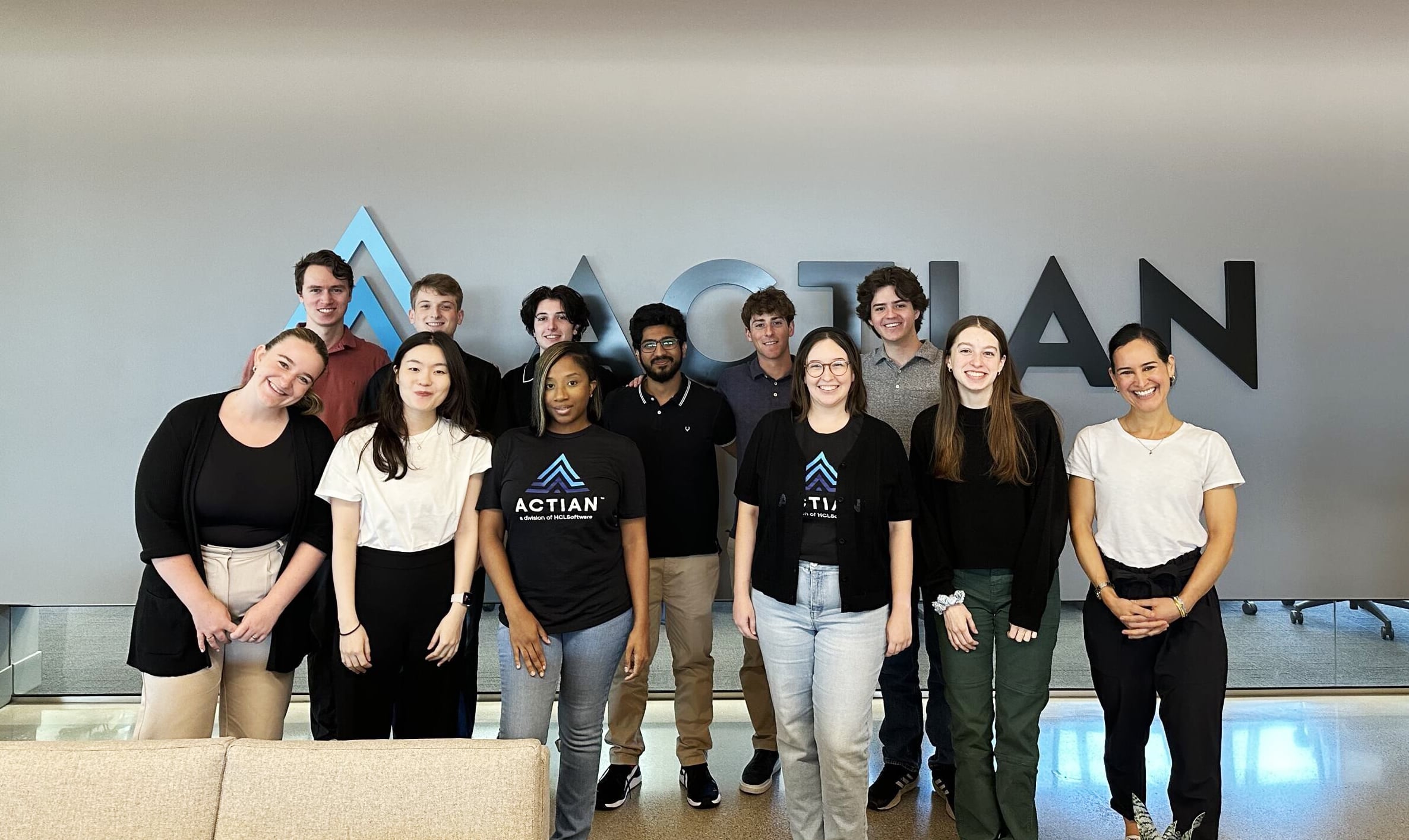
Actian’s Interns Contribute Across all Areas of the Business

Actian’s Interns Contributing

As we wrap up our internship season, I want to reflect on the brilliance of this program. It’s been a great experience so far and like the other interns, I’m impressed with how much I’m learning and the opportunities to actively contribute to the business. From collaborating on real-world projects to brainstorming innovative solutions, our intern team is making tangible impacts that help drive the company forward.

Since I came on board in June, my first three impressions are what I refer to as “The Three Cs.” They consist of community, culture, and capstone projects. I am incredibly grateful that these foundational pillars are integral to the distinctive character of the program. Actian’s internship is truly structured to move its participants from interns to capable, confident employees who will be ready for the next stage of our careers.

 Experiencing a Sense of Community

Given the remote nature of my internship—I’m based in Illinois—I was initially unsure how I would be able to connect with my fellow interns and Actian employees. To my relief, when we attended the in-person orientation at the Round Rock Center of Excellence in Texas, it became abundantly clear that despite the mostly remote work environment, Actian cultivates a supportive community of employees who not only care for the success of the company, but for one another, regardless of where we’re working.

It was extremely encouraging to have such incredible support from so many individuals within the company. Every employee with whom I’ve interacted has invited me to connect with them.

Without exception, they genuinely want to see us succeed and have provided us with the individual investment, tools, and resources to do so. This strong sense of community fosters collaboration and ensures that we all thrive together. As an intern, I feel like I’m part of a team that’s making a difference in the company. 

Participating in a Culture Worth Celebrating

Every Actian employee I’ve spoken to has genuine praise for the company’s incredible people and culture. Given this fact, it is no surprise that this positive culture extends to interns as well. During our in-person orientation, interns were able to meet each other face-to-face and engage in activities that allowed us to connect with one another.

This allowed us to get to know each other on a personal and a professional level. Whether it was the group dinners or the cohort favorite “GameOn! ATX” competition—for which I would like to extend a humble apology and thanks to my team’s opponents for continuing to be gracious following their loss!—we were able to share some incredibly fun memories.

Although we have all returned to our various work environments, including remote locations, thanks to the brilliant design of Employee Experience leaders Rae Coffman and Sara Lou, we are fortunate to have a continuing calendar of upcoming fun events. This allows us to interact and share, regardless of where we’re located or what team we’re working with at Actian.

Personally, I’m looking forward to the mini campfire. For this annual Actian intern tradition, each of us is sent supplies to build a candle campfire in their home. The supplies are complete with ingredients to build s’mores, which we’ll eat while we share scary stories with each other. Eek!

This is one example of how the recognizable culture that Actian cultivates globally is scaled to the internship program. The culture ensures that each intern feels seen, supported, and connected throughout the entirety of our experience with Actian.

Delivering Powerful Results With Capstone Projects

There tends to be a cliché that an intern’s only tasks are those that are miniscule to the company. You know, making copies or running errands. That’s certainly not the case here. No Actian intern will ever find themselves simply fetching their manager a cup of coffee. Instead, we are all given a unique opportunity to learn and showcase our hard work.

Each intern is assigned a capstone project at the beginning of our 12 weeks. We work on it, collaborate with others in the company, and ultimately deliver a structured, substantive outcome at the completion of the internship.

We are each given a team consisting of our manager and a buddy who create a reliable balance of support and autonomy as we work toward our project—honing our skills while adding value to the organization. Although I do make a mean cup of coffee, I am more excited about the project management skills and transferable, real-world experiences these capstone projects afford each one of us.

Our Unique Internship Opportunities Extend Globally

The brilliance of our internship program is not limited to inside the U.S. borders. Actian has an incredible cohort of interns working in Germany as well—and they hail from various parts of the globe. One difference between the U.S. and the German program is that those interning in Germany have the ability to be hired at any time of the year. Actian provides these interns with incredible opportunities that include an internship, academic thesis supervision, or a part-time position.

In the last year alone, the Actian office in Germany has supervised 11 students. This includes three academic thesis students and one who will be joining Actian full time this fall. It’s exciting for everyone involved in the program!

Coming from all levels of education and diverse experiences, these interns work on the Actian Vector team under the leadership of Steffen Kläbe and Thomas Schweser to contribute to the success of one of the industry’s fastest analytical database management systems. These interns start their program by completing an extensive onboarding experience that introduces them to the codebase and explains how to successfully optimize it.

Following the completion of these first one to two weeks, interns are assigned a task designed to provide hands-on experience with the codebase system. This task usually entails solving a problem or something similar that delivers actual business value, such as fixing a bug in the code. The initial task allows interns to not only advance their skillset but also gain the confidence needed to move into their selected projects.

Following this task comes the fun part! Interns choose a project that aligns with their interests. So far this year, there have been 17 projects that directly influence the current usage and future innovation of our Vector database. These projects range from “Memory Loading” to “Cloud Usage” to “Data Compression.”

The impact that these interns and projects have on the company is not only recognizably impressive but also incredibly powerful. Their dedication and innovation that they bring to the company every day continues to demonstrate a significant impact that advances our products and our business.

Making a Lasting Impression

Overall, the brilliance of the Actian internship program continues to reveal itself the more I experience it. I am extremely grateful for the opportunity to be here. I am certain that this experience will be one I carry on far longer than my 12 weeks here. Thank you to everyone who makes it possible!


Blog | Databases | | 5 min read

Smart Stores, Savvy Shoppers: Data’s Role in Reinventing Retail

businessperson looking at data in retail

In today’s digital age, retail is evolving at a breakneck pace. Gone are the days when a great product and a welcoming smile are enough to secure customer loyalty. Modern shoppers demand seamless, personalized experiences, whether they’re browsing online from their couch or strolling through a brick-and-mortar store.  

Customer loyalty has also evolved. In the past, shoppers would often stick with a single brand or store out of habit or familiarity. However, today’s consumers are more informed and have more choices at their fingertips. Loyalty is no longer guaranteed by proximity or tradition; it must be earned through consistent, high-quality, and personalized experiences. 

To stay competitive, retailers need to harness the power of data to anticipate needs, optimize operations, and create memorable shopping experiences that keep customers coming back—across every channel and each interaction.  

Leveraging Data to Improve Customer Acquisition and Loyalty

To improve customer acquisition and loyalty, retailers must leverage a variety of data types that often exist in different silos within the retail environment. 

1. Behavioral Data

Behavioral data is all about tracking customers’ online browsing history, click patterns, and purchase history on websites and mobile apps. For example, understanding which products a customer frequently views but does not purchase can help to craft targeted promotions.  

In stores, IoT devices and sensors can track how customers move through physical aisles, identifying popular paths and frequently visited sections. This information allows retailers to optimize store layouts and product placements to enhance the shopping experience and increase sales. 

2. Transactional Data

Analyzing purchase history provides insights into customer preferences and buying habits. Retailers can identify trends, like which products are frequently bought together, or which times of year certain items are in high demand. This data aids in inventory management, ensuring that popular products are always available to meet customer demand.  

3. Demographic Data

Collecting demographic information such as age, gender, location, and income levels helps retailers segment their customer base and create targeted marketing campaigns. Understanding the geographic distribution of customers can inform decisions about where to open new stores or focus advertising, while data on age group preference can allow retailers to tailor their marketing messages to the right audience.  

4. Psychographic Data

Psychographic data is all about customer interests, values, and lifestyle choices. Retailers can gather this information through online / browsing behavior, social media interactions, and other engagement tools. By aligning marketing messages with customers’ values and interests, retailers can build stronger emotional connections and brand loyalty. 

5. Feedback Data

Finally, customer feedback collected through reviews, surveys, and direct interactions offers invaluable insights into customer satisfaction and areas for improvement. Positive reviews can be leveraged in marketing campaigns to build trust and attract new customers. Negative feedback can highlight pain points and opportunities for improvement. By addressing customer concerns promptly, retailers can improve their products and services and boost customer loyalty and retention.  

Connect, Manage, and Analyze With Confidence Using the Actian Data Platform

Knowing what data to look for is only part of the solution. Integrating it to get a full view of your business is another issue entirely. Retailers often struggle with data scattered across various systems like POS, CRM, and e-commerce platforms, and need help connecting, managing, and analyzing the data points to make fast, accurate, data-driven decisions. This entails capturing data in both on-premises systems and in the cloud. That’s why retailers need a hybrid platform that enables: 

Connecting Data

Imagine a customer browsing your online store, adding items to their cart, and later deciding to complete the purchase in a physical store. With connected data, you can track their journey seamlessly, offering personalized recommendations and ensuring inventory is synchronized across channels. This level of integration creates a cohesive shopping experience that delights customers and drives loyalty. 

Actian Data Platform provides this solution by seamlessly connecting these data sources, providing a unified view of operations. This integration not only streamlines workflows but also ensures that all departments have access to accurate and up-to-date information. 

Managing Data

Managing vast amounts of data can be daunting, but the Actian Data Platform makes it easy. The platform’s ability to handle data from multiple sources means you can manage everything from sales transactions and customer profiles to inventory levels and supply chain logistics. Secure data management also protects sensitive customer information—like customer names—while still allowing you to target customers for marketing activities, building trust and confidence in your brand. 

Analyzing Data

The true power of data lies in its analysis. Actian Data Platform supports analytics capabilities that transform raw data into meaningful insights. Retailers can identify trends, forecast demand, and make data-driven decisions that improve their bottom line. Whether it’s optimizing inventory or personalizing marketing campaigns, the possibilities are endless. 

Drive the Future of Retail With Confidence

The Actian Data Platform is a game-changer for the retail industry, offering unparalleled capabilities in connecting, managing, and analyzing data. By leveraging this powerful tool, retailers can achieve greater efficiency, enhance customer experiences, and accelerate strategic growth. Actian’s commitment to innovation and excellence ensures that businesses like yours are equipped to meet the challenges of today’s data-driven world. Discover the future of retail with Actian with a custom demo.


Now more than ever, businesses in every vertical are inundated with vast amounts of data coming at them from various sources. And those sources keep growing as data is created by an ever-expanding number of apps, systems, and devices. Whether it’s customer interactions, supply chain operations, or financial transactions, data is the lifeblood of the modern enterprise.

However, the sheer volume and variety of data that’s available creates a significant challenge. You must ensure information is accessible, accurate, trusted, and actionable. This is where data integration has become crucial.

As I shared during a recent TDWI conference in San Diego, unifying data from multiple sources enables you to utilize the full potential of all your data to drive informed decision-making and strategic growth of the business. This includes hybrid data integration, which connects data from across cloud and on-premises environments.

Four Business Reasons to Integrate Your Hybrid Data

Unifying disparate data sources while ensuring quality and compliance are essential for success. Following proven approaches for integration, implementing a robust data integration strategy that supports your growth objectives, and using a modern data platform are all required to connect your data.

Reasons to bring your data together in a single platform include:

1. Overcoming Data Silos

Silos isolate data sets, making them inaccessible to other parts of your organization. These silos can arise from different software systems, geographic locations, or employees using their own data because they don’t trust or can’t easily access enterprise data. Data silos hinder collaboration and lead to incomplete insights. Data integration breaks down these silos, providing a unified view that enhances collaboration, decision-making, and comprehensive analysis.

2. Ensuring Data Consistency & Quality

With data flowing from so many sources, maintaining consistency and quality becomes a daunting task. Inconsistencies and inaccuracies in data can lead to flawed analysis and poor decision-making. By contrast, comprehensive data integration ensures that data is standardized, trusted, and accurate, providing a single source of truth that gives you confidence in your outcomes. Consistent, high-quality data is critical for accurate reporting and reliable business intelligence.

3. Enhancing Operational Efficiency

A unified view of critical information allows analysts and decision-makers to identify trends, optimize processes, and allocate resources more effectively. Integrated data also streamlines workflows, reduces redundancies, and minimizes errors, leading to improved operational efficiency. That’s because data integration helps you operate more smoothly, have agility to respond to market changes, and maintain a competitive edge.

4. Supporting Compliance & Security

In our era of stringent regulatory requirements, ensuring compliance is essential. Modern data integration platforms offer robust security features and compliance controls, helping you manage sensitive data across various environments. This includes implementing data quality rules, orchestration workflows, and secure data transfers, which are essential for maintaining regulatory compliance and protecting data integrity.

Four Benefits of Hybrid Data Integration

The ability to master data integration and achieve seamless operations across cloud, on-premises, or hybrid environments can unlock significant value across the business. With hybrid data integration, you realize these benefits:

1. Improved Organizational Decision-Making

Connected hybrid data provides a comprehensive view of business operations, enabling data-driven decision-making. By having access to accurate, up-to-date data, business leaders can make more informed choices that drive strategic growth and competitive advantage. When hybrid data is fully integrated, decision-making increases across all aspects of the business.

2. Increased Efficiency & Cost Savings

Bringing together data pipelines reduces the time and resources required for ongoing data management. This efficiency, coupled with automated data processes, translates into cost savings, reduced manual intervention, and optimized resource utilization. Plus, integrated data reduces the need for multiple data management tools, especially when using the right platform, which further lowers costs.

3. Enhanced Collaboration & Coordination

Data integration encourages data sharing across various departments and systems. When you have a data platform that offers easy data integration and accessibility, analysts and organizational teams can seamlessly share data and work together using the same information. Enhanced coordination leads to better alignment of efforts, more cohesive strategies, and improved overall performance, which also improves trust in your data.

4. Barrier-Free Access to Valuable Insights

Integrated data offers richer, more contextual insights than single data sets. This lets you uncover details that may have previously been hidden. These details give you a better understanding of customers, markets, and internal operations. As a result, you can make informed decisions, develop highly targeted strategies, and respond more effectively to changing market conditions.

Four Best Practices to Integrate Hybrid Data

One of the main questions I get asked during presentations is how to get started with data integration—especially with data spanning the cloud and on-premises systems. Many analysts and other data users are accustomed to complex processes that require IT help or advanced skill sets.

That is no longer the case! With the right strategy and data platform, hybrid data integration is easier than you may think. Here are four steps to ensure success:

1. Assess Your Data Integration Needs

Determining your organization’s specific needs is the essential first step. You’ll want to identify the data sources that need to be integrated, the types of data being handled, and the business processes that will benefit from integration. This assessment helps you choose the right data integration tools and strategy.

2. Pick the Right Data Platform

Select a robust data platform that simplifies data integration processes and makes it easy to build data pipelines to new sources. Also look for a platform that offers flexibility, scalability, and ease of use. Features such as codeless API integration, pre-built connectors, and data profiling capabilities significantly streamline the integration process and reduce the time to value. 

3. Ensure Data Quality & Governance

Comprehensive integration should not come at the expense of data quality. Maintaining quality is a continuous process that entails enacting data quality rules, performing regular data profiling, and establishing governance policies to ensure integrated data remains accurate and reliable. This approach helps mitigate data inconsistencies and ensures compliance with internal and regulatory standards.

4. Benefit From Automated Processes

Automating data integration processes greatly reduces manual efforts and minimizes errors. Integration tools and data pipeline orchestration can automate data workflows. Automation enhances efficiency while also enabling real-time data integration to deliver  timely insights.

Consider a Complete Data Platform That Simplifies Integration

Data integration is a necessity for businesses that want to thrive in our data-driven world. It requires a modern platform that allows you to connect data in hybrid environments without using a variety of tools. For example, the Actian Data Platform offers end-to-end integration, data warehousing capabilities, and analytics across your entire hybrid environment.

This single, unified data platform offers real-time insights along with superior price performance. Users across all skill levels can connect, manage, and analyze data using a fully integrated suite of data solutions, eliminating the need for multiple tools or manual code.

We can meet you wherever you are on your data journey while making data easy to access and use. Our platform can help you go from data to decisions with confidence, enabling you to:

  • Increase revenue
  • Reduce costs
  • Mitigate risk
  • Win market share
  • Support a data-driven culture

Blog | Data Analytics | | 3 min read

A Day in the Life of a Marketing Operations Specialist

marketing operations specialist showing day to day

My day begins early, fueled by a strong cup of coffee, a protein smoothie, and a quick glance at the day’s agenda. As a marketing operations specialist, my role revolves around leveraging data to drive strategic decisions to improve our marketing efforts. I need a holistic, cross-channel view across the entire global marketing organization. I also need to be able to trust my data, having the confidence to know that it’s giving me the most accurate and up-to-date information.

The first task is usually a review of content performance metrics. This morning, I’m diving into the performance of content we created to support the new Actian Zen 16.0 launch. I not only need to be able to slice and dice content metrics such as views, clicks, and scroll depth, but I also have to be able to layer in lead acquisition information to see if I can attribute any new leads to the launch content. To do this effectively, I need de-siloed, integrated data that I can trust, so having a platform that allows me to connect a multitude of sources together is imperative.

Mid-morning is typically spent in a strategy meeting with the marketing team. For example, today I pulled up and shared real-time dashboards to present the latest performance trends and customer behaviors. We discussed optimizing our current launch efforts and brainstormed new strategies based on the data-driven insights I presented to make informed decisions that optimize our marketing efforts and resources.

By lunchtime, it’s time to step away from my computer, grab another cup of coffee, and have lunch. Knowing that my data is being integrated, stored, and managed, and dashboards are up to date allows me to feel good about taking 15 minutes to myself, sitting outside, and playing with my cat.

The afternoon is dedicated to taking a deeper dive into campaign content performance. I look through a number of sources to understand how content performs in various markets and channels. This segmentation helps tailor our messaging for upcoming campaigns, ensuring that we target the right audience.

The Need for Trusted, Easy-to-Use Data

Actian products play a pivotal role in my daily routine. The Actian Data Platform allows me to unify all my marketing data into a single dataset in a warehouse that is built for easy, no-code reporting and analytics. Plus, the pre-built marketing connectors and APIs to marketing data sources allow self-serve, so I don’t have to wait or rely on IT to get the insights I need. Most importantly, there is no fear of stale or duplicative data with native data quality rules. My critical dashboards are reliable and function as expected.

Reliable Tools are a Marketer’s Best Friend

Wrapping up my day, I feel confident that the Actian Data Platform has empowered me and others across our global marketing team to make informed decisions and optimize our marketing strategies effectively. With its efficiency and reliability, the Actian Data Platform is an indispensable tool in my daily workflow, driving better outcomes for our marketing initiatives.

Customers are using our products for similar use cases. Learn about how the AA uses the Actian Data Platform to make split-second decisions to deliver faster results to their customers.


The imperative to modernize extends across all aspects of the IT landscape. Companies face an urgent need to enhance business agility, break down organizational silos, accelerate innovation, reduce time-to-market, optimize costs, and transform their IT workforce. Achieving these goals requires strategic decisions about how and where to modernize. Your organization needs to leverage the full spectrum of available tools and services and rethink its approach to developing, deploying, operating, and maintaining applications.

When done right, application modernization can transform your company and unlock new revenue sources with new or expanded use cases. But this does not happen overnight. It takes a concerted, organization-wide effort to rethink legacy systems, adopt hybrid architectures, and embrace DevOps best practices. You can achieve greater agility, scalability, and cost savings by gradually migrating applications to microservices, optimizing infrastructure, and automating deployment pipelines.

Utilize HCL Informix to Create Your Application Modernization Plan

Insufficient research, discovery, and planning is the most common modernization mistake. Often, businesses will wait to modernize their applications until something breaks. But you don’t have to learn the hard way. It just takes a little planning.

Define Your Strategic Goals

What “success” looks like may differ across your organization. Maybe you’re most concerned with maintaining the stability and performance of your existing infrastructure, but your research and development teams may want to test and explore new technologies and concepts. Establishing your goals and objectives and separating the “must-haves” from the “nice-to-haves” is essential. Make sure to run the goals up to a leadership level to set expectations.

Audit Your Applications

Conduct thorough discovery by auditing your existing applications and determining which level of modernization is appropriate for each. Compare applications to current standards and best practices in security, availability, scalability, infrastructure automation, monitoring, proactive failure prevention, and disaster recovery. Use the audit to determine what types of applications you want to migrate, enhance, re-build, or build from scratch.

Determine Strategic Importance

Not all applications are equally important to your organization’s success. You will want to modernize your applications with the highest business-criticality first or those that best align with your business strategy. Those could be the applications that drive the most revenue or the ones where security and data privacy are of utmost importance. Rank these applications and work with one of our Actian partners or specialists to devise a unique modernization strategy for each mission-critical application.

Establish Your Data Landscape

Choose an architecture (cloud, on-prem, hybrid), operating system (Windows, Linux, etc.), and data management services to combine with your updated HCL Informix® instance. Devise a comprehensive architecture diagram, including critical integrations and connectors, to map any potential vulnerabilities that must be addressed.

Get Ready for a Cultural Shift

Modernization is a team sport. While your team will be familiar with your HCL Informix database and tools like HCL Informix 4GL and the Informix Warehouse Accelerator, there may be a steep learning curve to managing a cloud-native or hybrid application. Additionally, there is a whole host of tools, data warehouses, and microservices available from cloud providers that your team may have to learn. Devise a training program uniquely for your database administrators, developers, architects, IT, and any other role that will be impacted, so they can proficiently manage your apps once migrated and modernized.

For additional best practices or to customize a strategy for your organization, connect with one of our Actian partners or specialists.

About Actian

Actian makes data easy. We deliver cloud, hybrid cloud, and on-premises data solutions that simplify how people connect, manage, and analyze data. We transform business by enabling customers to make confident, data-driven decisions that accelerate their organization’s growth. Our data platform integrates seamlessly, performs reliably, and delivers at industry-leading speeds. Learn more about Actian, a division of HCLSoftware: www.actian.com.

Informix® is a trademark of IBM Corporation in at least one jurisdiction and is used under license.


Blog | Data Integration | | 4 min read

3 Key Considerations for Crafting a Winning Data Quality Business Case

person crafting a winning data quality business case

In today’s rapidly evolving digital landscape, the integrity and reliability of your data can make or break your business. High data quality is not just a nice to have; it’s fundamental for informed decision-making, effective data management, and maintaining a competitive edge.

Ensuring your data’s accuracy, consistency, and reliability can significantly enhance operational efficiency and drive strategic initiatives. You must have confidence in your data. However, making the case for investments in the right technology to improve data quality can be challenging. It requires a well-crafted business case that clearly demonstrates its value and expected return on investment.

Understanding Data Quality

Data quality encompasses several key attributes:

  • Accuracy: How well data reflects real-world entities or events.
  • Consistency: The uniformity of data across different systems.
  • Completeness: The presence of all required data fields.
  • Timeliness: The availability of up-to-date information.
  • Validity: Adherence to specific formats and business rules.
  • Uniqueness: Absence of duplicate entries.

High-quality data offers numerous benefits, including improved efficiency, better customer satisfaction, enhanced compliance and risk management, and more effective use of emerging technologies like Generative AI (GenAI).

Recognizing the Need for Strong Data Quality

In today’s data-driven world, recognizing the need for strong data quality is crucial for any business aiming to stay competitive and efficient. Prioritizing data quality should be at the top of your agenda.

Watch for these indicators of potential data quality problems:

  • Discrepancies in data reports.
  • Poor marketing email delivery rates.
  • Declining business development efficacy.
  • Missing fields in CRM systems.
  • Increased customer or vendor complaints.
  • Inventory management issues.
  • Rising data storage and processing costs.
  • Increasing email opt-outs.

Benefits of High-Quality Data

High-quality data can transform your business operations, making them more efficient and driven by reliable insights. For instance, Actian customers like Ceva Logistics and Ebix Health rely on high-quality data to ensure that every decision is based on accurate, up-to-date, and complete information, enabling better customer relations and streamlined operations.

3 Steps to Craft a Winning Data Quality Business Case

1. Assess Current Data Quality

Start by conducting a thorough data quality assessment. Use data profiling tools to examine and understand the content, structure, and relationships within your data. This step involves reviewing data at both column and row levels and identifying patterns, anomalies, and inconsistencies, which will provide valuable insights into the quality of your data. Data auditing should also be part of this process, assessing the accuracy and completeness of data against predefined rules or standards. This initial assessment will help you pinpoint the specific areas where your data quality needs improvement.

2. Align Data Quality With Business Objectives

Next, ensure that your data quality initiatives align with your business objectives. Identify the link between business processes, key performance indicators (KPIs), and data assets. Engage with data and analytics leaders to capture their expectations and understand what is considered the “best fit” for the organization. This alignment guarantees that the data quality improvements you plan directly contribute to your business’s overall success and strategic goals.

3. Track Progress and Measure Impact

Finally, it’s crucial to track the progress of your data quality initiatives and measure their impact. Develop an organization-wide shared definition of data quality, identify specific quality metrics, and ensure continuous measurement of these metrics. Implement a data quality dashboard that provides all stakeholders with a comprehensive snapshot of data quality, helping them see past trends and design future process improvements. Regularly communicate the results and improvements to stakeholders to maintain transparency and foster a culture of continuous improvement in data quality.

By following these steps, you’ll craft a winning business case for data quality that highlights the necessity for investment and aligns closely with your strategic business goals, ensuring sustained support and success. You’ll also build confidence in your data and decision-making.


Applications are increasingly complex, demanding efficient data management solutions. Embedded databases, with their lightweight footprint and high performance, have become essential tools for developers building applications for various platforms, from mobile devices to edge computing environments. However, the plethora of options available can be overwhelming. This guide aims to equip developers with the knowledge to select the ideal embedded database for their specific needs.

Understanding Embedded Databases

An embedded database is a database management system (DBMS) integrated directly into an application, rather than running as a separate process. This architecture offers several advantages, including:

  • Performance: Reduced network latency and overhead.
  • Reliability: No external dependencies.
  • Security: Data resides within the application’s boundaries.
  • Flexibility: Tailored to specific application requirements.

However, embedded databases also come with limitations, such as scalability and concurrent access capabilities. It’s crucial to understand these trade-offs when making a selection.

Key Considerations for Database Selection

Before diving into specific database options, let’s outline the key factors to consider when choosing an embedded database:

  • Data Model: Determine whether your application requires a key-value, document, or relational data model.
  • Data Volume and Complexity: Evaluate the size and structure of your dataset.
  • Performance Requirements: Assess the required read and write speeds, transaction throughput, and latency.
  • Storage Constraints: Consider the available storage space on the target platform.
  • Concurrency: Determine the number of concurrent users or processes accessing the database.
  • ACID Compliance: Evaluate if your application requires strict ACID (Atomicity, Consistency, Isolation, Durability) guarantees.
  • Platform Compatibility: Ensure the database supports your target platforms (e.g., mobile, embedded systems, cloud).
  • Development and Maintenance Effort: Consider the learning curve and ongoing support requirements.

Types of Embedded Databases

1. Key-Value Stores

    • Ideal for simple data structures with fast read and write operations.
    • Use cases: Caching, configuration settings, user preferences.

2. Document Stores

    • Suitable for storing complex, hierarchical data structures.
    • Use cases: Content management systems, IoT data, application state management.

3. Relational Databases:

    • Offer structured data storage with ACID compliance.
    • Use cases: Financial applications, inventory management, analytics.

4. Time-Series Databases:

    • Optimized for handling time-stamped data with high ingestion and query rates.
    • Use cases: IoT sensor data, financial time series, application performance monitoring.

Database Selection for Embedded App Development

Mobile Apps

  • Prioritize performance, low storage footprint, and offline capabilities.
  • Consider document stores or embedded versions of document stores
  • Optimize for battery life and device resources.

IoT Devices

  • Focus on low power consumption, high performance, and limited storage.
  • Key-value stores or embedded time-series databases are often suitable.
  • Consider data compression and encryption for security.

Database Selection for Edge-to-Cloud Data Management

Edge Processing

  • Emphasize low latency, high throughput, and offline capabilities.
  • Time-series databases or embedded document stores can be effective.
  • Consider data aggregation and filtering at the edge to reduce cloud load.

Data Synchronization

  • Choose a database that supports efficient data replication and synchronization.
  • Consider hybrid approaches combining embedded and cloud databases.
  • Ensure data consistency and integrity across environments.

Conclusion

Selecting the right embedded database is crucial for the success of your application. By carefully considering the factors outlined in this guide and evaluating the specific requirements of your project, you can make an informed decision. 

Remember that the right embedded database is the one that meets your application’s needs while optimizing performance, security, and developer productivity. 

At Actian, we help organizations run faster, smarter applications on edge devices with our lightweight, embedded database – Actian Zen. Optimized for embedded systems and edge computing, Zen boasts a small footprint with fast read and write access, making it ideal for resource-constrained environments.

With seamless data synchronization from edge to cloud, Zen is fully ACID compliant, supporting SQL and NoSQL data access leveraging popular programming languages, allowing developers to build low-latency embedded apps.

Additional Resources:


Blog | Data Management | | 4 min read

Enhance Financial Decisions With Real-Time Data Processing

Actian Zen datapoints showing Intelligent Edge Era

Article by Ashley Knoble and Derek Comingore

Cloud computing has been a dominant computing model dating back to 2002 when Amazon Web Services (AWS) launched. In 2012, Cisco coined the term “Fog Computing,” which is a form of distributed computing that brings computation and data persistence closer to the edge.

Fog computing, also known as edge computing, set the stage for the current Intelligent Edge era. The Intelligent Edge is the convergence of both machine learning and edge computing, resulting in intelligence being generated where data is born. The benefits of the Intelligent Edge are many, including:

  • Reduced bandwidth consumption.
  • Accelerated time-to-insights.
  • Smart devices that take automated actions.

The Intelligent Edge requires TinyML (Tiny machine learning) and traditional analytics running on smaller, less powerful devices. With smaller devices comes reduced disk capacities. Hence, software install footprints must be reduced.

Harnessing a single data management platform that accommodates a variety of intelligent edge use cases is preferred for consistency, reduced security surface, and data integration efficiencies. With increased data management and analytics on edge devices, security needs also increase. Security features such as data encryption quickly become required.

Embedded Databases for Edge Computing

Unlike traditional databases, embedded databases are ideal for edge computing environments for key reasons that include:

  • Small Footprint. Embedded databases require minimal storage and memory, making them ideal for devices with limited resources. This allows for smaller form factors and lower costs for edge devices.
  • Low Power Consumption. Embedded databases are designed to be energy efficient, minimizing the power drain on battery-powered devices, which is a critical concern for many edge applications.
  • Fast Performance. Real-time data processing is essential for many edge applications. Embedded databases are optimized for speed, ensuring timely data storage, retrieval, and analysis at the edge.
  • Reliability and Durability. Edge devices often operate in harsh environments. Embedded databases are designed to be reliable and durable, ensuring data integrity even in case of power failures or device malfunctions.
  • Security is paramount in the edge landscape. Embedded databases incorporate robust security features to protect sensitive data from unauthorized access.
  • Ease of Use. Unlike traditional databases, embedded databases are designed to be easy to set up and manage. This simplifies development and deployment for resource-constrained edge projects.

Introducing Actian Zen–An Embedded Database for Use Cases at the Edge

Actian Zen is our best-in-class multi-model embedded database for disruptive intelligent edge applications. With Zen, both partners and customers build intelligent applications running directly on and near the edge.

Additionally, traditional server and cloud-based deployments are supported. This results in a cohesive end-to-end data architecture for efficient data integration and reduced security vulnerability. Intelligent edge and edge-to-cloud applications can be deployed with confidence.

Analytics can be run directly where the data is being generated, utilizing Zen’s database technology. Actian Zen saves organizations time and simplifies what is otherwise a complicated and fragmented data architecture. Customers and partners obtain millisecond query response times with Zen’s microkernel database engine. And with native ANSI SQL support, users easily connect their favorite dashboard and data integration tools.

The Family of Proven Zen Products

Zen is a feature-rich intelligent edge database designed to solve a wide spectrum of industry use cases and workloads. As such, Actian offers Zen in three specific editions tailored for custom and unique use cases.

  • Zen Mobile is designed for smart IoT and mobile devices. Deployment is achieved via direct application, embedding as a lightweight library.
  • Zen Edge offers an edition custom-tailored for edge gateways and complex industrial devices.
  • Zen Enterprise enables customers and partners to solve their largest data management workloads and challenges. Zen Enterprise accommodates thousands of concurrent users while offering flexible deployment options, including traditional on-premises and cloud environments.

Key Features and Benefits for Edge Environments

By leveraging Zen, companies gain immediate access to business and operational insights. Both partners and customers reduce total cost of ownership (TCO), save expenses via lesser dependence on cloud computing and storage technologies, and improve sustainability.

Employee training is also reduced by using a single cohesive data platform. In parallel, when data must be propagated to the cloud, Zen provides a rich set of data access APIs supported by popular development frameworks and platforms.

Harness Edge Intelligence Today

With the arrival of the Intelligent Edge era comes a new set of technology and business requirements. Actian Zen, a lightweight multi-model embedded database, is at the forefront of the Intelligent Edge era. And, with the latest release of Zen 16.0, we are committed to helping companies simplify and solve for both intelligent edge and edge-to-cloud applications.

Get started today by contacting us or downloading the Actian Zen Evaluation Edition.


Blog | Actian Life | | 12 min read

Get to Know Actian’s 2024 Interns

Actian's 2024 interns

We want to celebrate our interns worldwide and recognize the incredible value they are bringing to our company. As a newly inducted intern myself, I am honored to have the opportunity to introduce our incredible new cohort of interns!

Andrea Brown headshot

Andrea Brown (She/Her)
Clouds Operations Engineer Intern

Andrea is a Computer Science major at the University of Houston-Downtown. She lives in Houston and in her free time enjoys practicing roller skating and learning French. Her capstone project focuses on using Grafana for monitoring resources and testing them with k6 synthetics.

What she likes most about the intern program so far is the culture. “Actian has done such a great job cultivating a culture where everyone wants to see you succeed,” she notes. “Everyone is helpful and inspiring.” From the moment she was contacted for an internship to meeting employees and peers during orientation week, she felt welcome and knew right away she had made the right choice. She has no doubt this will be a unique and unforgettable experience, and she is looking forward to learning more about her capstone project and connecting with people across the organization.

Claire Li headshot

Claire Li (She/Her)
UX Design Intern

Claire is based in Los Angeles and is studying interaction design at ArtCenter College of Design. For her capstone project, she will create interactive standards for the Actian Data Platform and apply them to reusable components and the onboarding experience to enhance the overall user experience.

“Actian fosters a positive and supportive environment for interns to learn and grow,” she says.

Claire enjoys the collaborative atmosphere and the opportunity to tackle real-world challenges. She looks forward to seeing how she and her fellow interns will challenge themselves to problem-solve, present their ideas, and bring value to Actian in their unique final presentations. Outside of work, she spends most of her weekends hiking and capturing nature shots.

Prathamesh Kulkarni headshot

Prathamesh Kulkarni (He/Him)
Cloud QA Intern

Prathamesh is working toward his master’s degree in Computer Science at The University of Texas at Dallas. He is originally from Pune, India.

His capstone project aims to streamline the development of Actian’s in-house API test automation tool and research the usability of GitHub Copilot in API test automation.

By automating these tasks, he and his team can reduce manual effort and expedite the creation of effective and robust test automation solutions. The amazing support he has received and the real value of the work he has been involved in have been highlights of his internship so far. He says it’s been a rewarding experience to apply what he has learned in a practical setting and see the impact of his contributions.

A fun fact about him is that he loves washing dishes—it’s like therapy to him, and he even calls himself a professional dishwasher! He is also an accomplished Indian classical percussion musician, having graduated in that field.

Marco Brodkorb headshot

Marco Brodkorb
Development Vector Intern

Hailing from Thuringia, Germany, Marco is working on his master’s degree in Computer Science at Technische Universität Ilmenau. He began his work as an Actian intern by writing unit tests and then began integrating a new compression method for strings called FSST.

He is working on integrating a more efficient range join algorithm that uses ad hoc generated UB-Trees, as part of his master thesis.

Naomi Thomas headshot

Naomi Thomas (She/Her)
Education Team Intern

Naomi is from Florida and is a graduate student at the University of Central Florida pursuing a master’s degree in Instructional Design & Technology. She has five years of experience working in the education field with an undergraduate degree in Education Sciences.

For her capstone project, Naomi is diving into the instructional design process to create a customer-facing course on DataConnect 12.2 for Actian Academy. She is enjoying the company culture and the opportunity to learn from experienced instructional designers and subject matter experts. “Everyone has been incredibly welcoming and supportive, and I’m excited to be working on a meaningful project with a tangible impact!” she says.

A fun fact about her is that she has two adorable dogs named Jax and King. She enjoys reading and collecting books in her free time.

Linnea Castro headshot

Linnea Castro (She/Her)
Cloud Operations Engineer Intern

Linnea is majoring in Computer Science at Washington State University. She is working with the Cloud Operations team to convert Grafana observability dashboards into source code—effective observability helps data tell a story, while converting these dashboards to code will make the infrastructure that supports the data more robust.

She has loved meeting new people and collaborating with the Cloud team. Their morning sync meetings bring together people across the U.S. and U.K. She says that getting together with the internship leaders and fellow interns during orientation week set a tone of connection and possibility that continues to drive her each day. Linnea is looking forward to continuing to learn about Grafana and get swifter with querying. To that end, she is eager to learn as much as she can from the Cloud team and make a meaningful contribution.

She has three daughters who are in elementary school and is a U.S. Coast Guard veteran. Her favorite book is “Mindset” by Dr. Carol Dweck because it introduced her to the concept and power of practicing a growth mindset.

Alain Escarrá García headshot

Alain Escarrá García (He/Him)
Development Vector Intern

Alain is from Cuba and just finished his first year of bachelor studies at Constructor University in Bremen, Germany, where he is majoring in Software, Data, and Technology. Working with the Actian Vector team, his main project involves introducing microservice architecture for user-defined Python functions. In his free time, he enjoys music, both listening to it and learning to play different instruments.

Matilda Huang headshot

Matilda Huang (She/Her)
CX Design Intern

Matilda is pursuing her master’s degree in Technology Innovation at the University of Washington. She is participating in her internship from Seattle. Her capstone project focuses on elevating the voice of our customers. She aims to identify friction points in our current feedback communication process and uncover areas of opportunity for CX prioritization.

Matilda is enjoying the opportunity to collaborate with members from various teams and looks forward to connecting with more people across the company.

Liam Norman headshot

Liam Norman (He/Him)
Generative AI Intern

Liam is a senior at Harvard studying Computer Science. His capstone project involves converting natural language queries into SQL queries to assist Actian’s sales team.

So far, his favorite part of the internship was meeting the other interns at orientation week. A fun fact: In his free time, he likes to draw cartoons and play the piano.

Laurin Martins headshot

Laurin Martins (He/Him)
Development Vector Intern

Laurin is from a small village near Frankfurt, Germany, called Langebach and is studying for a master’s degree in IT at TU Ilmenau. His previous work for Actian includes his bachelor thesis “Multi-key Sorting in Vectorized Query Execution.”

After that, he completed an internship to implement the proposed algorithms for a wide variety of data types. He is currently working on his master’s thesis titled “Elastic Query Processing in Stateless x100.” He plans to further develop the ideas and implementation presented in his master’s thesis in a Ph.D. program in conjunction with TU Ilmenau.

In his free time, he discovered that Dungeons and Dragons is a great evening board game to play with friends. He is also the lead for the software development at a startup company (https://healyan.com)

Kelsey Mulrooney headshot

Kelsey Mulrooney (She/Her)
Cloud Security Engineer Intern

Kelsey is from Wilmington, Delaware, and majoring in Cybersecurity at the Rochester Institute of Technology. She is involved in implementing honeypots—simulated systems designed to attract and analyze hacker activities.

Kelsey’s favorite part about the internship program so far is the welcoming environment that Actian cultivates. She looks forward to seeing how much she can accomplish in the span of 12 weeks. Outside of work, Kelsey enjoys playing percussion, specifically the marimba and vibraphone.

Justin Tedeschi headshot

Justin Tedeschi (He/Him)
Cloud Security Engineer Intern

Justin is from Long Island, New York, and an incoming senior at the University of Tampa. He’s majoring in Management Information Systems with a minor in Cybersecurity. At Actian, he’s learning about vulnerabilities in the cloud and how to spot them, understand them, and also prevent them.

The internship program allows access to a variety of resources, which he’s definitely taking advantage of, including interacting with people he finds to be knowledgeable and understanding. A fun fact about Justin is that he used to be a collegiate runner—one year at the University of Buffalo, a Division 1 school, then another year at the college he’s currently attending, which is Division 2.

Guillermo Martinez Alacron
Development Vector Intern

Hailing from Mexico, Guillermo is studying Industrial Engineering and participating in an exchange at TU Ilmenau in Germany. As part of his internship, he is working on the design and implementation of a quality management system in order to obtain the ISO 9001 certification for Actian. He enjoys Star Wars, rock music, and sports—and is especially looking forward to the Olympics!

Joe Untrecht headshot

Joe Untrecht (He/Him)
Cloud Operations Engineer Intern

Joe is from Portola Valley, California, which is a small town near Palo Alto. He is heading into his senior year at the University of Wisconsin-Madison, majoring in Computer Science. He loves and cannot recommend this school enough. One interesting fact about him is that he loves playing Hacky Sack and is about to start making custom hacky sacks. Another interesting fact is that he loves all things Star Wars and believes “Revenge of the Sith” is clearly the best movie. His favorite dessert is cookies and milk.

His capstone project involves cloud resource monitoring. He has been learning how to use the various services on Amazon Web Services, Google Cloud, and Microsoft Azure while practicing how to visualize the data and use the services on Grafana. He has had an immense amount of fun working with these platforms and doesn’t think he has ever learned more than in the first three weeks of his internship. He views the internship as a great opportunity to improve his skills and build new ones. He is “beyond grateful” for this opportunity and excited to continue learning about Actian and working on his capstone project.

Jon Lumi headshot

Jon Lumi (He/Him)
Software Development Intern

Jon is from Kosovo and is a second-year Computer Science student at Constructor University in Bremen, Germany. He is working at the Actian office in Ilmenau, Germany, and previously worked as a teaching assistant at his university for first-year courses.

His experience as an Actian intern has been nothing short of amazing because he has not only had the opportunity to grow professionally through the guidance of supervisors and the challenges he faced, but also to learn in a positive and friendly environment. Jon is looking forward to learning and experiencing even more of what Actian offers, and having a good time along the way.

Davis Palmer headshot

Davis Palmer (He/Him)
Engineering Intern, Zen Hardware

Davis is double majoring in Mechanical Engineering and Applied Mathematics. He’s also earning a minor in Computer Science at Texas A&M University.

His capstone project consists of designing and constructing a smart building with a variety of IoT devices with the Actian Zen team. He “absolutely loves” the work he has been doing and all the people he has interacted with. Davis is looking forward to all of the intern events for the rest of the summer.

Matthew Jackson headshot

Matthew Jackson (He/Him)
Engineering Intern, Zen Hardware

Matthew is working with the Actian Zen team. He grew up only a few miles from Actian’s office in Round Rock, Texas. Going into his junior year at Colorado School of Mines in Golden, Colorado, he’s working on two majors: Computer Science with a focus on Data Science, and Electrical Engineering with a focus on Information & Systems Sciences (ISS).

Outside of school, he plays a bit of jazz and other genres as a keyboardist and trumpeter. He is a huge fan of playing winter sports like hockey, skiing, and snowboarding. This summer at Actian, he is working alongside another hardware engineering intern for Actian Zen, Davis Palmer, to build a smart model office building to act as a tech demo for Zen databases. His part of the project is performing all the high-level development, which includes conducting web development, developing projects with facial recognition AI, and other tasks at that level of abstraction. He is super interested in the project assigned to him and is excited to see where it goes… 

Fedor Gromov
Development Vector Intern

Fedor is from Russia and working at the Actian office in Germany. He is attending a master’s program at Constructor University of Bremen and studying Computer Science. He’s working on adding ONNX microservice support to a microservices team. His current hobby is bouldering.

Katie Keith headshot

Katie Keith (She/Her)
Employee Experience Intern

Katie is from Vail, Colorado, and an upcoming senior at Loyola University in Chicago. She is receiving her BBA in Finance with a minor in Psychology. For her capstone project, she is working with the Employee Experience team to put together a Pilot Orientation Program for the new go-to-market strategy employees.

She has really enjoyed Actian’s company culture and getting to learn from her team. Katie is looking forward to cheering on her fellow interns during their capstone presentations at the completion of the internship program. In her free time, she enjoys seeing stage productions and reading. She is super thankful to be part of the Actian team!