Blog | Data Intelligence | | 6 min read

7 Obstacles to Democratizing Data Access in an Organization

7 Obstacles To Democratizing Data Access

Many organizations have the objective of becoming data-driven, i.e., basing their strategic decisions not on hunches or trends, but on accurate, reliable data and analysis. This implies a process of storing, documenting, and making available this data to make the most of it. If these companies equip themselves with modern tools to democratize access to data, they are faced with a multitude of difficulties that can slow down the process. This article is based on our experience with the Actian Data Intelligence Platform users from organizations of various sizes and sectors to describe 7 obstacles frequently encountered on the road to data democratization.

Tools are not Sufficient

Among the users of the Actian Data Intelligence Platform solutions, the democratization of data and the desire to switch to a data-driven decision-making model are, of course, major priorities. Moreover, access to the data of these organizations is partially democratized since they are all equipped with dedicated tools like data lakes and data labs. Naturally, the deployment of a Data Catalog in these companies is also an illustration of this, with the use of a unique platform capable of centralizing an entire data ecosystem that is shared with all employees.

These tools are essential building blocks for any data-driven approach, but they do not, on their own, make access to data more democratic. If we take a data catalog, for example, the tool becomes especially effective when it is used by the largest number of people in the organization. It is the multiplication of use cases and the documentation of data assets by as many employees as possible that allows the value of the company’s information to be unlocked. Everyone at their own level can then benefit from the work of their colleagues, a virtuous circle in short. To encourage this, a cultural change is necessary.

Shifting Corporate Culture

There is sometimes a lack of awareness of the value of the data available in the organization and a lack of commitment to the process of documenting and sharing data. The challenge lies in the use of the tools mentioned above, with data often remaining in silos between the different departments and teams. This mindset is even more difficult to change at the business level, whereas IT teams are culturally more aware and inclined to document and share data.

Governance units were created to promote this awareness, but the lack of legitimacy within the organization complicates their work of raising awareness of the central role of data for the company. In data mesh literature, it is recommended to federate/decentralize data governance. Business teams must be integrated into this process, at the risk of creating a language gap: governance teams must work with data owners, data engineers, data analysts, etc. The democratization of data access must involve both data producers and consumers.

The notion of changing the company’s mindset is a necessity to complement the tools in place to democratize data. Research published by Gartner shows that historically, organizations have evolved into a defensive culture of “never share, except” for good reasons to share it. The research institute insists on the need to switch to an “must share, except” philosophy. Tools (data lakes, data labs, data catalogs, etc.) are not enough to democratize data if they are not supported by this cultural shift.

Documenting After the Fact

Many projects are primarily driven by costs and time, and in these cases, data governance and data quality are typically not priority topics from the start. There is a tendency to document after the fact, making sharing and documenting data more difficult. Data quality, and even more so its documentation, is all too often the last task to be executed.

The Lack of Time

The lack of documentation is a bias that is heightened in organizations whose products and value are created through the exploitation of data – where the obstacle to democratization is more related to the lack of time for documenting than a lack of data culture as mentioned above. If we go back to the example of a data catalog and focus on the data scientist profession, we can see that this type of population has more or less the desire to document its activity but does not take the time to do so, since the completeness of the data catalog is not a priority.

Furthermore, documenting and making data available is not always part of the employees’ mission. There is therefore also an HR dimension to data democratization. The documentation mission can be added to the scope of the employees’ responsibilities to promote democratization and accountability.

The Volume of Data

A form of fear sometimes arises when contributors are asked to share their own business data within a large common container (a data lake or data catalog). This is the fear of finding oneself drowning in an ocean of data added by other entities of the organization, and of not being able to find one’s way around.

The data catalog is a valuable tool to alleviate this fear among data producers. Indeed, the tool offers them the possibility to not only easily explore their own data, but also to use data produced by others for their own use cases.

Data Security

The security aspect regularly comes up as a pretext for not sharing data within the company. However, there are effective systems for managing user permissions, such as the one integrated into the the Actian Data Intelligence Platform data catalog, for example, which, coupled with a culture of sharing and accountability, can make it possible to overcome this barrier.

Data Ownership

As far as the notion of ownership is concerned, we too often observe ownership of datasets at a local level. Yet data is a corporate asset, a common heritage, and only regulatory aspects should justify local ownership. In other cases, this ownership quickly becomes an obstacle to documentation: the corporate culture must favor making data available to the greatest number, under the responsibility of an entity or individuals.

If you would like to discuss the obstacles to the democratization of data described in this article, or if you would like a presentation of the Actian Data Intelligence Platform solutions for data-driven companies contact us.


Blog | Data Intelligence | | 4 min read

The Benefits and Challenges of Data for the Banking Industry

Banking Industry Data

Banks and insurance companies have one thing in common: they collect massive amounts of customer data. Due to rising customer expectations and increased competition from Fintech players, the financial services industry simply cannot afford to let the data collected go unused. Explanations.

The financial services industry has invested heavily in data collection and processing technologies for over a decade. This reality is expected to grow even more with the growth of digital consumer habits and the emergence of new forms of competition. Banks and insurers must leverage existing and future datasets to maximize their understanding of customers and gain a competitive advantage.

The Impact of Digital Transformation in the Banking Industry

Disciplines such as Finance Data or Finance Data Analytics are widely employed in the banking industry to calculate risks, detect fraud, limit losses, and maximize gains. According to a study conducted by IDC, by 2025, the volume of data to be analyzed in the banking sector could reach 163 billion terabytes. Payment card use, multiplication of banking services, online transactions, dematerialization of salaries, online consultation of personal accounts, identification of customers’ consumption habits…banks have a considerable amount of information about their customers. The banking world is undergoing massive digital transformation efforts.

According to a study conducted by the Autorité de contrôle prudentiel et de résolution (ACPR), there are several reasons for these efforts. First, there is a need for easy-to-access, multi-channel digital tools that allow for seamless and perfectly secure customer paths. Secondly, there is a need for immediacy and flexibility in customer relations. And finally, there is a need to personalize the service delivered to the customer, allowing them to become autonomous. All of these needs can be met through the use of data.

The Benefits of Data for Banks

The urgency to carry out this digital transformation, however, is amplified by various structural elements that affect the banking market. Between the evolution of crypto-currencies, the emergence of NFTs, and the appearance of new models favoring new forms of competition with open-banking and Fintech, traditional banks must not only rethink their offers, methods, and organization but also their territorial network, to maximize proximity with customers, minimize operating costs and offer a differentiating customer experience.

However, the use of data in the banking sector is not limited to customer relations.

Through data science, the financial services industry is undergoing a real disruption. By analyzing data, companies can extract valuable information through mathematical and statistical techniques. Finance Data not only allows companies to better understand their customers in order to deliver better service offers but also optimizes the profits of the banking sector – at a time when their business model is being challenged by the emergence of new players such as digital banks and fintech. Data is also used in activities such as high-frequency trading.

The Stakes of Data for Banks

According to Verizon’s 2022 Data Breach Investigation Report, 95% of data compromises identified in the report are motivated by greed. In this context, the financial services industry is, by its very nature, a target for criminal organizations. As a designated target for cyber threats, the banking sector is also the object of particular vigilance on the part of the authorities, particularly with regard to compliance with the provisions of the RGPD. The first challenge of the banking sector in relation to data is indeed that of security and compliance. But it is not the only one.

Indeed, the very nature of banking activity allows the collection and aggregation of large volumes of data that can be of a heterogeneous nature. The banking world is therefore faced with major challenges in terms of data governance, data quality, and the continuous optimization of data assets.


Blog | Data Architecture | | 3 min read

Power Up the Enterprise With Data – ‘Gas’ for Your SaaS

Digital environment with hand touching a virtual screen

The faster an organization can innovate and scale its technology to adapt to changing market conditions and economic uncertainty, the better positioned it will be as a market leader. Data insights fuel organizations but adding that “gas” to your organization’s SaaS is easier said than done.

Be it analyzing customer data, running and maintaining a CRM, handling payroll, or any other essential task, organizations regularly use countless cloud applications and services to handle daily business processes. Running these applications in the cloud helps free up on-premises storage and allows for data to be accessed from anywhere. SaaS usage is exploding, too. A recent report found that on average, businesses are using over 100 SaaS-based applications and systems in their enterprise.

To ensure these applications and systems are fully functional and provide the proper insights needed to inform business decisions, enterprises must power SaaS efforts with real-time analytics that extract maximum value from data pipelines.

SaaS Alignment – Easier Said Than Done

The tricky part for enterprises is ensuring their SaaS-backed systems work with one another to enable real-time insights and access to fresh data. Businesses can often get bogged down with too many systems, which can create silos that operate disparately from one another and cut off information pipelines across the organization. This is problematic, as the data generated by these systems can be difficult or impossible to access for proper analysis.

SaaS sprawl can hinder organizations’ transparency, workflows, and interdepartmental communication and jeopardize enterprise security. Organizations can also find themselves overpaying continuously (based on a cloud subscription cost) for services that are inefficient at providing critical business insights – a lose-lose situation. An abundance of SaaS applications also means that systems can be harder for users to access and understand how they feed into the bigger picture, which can make employees feel disconnected from other departments and create unintentional data silos.

A lack of connectivity across SaaS applications can put businesses a step behind their competitors. This makes the data pipeline harder to access, slowing down an organization’s decision-making and productivity. Doing it right means having fresh data insights in real time in a simple way.

How to Unlock the True Potential of Enterprise Data

Data analytics is critical for ambitious companies that rely on data. Like gasoline in a car, businesses need a tool that can extract the maximum value of the data being stored, and power the insights needed to drive decisions forward. The Actian Data Platform provides this fuel for SaaS users with line of business (LOB) management and easily accessible real-time data across enterprise functions to boost business operations intelligence.

Industry shifts happen. That’s why tools that enable this type of analysis are critical for meaningful innovation and scaling of operations. Having this scalability and business insight helps organizations reduce costs on SaaS tools that aren’t operating efficiently across silos. It also reduces up-front investment costs associated with additional IT resources, CAPEX, training and more.

Proper insights offered by this type of tool can help businesses analyze what systems are working and which aren’t, to better inform their digital transformation journey, reduce costs, prove their value proposition, and increase revenue. By turbocharging organizations with real-time insights, organizations can do more with stronger, more valuable data.


Blog | Actian Life | | 4 min read

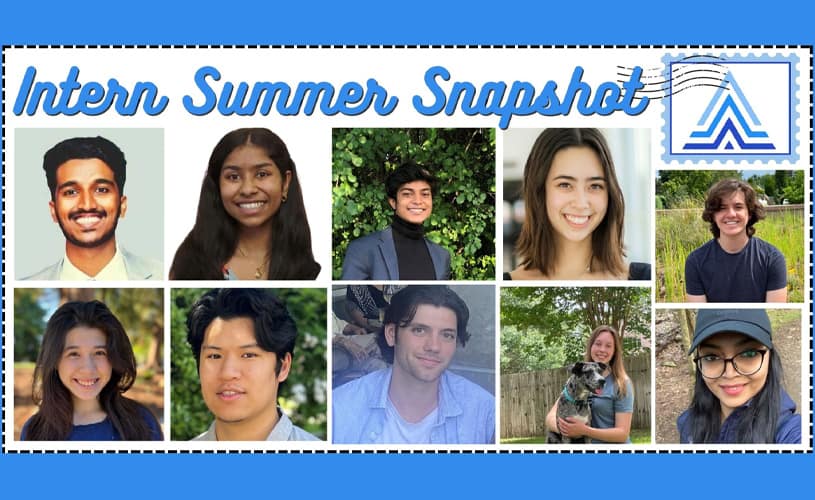
Intern Summer Snapshot #4

Get to know the members of the Actian intern summer series 2022 in depth

Written By: Madeline Heath, Marketing Intern

The fourth week of August signals the final week of our 2022 summer internship session. Our interns have spent the last 11 weeks contributing in engineering, finance, technical course development, marketing, and people. For the fourth and final installment of our Intern Summer Series, we take an in-depth look at what our interns, Nikita Gaurihar, Linson Miranda, and Riya Singla have been working on!

Nikita Gaurihar
Department Vector Engineering Intern

As an intern in the Vector Engineering department, Nikita has spent her summer designing a Data Pipeline solution by performing quality checks and ingesting the processed data using the GRC approach into the Data Vault schema using Actian Products. As a result, Nikita is well versed in SQL, Unix Shell scripting, Lucid Chart, and Database management.

From such hands-on experience within such a dynamic environment, she has learned three skills she believes are essential to navigate any workplace: Managing the action items in terms of priority for the sake of efficiency, communication and networking being the key, and yearning to maintain the technical competencies in the ever-changing technology-driven industry.

As the primary reason she pursued her position at Actian was the potential of real tangible experience, this internship has reinforced her aspirations of working as a Data Scientist, Machine Learning Engineer, etc., and motivated her to keep going using the first principles thinking. Although her time at Actian is dwindling, Nikita is incredibly grateful for Actian being her first international professional experience and will always remember how Actian treated her like a real engineer.

Linson Miranda
Business Intelligence and Analytics Intern, Revenue Operations & Customer Enablement

This summer, Linson worked as a Business Intelligence and Analytics Intern for the Business Development team at Actian. His capstone project revolved around building a Customer 360 Demo for the Sales team using the Actian Data Platform and sharing his findings and feedback with Actian Leadership. Despite the remote setting, Linson felt empowered to reach out to seniors within the company and was happy to find a tight-knit community that was spread across the globe.

Looking forward, Linson would love to explore his career further with Actian and sees this internship as a milestone in his analytics career. From such an incredible and rewarding experience, he is confident in his pursuit of opportunities in data science and engineering with companies like Google and Adobe.

Although his time at Actian is coming to an end, Linson is happy to have participated in the Summer Internship program and is grateful to his peers and other Actian employees for encouraging him and sharing their experiences and insights in such a brief time. He has thoroughly enjoyed the people-first culture of Actian and believes the retention rate speaks for itself!

Riya Singla
IT Development Operations Intern

As the IT Development Operations Intern, Riya works alongside Engineering IT to create a script which automatically deploys Terraform templates to the cloud. From such hands-on experience, she is well-versed in many developmental operations technologies such as Terraform, Jenkins, and Kubernetes.

Although Riya has extensive personal coding experience, she has enjoyed coding in a professional environment and believes it is important to know how to make code production ready. As Riya wants to pursue a career in software engineering, she believes her internship has helped her develop instrumental developmental operations skills that make her a more well-rounded engineer.

With insight from her manager, Riya now maintains the mindset that when interacting with new technologies you “learn a little about a lot.” This means when interacting with different programs, you can dive into different technologies with just enough knowledge that you need to piece them together to build something bigger.


If you are a student interested in gaining real-world experience and tangible skills and want to foster your own professional growth in a flexible virtual setting, we encourage you to submit your resume for consideration for our Actian Summer Internship Program!


Blog | Data Analytics | | 4 min read

Holistic Data Sources to Optimize Marketing Budgets and ROI

Optimizing marketing budgets

In the current economy where businesses are entrenched in a hyper-personalized world, it is more important than ever to ensure your marketing dollars are spent on realizing value for your business. Businesses are investing heavily in personalized content strategies to meet the needs of their customers at each stage of the customer lifecycle.

But what happens when the ROI dries up? If target audiences are not accurate, businesses will lose money from creating irrelevant content for the wrong stage of the buyer journey. Creating content that produces effective engagement with customers is one of the biggest hurdles that ambitious businesses face today, so it is crucial to get the strategy right from the beginning.

Organizations often undertake content marketing strategies without a full, 360-degree view of who the customer truly is. As a result, marketing teams are held back from launching their campaigns off the ground because they fail to get the full picture of who to target and how. Time is of the essence for marketers, and every minute (if not second) when a campaign is not being acted on can result in wasted marketing spend.

Diversify Your Data Sources

Marketing teams may source exclusively from internal data or use data generated from a single system within a single department. While internal data can provide color as to who the personas are that the organization is trying to reach, it is just one brush stroke of paint in the picture. You need to pull from diverse datasets to create the full image of customer personas.

Now that you know you need to understand your customers more meaningfully, how do you make that happen? To get a truly holistic image of who the customer is, consider the following.

Move your business past the traditional CRM and data warehouse systems. These legacy systems cannot handle all the datasets needed to accurately portray target audiences, which make it more difficult for your content marketing strategy to be successful. If you do not have a clear picture of your ideal customer personas, you cannot create optimized content for them – let alone close a sale. Pivot to external data sources that can help you paint a better picture – think datasets like searches, social networking, mobile web impressions, and history with inbound and outbound campaigns. This type of data gives the best insights into things like buying patterns and habits that can offer true, actionable next steps to meet your customers, nurture them, and recommend what else they may need along their journey with you.

After all data is unlocked and collected from internal and external sources, it is then up to businesses like yours to combine that data in a way that can be viewed in a single pane. Why is this important? Because unconnected data is hard to interpret and analyze properly, leading to even more dollars being wasted on irrelevant marketing content generated from disparate data sources.

From there, organizations can rapidly personalize the customer experience through micro-segmentation, next best action, and market basket analysis, while improving customer acquisition and retention through campaign optimization, and churn analysis to increase customer loyalty.

Don’t Wait for Later. Act Now for Best Results.

It sounds simple but given how quickly consumers get their information in today’s mobile-first world, it is imperative to stay on top of this data and implement it into marketing campaigns as quickly as possible. The ability to build, test, deploy, and assess campaigns quickly is a key consideration, if you want to maximize your campaign revenue.

What else makes an effective campaign?

  • Understanding your buyer persona, where they research to learn more about what they are looking for, and who they turn to and trust when they’re making their buyer decisions.
  • Understanding where your customers are geographically, where they congregate, and where they socialize – both digitally and in-person. This could include where they shop online, where they are in-person, what mobile apps they use, including social selling platforms like TikTok and Instagram.
  • Quickly assess the current state of your campaign and leverage available datasets to pivot appropriately. Access to these real-time analytics gives marketers like you the best possible chance to refine and optimize your campaigns and generate higher ROI.

Content marketing campaigns are made more robust and effective if quality, timely, and secure data are fed into them. Want to stand out in a crowded market and get the best bang for your buck? Ambitious businesses like yours can deploy targeted and highly personalized campaigns using relevant data to perform deep analysis on your customer types. Acting quickly to capitalize on a variety of data sources to paint a 360-degree view of customers makes all the difference between optimizing and squandering your marketing budget.


Blog | Actian Life | | 3 min read

Intern Summer Snapshot #3

Get to know the members of the Actian intern summer series 2022 in depth

With August in full swing, our 2022 summer internship is coming to a close. Our interns have spent the last 10 weeks contributing to different teams throughout Actian. For the third installment of our Intern Summer Series, we take an in-depth look at what our interns, Madeline Heath and Gabrielle Kray, have been up to this summer!

Madeline Heath
Marketing Intern

Maddie has spent her summer working as the Marketing Intern for the Marketing department where she is primarily responsible for managing the Actian blog and tagging all Actian content with keywords in Uberflip – a marketing software for which she is now certified. She also is responsible for managing other supplemental projects such as content organization, industry market research, and website content for the executive team.

She is most grateful for the continued development of her project management skills and aptitude for efficient processes. She also realized how much she appreciates the “little parts” of the team experience especially when working remotely like good morning messages and gifs that make Actian such a community.

While her time as an intern is ending, she will never forget how wonderful it was meeting making friends with such bright-minded peers in her intern class and the mentorship she received from all members of the Actian team -most specifically her manager Kimmah Shah and buddy, Mollie Kendall.

Gabrielle Kray
Employee Experience Intern

Gabrielle -Actian’s very own Employee Experience Intern- has spent her summer working within the Employee Experience team renovating the New Hire Orientation process. Gabrielle conducted extensive research and utilized the software Camtasia to build an Asynchronous New Hire Orientation.

This orientation, soon available on Actian Academy, expanded upon the content of the initial curriculum used for orientation, allowing for more detailed and digestible information. A lot of care was also put into ensuring that the information is presented in a way that is much more interactive, flexible, and provides new hires with easy to reference materials to be used in the future. Working on such an essential part of the onboarding process has equipped Gabrielle with an understanding of what to look for when joining a company, how to map out a vision prior to execution, and some slick video editing skills!

Gabrielle has enjoyed her internship and is grateful to her Manager, Sara Lou, and Buddy, Rae Coffman-Bueb, for providing her with a comfortable and invigorating work environment. The passion they bring to their work and the people of Actian is inspiring!

If you are a student interested in gaining real-world experience and tangible skills and want to foster your own professional growth in a flexible virtual setting, we encourage you to submit your resume for consideration for our Actian Summer Internship Program!


Blog | Data Analytics | | 5 min read

How to Create a Perfectly Tailored Customer Experience

perfectly tailored customer experience

Summary

This blog delves into strategies for crafting personalized customer experiences in the competitive e-commerce landscape, emphasizing the importance of unified customer profiles, data integration, and predictive analytics.

  • Unified Customer Profiles: Integrating data from various touchpoints to create comprehensive customer profiles enables businesses to understand individual preferences and behaviors, facilitating personalized interactions.
  • Predictive Analytics: Leveraging data analytics to anticipate customer needs and behaviors allows businesses to proactively offer relevant products and services, enhancing customer satisfaction and loyalty.
  • Real-Time Data Integration: Implementing platforms that provide real-time data integration ensures that businesses can respond promptly to customer interactions, maintaining a seamless and personalized experience across channels.

E-commerce is a competitive field. Businesses are living in an era of hyper-personalization and omnichannel engagement, constantly vying for limited customer attention in a saturated market. As a result, optimizing marketing campaigns and driving qualified sales leads continues to be a challenge.

Having insight into each individual’s unique preferences, buying behavior, and expressed sentiment on the retail brand is essential for retailers to build as close to a complete picture of their customers as possible. In doing so, their marketing campaigns and sales channels are shaped in ways to make this achievable. However, many companies do not have access to a comprehensive view of their customer data. This is unsurprising, as customer data tends to be scattered, lying across various channels and sources. It would be challenging for a true 360-degree view to be sourced exclusively from internal data, and even harder to be found in a single system or business team.

To make the most of customer analytics and better serve customers, businesses need a platform that provides a unified view of the customer profile so businesses can optimize the shopping experience and improve customer retention levels.

Why are Unified Customer Profiles Important?

Customers expect companies to draw them in and entice them to make a purchase. Businesses want to delight their customers, but before that’s possible, companies must be familiar with who their customers are and what types of content they are engaging with. As one example, research by McKinsey & Company shows new consumer groups are trying out digital products and services for the first time. And when it comes to business-to-business consumers, according to the McKinsey article from spring 2020, “our recent customer-behavior research shows that digital interaction with B2B customers is now two times more important than traditional channels—more than a 30 percent jump since before the COVID-19 crisis hit.”

In order to stitch together disparate data and get a complete customer profile, companies need a single SaaS customer analytics cloud platform. Once customer data is easily accessible, it’s much simpler to combine data from each customer touchpoint. This includes accessing historical transactions, data stored across CRM, ERP, and operational systems, and verifying a customer’s identity across multiple channels under various personas – aggregating all this into a comprehensible profile. A holistic customer profile allows you to understand your customers at each stage of their journey. From this, you can deliver personalized experiences for them and help increase customer satisfaction and grow customer loyalty over time.

How to Optimize the Shopping Experience

When shopping online, customers want to quickly and efficiently make purchases. Companies can meet these expectations and increase sales when they understand their customers well – and even better when they are able to create personalized experiences based on their buyer journey.

One way to optimize a customer’s experience while improving sales and customer satisfaction is to use data and market basket analysis to determine which products are commonly purchased together. With this insight, you can optimize product placement on your site or in-person, offer special deals, and create product bundles, which will encourage additional sales of similar product combinations.

Don’t Wait Until it’s Too Late: Learn to Improve Customer Retention

Losing customers has a huge impact on businesses, and most companies don’t know which customers are considering leaving until it’s too late. This leads to more than just a loss of revenue; it can also impact a company’s future growth. A study by Bain & Company found that increasing customer retention by only 5 percent opens up the potential for an increase in profits anywhere from 24-95 percent.

Existing customers are valuable assets and are more likely to purchase from you than new customers, so it’s crucial to develop strong customer loyalty. If you want to hold onto your customers and continue to build a stronger view of who they are, you’ll need to identify triggers and events that might influence them to make purchases elsewhere, thus increasing the accuracy of your customer churn predictions. With the right data, you can have insight into who’s most likely to leave. For example, once you’ve identified potential lost customers, you can send a promising retention offer to high-value customers, while deprioritizing the more unprofitable customers – exposing them to consider other competitors.

In a competitive market, businesses must find ways to stand out from the rest and deliver a memorable customer experience. How do you do that? You can accomplish this by using a platform that simplifies combining cross-channel data and sources in real time, giving your team a complete view of up-to-date customer information. Try this and you’ll see personalized customer experiences come to life and optimized ROI.

The Actian Customer Data Analytics Hub, powered by the Actian Data Platform, combines data integration and real-time analytics, making it easy to have a comprehensive view of your customer data across multiple channels and sources. You’ll be able to access, analyze, and unify buying behaviors while building valuable customer insights in real-time. More importantly, you’re building important relationships with customers, growing customer loyalty, and increasing sales along the way.


Blog | Actian Life | | 3 min read

Intern Summer Snapshot – #2

Get to know the members of the Actian intern summer series 2022 in depth

For the month of August, we will be sharing a weekly post about our interns, their insights into the program, and how they’ve been developing their professional skills. For the second installment of our Intern Summer Series, we take an in-depth look at what our interns, Andi Wagner, Ashwin Ramakrishna, and Josh Reyes have been up to this summer!

Andi Wagner
Software Engineering Intern

Andi has spent the summer working as a Software Engineering Intern for the DataConnect Development Department where she has been developing an Apache Camel Extension for Actian DataConnect. Their work will allow for consumer use of Camel routes without extensive knowledge of the Apache Camel rules and framework making Actian DataConnect even more user-friendly and efficient.

Andi is happy to have developed proficiency in both DataConnect and Apache Camel, both of which they were unfamiliar with prior to her internship. She has also gained great insight into how software development occurs in a company and what it means to code professionally.

Andi will always be grateful for her Intern Orientation. She believes nothing could top that “best week” of fun activities and getting to know one another!

Ashwin Ramakrishna
Revenue Operations Analyst Intern

While at Actian, Ashwin works within the Business Development Team as the Revenue Operations Analyst Intern where they are developing an automated sales recommendation engine through Excel to simplify the pursuit and acquisition of leads. From hands-on experience, Ashwin now maintains a better understanding of what it is like to work within Revenue Operations and is well-versed in the lead-to-sale conversion process.

Ashwin has learned so much from the consistent feedback and collaboration within the Development Team and credits the entire team for his growth, as they have been extremely welcoming and eager to share their thoughts and professional insight. This internship has also furthered Ashwin’s interest in revenue operations -they believe it to be an essential aspect of all industries- and would like to use their experiences at Actian to get further involved in this field. #ShoutOutRevOpsTeam!

Joshua Reyes
Finance Intern

Josh has spent his summer working as a Finance Intern for the Finance Department where he has primarily worked on developing forecasting models for the future yearly costs for each of Actian’s cloud service providers. He has enjoyed furthering his collaboration skills and his understanding of forecast model building.

Working full-time in a professional finance setting has given Josh hands-on experience in the flow and function of a working finance team. This experience has supported his passion for developmental financial planning and analysis, and he has enjoyed furthering his understanding of the tech industry and prowess for finance.

Josh is most grateful to have worked with such skilled professionals and to have learned from their mentorship and experiences. He would like shoutout his manager, Mike Laquian and Buddy, Chris Saulsbury, for their guidance and support!

If you are a student interested in gaining real-world experience and tangible skills and want to foster your own professional growth in a flexible virtual setting, we encourage you to submit your resume for consideration for our Actian Summer Internship Program!


Blog | Actian Life | | 5 min read

Lesbians Who Tech – Key Takeaways and What Actian is Doing Next

Actian is a proud sponsor of Lesbians Who Tech

In true LWT fashion, we have to start out this blog with a ✋! As part of Pride Month, I had the honor of attending one of tech’s most highly anticipated annual events, Lesbians Who Tech #PrideSummit2022, which was held virtually from June 6 – June 10.

Actian is a proud sponsor of Lesbians Who Tech, as they embody what it means to hold space, amplify underrepresented voices, and shine a light on crucial issues the LGBTQIAP+ community faces as it relates to the tech industry and beyond. As an early attendee of the LWT Pride Summit, I realized Lesbians Who Tech and Actian would be a perfect pairing as Actian looks to expand our own diversity and inclusion efforts to support our large base of LGBTQIAP + employees.

Lesbians Who Tech Pride Summit is an event I look forward to all year, and this year was no exception. With a stacked lineup of speakers discussing topics ranging from political issues to creating inclusivity within the tech industry, I was excited to dive in and learn how to best advocate for positive and impactful change for the LGBTQIAP + employees within Actian.

This year, with the main conference held virtually, I was able to attend a wide variety of sessions and workshops. Without further ado, here are my highlights from Lesbians Who Tech Pride Summit 2022 and key takeaways on how we can all become more involved!

Implementing Gender-Affirming Care Offerings

Due to the current political climate, many speakers focused their sessions on advocating for trans rights in the workplace.

Heidi Schriefer, Vice President of People & Places at Grindr, delivered a superb presentation on how Grindr developed its Gender Affirming Care Benefits program, which is one of the most progressive and inclusive benefit packages for trans and queer employees I have seen. Grindr has committed itself to providing expanded access to Hormone Replacement Therapy (HRT) to their transgender employees as well as establishing a Gender Affirmation Fund, which eliminates financial obstacles to surgical, social, and legal care.

What stood out most about Heidi’s presentation is how strong of an ally to the LGBTQIAP + community she is, and how she feels empowered through her allyship to enact momentous change within her company – allowing trans employees to receive the care they need and deserve, as well as often overlooked disparity of benefits for LGBTQIAP+ employees. Grindr is an excellent example of how companies can be doing more to support trans employees as they embark on their transition journey.

How to Own Your Career Authentically

Another standout session I attended was that of Keshona Lawrence, Platform Support and Experience Manager at Twitter. Kenosha’s speech focused on “only-ness” that many minority queer employees can experience in the workplace.

She explained how oftentimes minority and queer employees can feel as though they are the only person in the room, with no other employees who can relate to the struggles of being an intersectional queer employee. Dealing with this “only-ness” can cause many to minimize, tone-down, or shy away from their authentic selves in the workplace.

Kenosha shared her own personal struggles with “only-ness” and detailed that by holding her employers accountable and requiring them to create space and inclusive policies for those who feel underrepresented, she finally gained the courage to step into her own power and make her voice heard.

Learning Your Work Love Language in the Workplace

One thing I love about the Pride Summit are the engaging workshops offered throughout the course of the conference. A workshop I found extremely interesting was held by Brittney Aston, Community Manager at NextDoor, which explored employees’ different love languages within the workplace. We learned how to identify a person’s love language and develop effective cross-functional communication methods based on each love language category. This workshop was a great learning opportunity for myself, where I discovered tangible solutions that I can apply in my future work at Actian.

Key Takeaways

With so many amazing discussions, workshops, and networking events, Lesbians Who Tech #PrideSummit 2022 left me feeling well-equipped and ready to apply what I learned to future DE&I policies at Actian to better support our employees. With this in mind, here are a few things I took away from the conference and how we’re looking to implement further change at Actian in the future:

Have more informed conversations with our insurance brokers on how we can address some of the key areas noted across discussions on trans healthcare
As we continue with forming our DEIB Council, things to keep in mind to ensure equitability
Review opportunities create more inclusive naming policies and practices – decades old language defaults in tech are problematic and can introduce harmful microaggressions.

With the benefit of sponsoring the event, Actian had the opportunity to meet a number of qualified candidates. We are excited to have been able to onboard following those connections and look forward to supporting and enabling their success here at Actian!

One reason I love working at Actian is their continuous commitment to better themselves as a company and to always provide their employees with a work environment where they feel safe and supported. I am thrilled to work for and partner with a company committed to supporting our LGBTQIAP + employees to ensure their utmost success and happiness while working at Actian.

Are you ready to make an impact on the world and change the face of data management and integration? Join our team of enthusiastic, talented minds in a diverse, collaborative environment where you can thrive and grow. Learn more about our career openings at https://www.actian.com/company/careers/.


Blog | Actian Life | | 3 min read

Intern Summer Snapshot – #1

Get to know the members of the Actian intern summer series 2022 in depth

The first week of August kicks off our Intern Summer Series! For the month of August, we will share a weekly post about our interns, their insights into the 12-week virtual program, and how their internship has helped develop professional skills. First up, we have our wonderful Cloud Operations Analyst Intern, Henry McKinney, and Zen Engineering Intern, Matt Jackson! Gain insight into their intern experience below!

Henry McKinney
Cloud Operations Analyst Intern

Henry has spent his summer as the Cloud Operations Analyst Intern on the Cloud Operations team where he works to streamline workflow and create greater efficiency within his team’s projects. His primary responsibility –analyzing and assisting the operations of his team- consists of specific tasks such as: project designing, project management, team management, workload analysis, ticket analysis, and security analysis.

Henry describes his experience working on a cloud operations team as exciting and innovative and has developed an appreciation for the Agile mindset in tech. His experience working with AWS, GCP, Azure and Atlassian at Actian combined with his passion for technology and data have further strengthened Henry’s ambitions to pursue a career in the cloud space.

Henry has enjoyed the opportunity to add value to his cloud operations team and admires the collaborative culture they present. He believes it is a privilege to work alongside such seasoned veterans in the cloud space and is grateful for how friendly and helpful his team members -especially his mentor, Bobby- have been.

Matthew Jackson
Zen Engineering Intern

Matt has spent his summer working as the Zen Engineering intern where his time has been split between two major projects. He first worked on CM Wiki Migration where -through scripting- he migrated old Zen wiki content to Confluence in the cloud. Following the early completion of this project, Matt transferred his focus to the Btrieve Databases where he now utilizes BRestfulAPI to make an app that will be used to share Actian product implementation.

From personal coding projects to working as a JavaScript Instructor for children, Matt considers himself to be a certifiable “language jumper” and is grateful to have learned about source control and how to further coding proficiency in a professional setting.

By working with people involved in quality assurance, Matt has gained a deeper understanding of the value of a big picture approach while furthering his appreciation of the small tasks that make big picture ideas possible. He has developed his own understanding of the importance of integrating business and computer science by coding with a purpose and has an even greater passion for collaboration within a professional coding environment.

If you are a student interested in gaining real-world experience and tangible skills and want to foster your own professional growth in a flexible virtual setting, we encourage you to submit your resume for consideration for our Actian Summer Internship Program!


Blog | Data Analytics | | 5 min read

How Retailers Can Keep Pace Alongside Dynamic Customers

create successful customer experience programs

The rapid pace of change and acceleration of digital transformation brought on by the pandemic isn’t news anymore; hybrid working environments and limits to in-person commerce forced businesses across diverse sectors to modernize the way they work and their tech stacks to keep up with demand. However, one side effect of this rapid pace of change is the way businesses view and approach their customer experience (CX).

Having a complete, 360-degree view of a customer is paramount for businesses to create successful CX programs, but organizations were often only pulling this information from one single data source, or from internal data sourced by a single department. This may have worked in the past, but as customers have diversified their approach to everyday life and obtaining goods and services, organizations need to reconsider how they’re analyzing consumers if they want to continue to scale.

Complicating this, especially in the retail sector, is the rash of supply chain issues around the globe in the past few years. Everything from inventory shortages to shipping vessels held at a standstill has caused massive delays and headaches for the retail industry. Revitalizing CX after supply chain issues can be difficult, but with the right approach to customer analysis, there are possibilities.

Creating a 360-Degree Profile of Customers

What’s also tricky for retailers is the rate at which the pandemic (and subsequent supply chain issues) opened consumers’ eyes to the number of options available to them. A recent McKinsey study found that 75% of US consumers tried out a new store, brand, or way of shopping during the pandemic. This presents new or resurfaced challenges for retailers and other businesses who have not prioritized nurturing their customers throughout their buyer journey and those who do not have a holistic view of their consumers.

Additionally, over 80% of US consumers say they have begun using more digital channels than they had in 2019. This surge in omnichannel experiences increasingly places retailers in a tough spot – consumers are more willing today to try alternative options and even forego brand loyalty. Now enter marketing and customer experience teams tasked with the challenge of delivering the highest quality and most sustainable CX possible.

How can thoughtful and ambitious businesses build and nurture the strongest CX? One way to do this is by thinking outside of their traditional data sources for their full, 360-degree view of who their target audiences are.

Example data sources include social media, search, and previous touch points such as past orders or newsletter engagement to accurately map out where customers exist on their journey. In doing so, businesses can provide real-time insights and analysis of who their customer is by integrating the data within CX efforts. The “real-time” part is the most critical value for businesses if they want to continue nurturing and keeping their customers happy.

Optimization in the Fashion Business

The rub here is that the data integration part isn’t always easy. Consider the French fashion retailer, Kiabi. As the company experienced surges in business, their legacy data analytics and integration systems were unable to provide them with on-the-fly insights on their 20+ million customers. What’s worse was having trouble scaling alongside their growing customer base. For example, when it came to tracking the reasons for markdowns, it was difficult to use the data to pinpoint a cause.

Taking the initiative to modernize their systems, Kiabi leveraged Actian’s Customer 360 Analytics Solution and saw immediate results that generated real-time insights on existing sales data and underpins Kiabi’s use of business intelligence (BI) tools including Business Objects and Tableau Software. Integration between the database and BI tools is transparent to the business users, freeing them to focus on analyzing sales and marketing programs to gain deeper insights and improve decision-making.

The result was a massive reduction in physical data size and an increase in the ability to pinpoint causes of markdowns by analyzing millions of sales records. The most important element for Kiabi in adapting and modernizing their CX systems was the ability to scale and answer customer questions quickly and effectively. As a result, customers felt that their needs were being addressed, while Kiabi continued to grow and adapt alongside changing needs.

Given the spikes in e-commerce and the dynamic needs of today’s customers, businesses can’t afford not to optimize their CX efforts through a greater investment in data integration. This has been a challenge for CX teams, with nearly 50% of marketers saying adopting new marketing solutions is their biggest challenge.

While adapting to change and onboarding new technologies is difficult, it’s a reality for many businesses (but particularly customer-centric ones like retailers). Retailers and CX teams must prioritize the rapid personalization of the customer experience by creating micro-segments of their audience, analyzing when and why customers churn out, and then performing deep analysis to determine the next actionable steps.


Blog | Actian Life | | 11 min read

Introducing Our Actian 2022 Interns!

Meet the new Actian 2022 interns

It’s National Intern Day, which means it’s time to talk about Actian’s Summer Internship Program! Since launching this 12-week program in 2020, Actian’s internships have been centralized around intern capstone projects, and engaging virtual events, all while being fully remote – this year however, they were able to add the exciting addition of a hybrid-remote Intern Orientation.

My name is Gabrielle Kray, and I am halfway through my internship as Actian’s Employee Experience Intern. I have learned so much about the People field these past 7-weeks and have felt appreciated for what I have brought to the table every step of the way. Being a global organization, it has also been an exciting time of meeting and working with people cross-functionally. I am looking forward to learning more as I continue my internship but let’s talk about what has been going on so far!

The first thing to note about Actian’s internship program is that every internship has a capstone project. This project is meant to be the interns’ focus, where over the course of the twelve weeks they will be able to plan, organize, and complete it with the guidance of their manager and buddy. As Actian is a remote-first organization, this helps ensure that interns do not fall into the pitfalls of other internships – where interns are brought on as less expensive, temporary workers, with unfocused objectives or relegated meaningless tasks. This helps ensure that it is a learning experience that benefits the interns, as well as the organization.

The project I am working on this summer is to migrate Actian’s New Hire Orientation to an asynchronous format, that a new hire can go through at their own pace. The benefits to this would be that the program will be digestible, and engaging, and it provides us an opportunity to be more thorough. What’s more, it will provide course materials they can return to in case they need reference information. In addition to the asynchronous orientation, there will also be a monthly synchronous gathering of new hires to answer all their questions, provide a networking opportunity, and offer engagement with our leadership. Altogether, this orientation will be a proper welcome to our company!

So far, I have planned out how the orientation will flow, generated ideas on how to create an engaging program, and got to work creating the materials we will be presenting. Soon, with the help of the Employee Experience Team, I will be recording content and uploading it to the course to our internal platform Actian Academy! I have faced challenges, like worrying I would not reach my completion goals, or not always feeling like I knew all the content I like I should, but in the end, everything was a learning curve, and my team had my back. It is really satisfying to see how the first half of my internship, which was spent learning the ins and outs of new hire orientation and creating a game plan with my team, is starting to come to life!

The second feature to note about our internship is that it has been fully remote (outside of the optional in-person attendance of Intern Orientation). Actian has provided all the essentials for completing our projects, along with structured learning plans, and we don’t even have to worry about commuting! As with most remote first companies, we communicate through chat, email, and video calls. We also have employee events and weekly intern events to give us space to connect.

Speaking of weekly intern events, we recently had an exciting one. Rae Coffman-Bueb and Sara Lou, who direct the intern program, sent each of us a small kit that included tea candles, a small lighter, and all the necessary ingredients for s’mores! The event was called “Tiny Camp Fire” where we lit three little tea lights in a triangle and roasted ‘mallows while telling spooky stories. I certainly got the chills!

This year, we had an aspect to the internship program that hadn’t been an option until now – the ability to attend Intern Orientation in-person at the Round Rock, Texas office! Those that wanted to were flown in from all over the country, where we got to not only attend the hybrid orientation, but also get in some team building time too! My fondest memory was when we all bussed down to the Congress Avenue Bridge and watched thousands of bats flood the sky during their migration. We then made our way down to the round rock for which the city of Round Rock was named and took this iconic picture:

Actian 2022 interns at the Round Rock, Texas office

It was such a blast, and I hope that in future years the in-person orientations will continue!

As this is International Intern Day, I would like to introduce our group of Actian’s 2022 interns. They are a phenomenal bunch!

Ashwin Ramakrishna (he/they)
Revenue Operations Analyst Intern

Ashwin Ramakrishna, Revenue Operations Analyst Intern

Ashwin Ramakrishna is from Saratoga, California. He attends UC Davis and is an incoming Junior in Economics. In Actian, they are currently working to automate the sales recommendation engine process to make analysis in lead processing more efficient. He learned about the internship through his family friend who is an Actian Employee and thought it would be an incredible learning opportunity. In their free time, Ashwin teaches himself piano, and enjoys going to concerts.

Henry McKinney (he/him)
Cloud Operations Analyst Intern

Henry McKinney, Cloud Operations Analyst Intern

Henry McKinney is Actian’s Cloud Operations Analyst Intern. He is currently studying at Nazareth College in Rochester, New York, majoring in Psychology, and minoring in Math, Finance, and Analytics. He first found Actian through LinkedIn, met his manager, and decided it would be a wonderful place to work, especially with the opportunity to work in the cloud space.

Henry is currently assisting the project manager on the cloud operations team. Using JIRA, he is helping reorganize tasks, as well as implementing a new project type that has additional features such as timeline view and priority. He values getting this bird’s eye view of an IT operations team and understanding of an Agile mindset. He is learning how to make operations efficient and scalable by working with developers and project managers in the cloud space.

During his free time, he loves to read non-fiction, train for hockey, and learn about new tech.

Nikita Gaurihar (she/her)
Engineering Intern

Nikita Gaurihar, Engineering Intern

Nikita Gaurihar is an Engineering Intern at Actian. She is currently pursuing a Master of Information Systems at the Northeastern University in Boston; however, she already has a Post Graduate Diploma in Management from India where she is from! She moved from India to the United States to gain more opportunities in roles that focus on data engineering, analytics, and machine learning.

During this internship, she is working on a project to design and develop a data pipeline solution to create a Data Vault Schema for Actian. She values the experience she is gaining by working with data, as it will bring her closer to her goal of becoming a Data Scientist!
When she is relaxing after work, she enjoys playing badminton with her husband & friends, or taking a stroll on the beach.

Linson Miranda (he/him)
Business Intelligence and Analytics Intern

Linson Miranda, Business Intelligence and Analytics Intern

Linson is pursuing his Master’s in Business Analytics at the University of Texas at Dallas. A techie at heart, he knew he wanted to work at an organization where he would have the opportunity to grow significantly as a summer intern and create an impact on the company’s future. And Actian was the perfect fit!

This summer, Linson is working as a Business Intelligence and Analytics Intern with the Customer Enablement & Revenue Operations team. Keeping in line with Actian’s aim to grow its market footprint, his capstone project revolves around building a customer 360 demo using the Actian Data Platform, their flagship product.

When he is not busy analyzing customer data or reading, Linson loves playing the guitar and binge-watching sit-coms!

Joshua Reyes (he/him)
Finance Intern

Joshua Reyes, Finance Intern

Josh is a Finance Major studying at the University of San Francisco. His aim this year was to gain experience in his field, and when he found this internship, he appreciated that it was specifically focused on financial analysis, which is his main interest! His internship capstone project is to create a financial forecasting model to predict future costs from cloud service vendors that Actian works with.

So far, Josh has valued experiencing the work environment and finds it interesting seeing the implementation of the skills he learned in college. When he wants to have a fun time, he enjoys hanging out with friends, watching sports, and going to the gym!

Riya Singla (she/her)
DevOps Intern

Riya Singla, DevOps Intern

Riya is majoring in Computer Science at UT Austin. When she applied for Actian, she was originally interested in the Software Engineering internship, but when she received a recommendation to try out DevOps, she decided to go for it! As her main project this summer, Riya is writing a script to automatically deploy Terraform templates every time a git repository updates. During her experience as DevOps, she learned new perspective on software engineering, understanding that code in the writing process needs to be checked for a strong framework before it reaches a production environment. She hopes to return to the world of software engineering with this new perspective to enrich her work.

Maddie Heath (she/her)
Marketing Intern

Maddie Heath, Marketing Intern

Maddie Heath is from Carmel, Indiana, and a rising Junior at IU Bloomington’s Kelley School of Business. She first found the Actian Internship online and was excited at the opportunity to work within the technology industry! While her primary responsibilities are managing Actian’s blog and tagging content via UberFlip, she manages many different projects and continually offers support to the marketing team. Despite her allergies, Maddie is a cat person, and has two cats. She spends her time fundraising for charity through designing art and clothes and spending time with her family.

Andi Wagner (she/they)
Software Engineering Intern

Andi Wagner, Software Engineering Intern

Andi is based in Round Rock, Texas, close to the Actian office! They are currently a senior at the University of Dallas, majoring in Computer Science. When she came across this internship, they thought it would be a great learning and networking opportunity. What more, she found that based on the reviews online, employees loved the company, so she chose to apply!

Their main project this summer is to implement an Apache Camel extension into DataConnect, which will allow for the implementation of Camel routes seamlessly through the product. After work, Andi enjoys spending time with her dog, Loki, exploring, eating, and playing video games.

Matthew Jackson (he/him)
Zen Engineering Intern

Matthew Jackson, Zen Engineering Intern

Matt is from Round Rock, Texas, right by the Actian office! He is an incoming freshman for the Colorado School of Mines and will be studying Computer Science. He is an engineering intern, working with the team that manages Zen, Actian’s database management system. He started off his internship focusing on the migration from CMWiki to Confluence, by writing a program to scrape data from CMWiki, process it, and upload it all to Confluence. Once he completed this project, he started his next one, setting up an app that will serve as an example of how customers can use BRestful API in Btrieve 2. This will improve the implementation of the product for users. Outside of work, Matt really enjoys music. One of his favorite pastimes is busking on the street with his Jazz Band.

Gabrielle Kray (she/her)
Employee Experience Intern

Gabrielle Kray, Employee Experience Intern

Gabrielle is from Sunnyvale, California. She is an incoming freshman at Cal Poly, San Luis Obispo. This summer she joined the Employee Experience team as an intern, finding it the perfect opportunity to explore the field of HR. Her focus during her internship is to build an asynchronous new hire orientation that is digestible, engaging, and thorough. She found that this project gave her perspective on the needs and experiences of a new hire. After work, Gabrielle loves spending time with her family and friends, and taking short hikes in nature.


Written by Gabrielle Kray