
Étude BARC x Actian : Pourquoi les entreprises investissent dans Data Products


Points clés à retenir
- Les entreprises adoptent data products pour garantir la fiabilité des données destinées à l'IA (60 %) et à prise de décision 59 %), et pas seulement pour en faciliter l'accès.
- Les initiatives en matière d'IA renforcent la nécessité de disposer de données fiables, cohérentes et bien gérées.
- Data products data contracts une structure grâce à la définition de la propriété, à des normes de qualité et à des interfaces de données stables.
- Les contraintes réglementaires accélèrent l'adoption de ces technologies, en particulier dans les secteurs qui exigent gouvernance rigoureuse gouvernance une traçabilité rigoureuse.
Conclusions de l'étude mondiale BARC x Actian de 2026, menée auprès de plus de 300 responsables des données en entreprise
Dans tous les secteurs, les entreprises investissent massivement dans l'IA. Pourtant, de nombreuses initiatives peinent encore à dépasser le stade de l'expérimentation et à générer une valeur ajoutée durable pour l'entreprise.
Pour mieux comprendre ce qui distingue les initiatives d'IA qui se développent de celles qui stagnent, Actian s'est associé à BARC, un cabinet d'analyse mondial de premier plan spécialisé dans les données et l'analyse, pour mener une étude mondiale auprès des responsables des données d'entreprise.
S'appuyant sur les témoignages de plus de 300 personnes interrogées issues de divers secteurs et régions, cette étude examine la manière dont les organisations adoptent et mettent en œuvre data products data contracts, ainsi que l'influence de ces approches sur la réussite des initiatives en matière d'IA.
L'un des enseignements les plus révélateurs de cette étude est la raison pour laquelle les organisations adoptent data products premier lieu.
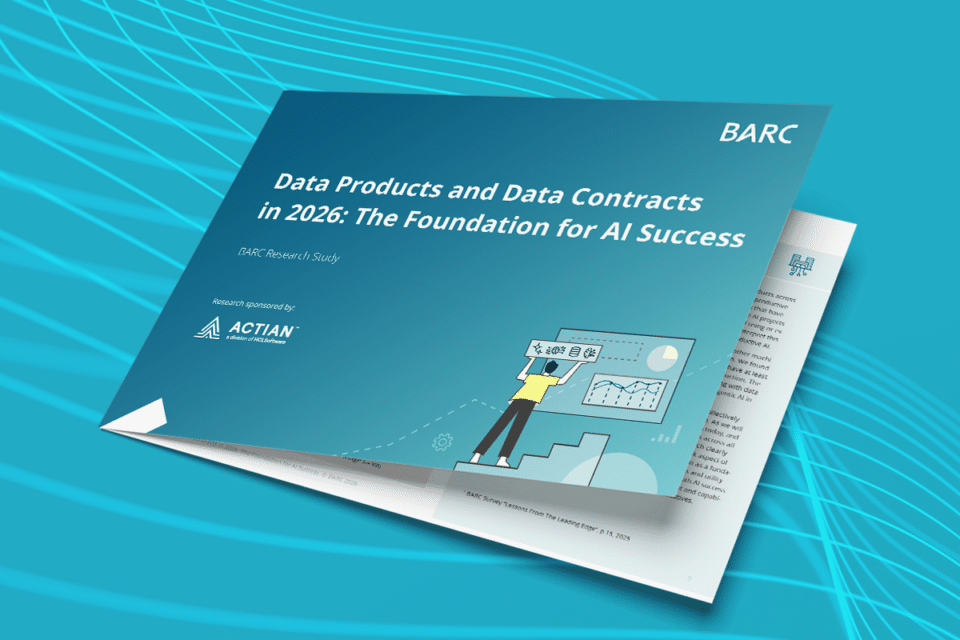
 Rapport mondial de recherche BARC × Actian (2026)
La fiabilité des données est le principal facteur d'adoption des produits basés sur les données
Les études montrent que les entreprises n'adoptent pas data products pour améliorer l'accès aux données. Au contraire, c'est la confiance qui constitue la principale motivation.
Lorsqu'on a interrogé les personnes interrogées sur les principaux facteurs motivant la mise en œuvre data products, deux éléments se sont clairement démarqués :
- Des données fiables pour les systèmes d'IA (60 %).
- Des données fiables pour prise de décision 59 %).
Ces deux facteurs ont été jugés nettement plus importants que des objectifs traditionnels tels que l'amélioration de l'accessibilité des données ou la promotion d'une plus large démocratisation des données.
Ce constat reflète une évolution dans la manière dont les organisations appréhendent gestion des données. Les premières vagues de modernisation des données visaient principalement à faciliter l'accès aux données à l'échelle de l'organisation. Si l'accessibilité reste importante, les entreprises reconnaissent de plus en plus que pour obtenir des résultats fiables, il faut disposer d'une base de données fiable.
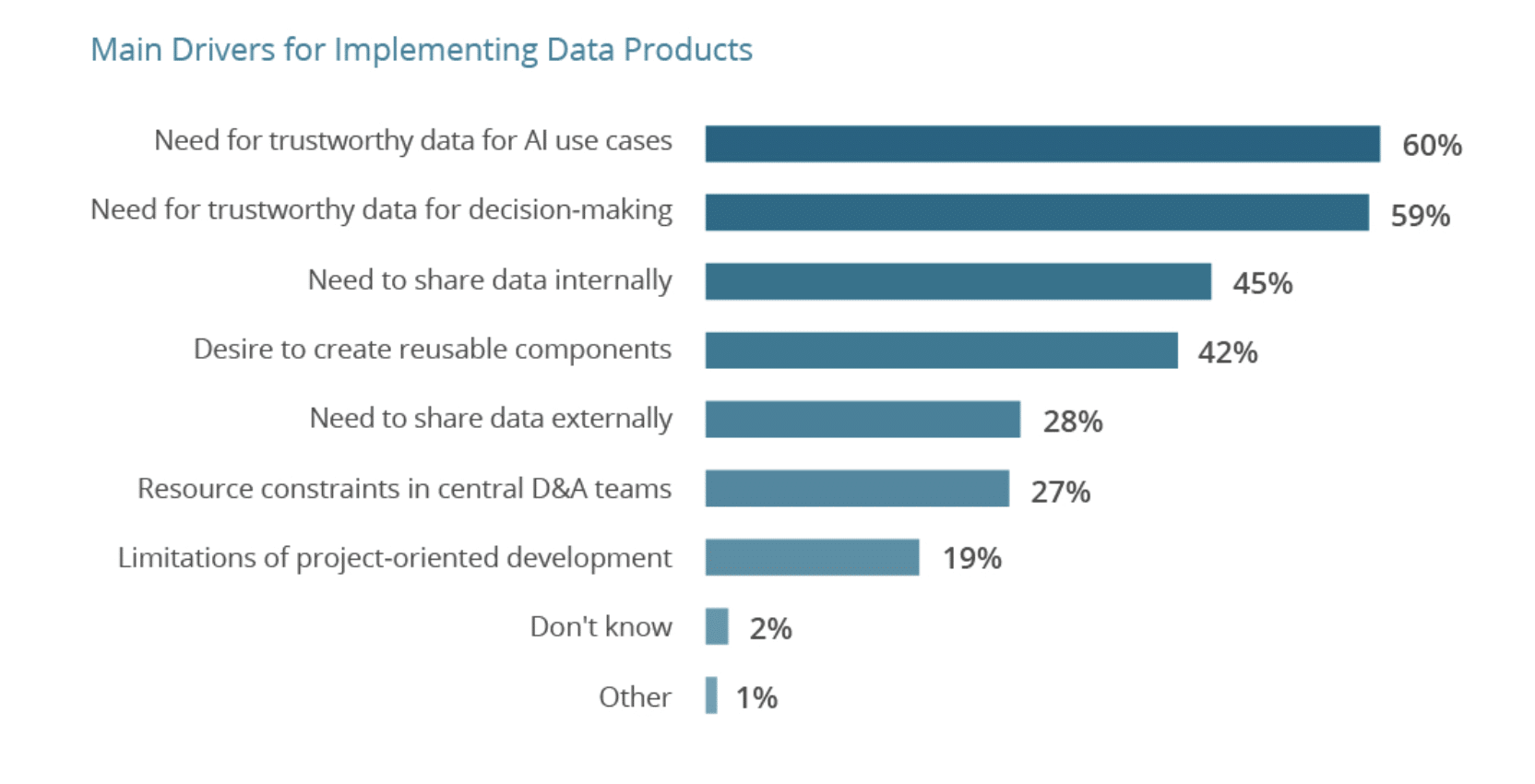
Quels sont les principaux facteurs qui motivent la mise en place data products? – © BARC 2026
L'IA met la fiabilité des données à rude épreuve
L'importance croissante de données fiables est étroitement liée à l'essor rapide des initiatives en matière d'IA.
Les systèmes d'IA sont extrêmement sensibles à la qualité et à cohérence données qui leur sont fournies. jeux de données incohérents, une propriété mal définie ou des modifications non documentées des structures de données peuvent rapidement nuire aux performances des modèles et éroder la confiance dans les décisions fondées sur l'IA.
À mesure que les entreprises développent leurs initiatives en matière d'IA, elles ont de plus en plus besoin d'environnements de données qui offrent :
- Une répartition claire des responsabilités et des obligations.
- Des normes de qualité des données bien définies.
- Des interfaces stables entre les producteurs et les consommateurs de données.
Dans de nombreuses organisations, data contracts ces attentes entre les producteurs et les consommateurs, contribuant ainsi à garantir que les modifications apportées aux structures de données ou aux normes de qualité ne perturbent pas les systèmes d'IA et d'analyse en aval.
Data products mettre en place cette structure en organisant les ressources de données sous forme de produits gérés, dotés gouvernance définie, d'exigences de qualité et d'interfaces réutilisables.
Ces caractéristiques font data products adaptés pour support les systèmes support déployés à l'échelle de l'entreprise.
La réglementation favorise l'adoption des produits de données
Un autre facteur important qui influence l'adoption est la pression réglementaire.
Les secteurs fortement réglementés — notamment les services financiers, la santé et l'énergie — comptent parmi les premiers à avoir adopté les approches axées sur les produits de données. Ces secteurs sont depuis longtemps tenus de mettre en place des contrôles rigoureux en matière de gouvernance des données, de traçabilité et de conformité.
Alors que les exigences réglementaires en matière d'utilisation des données, de protection de la vie privée et de transparence de l'IA ne cessent de se renforcer, de nombreuses organisations formalisent leurs gestion des données . Data products un moyen concret de répondre à ces attentes en clarifiant la responsabilité, en normalisant les définitions des données et en renforçant gouvernance .
Dans ce contexte, les exigences réglementaires jouent souvent un rôle de catalyseur dans l'adoption gestion des données structurées gestion des données , telles que data products.
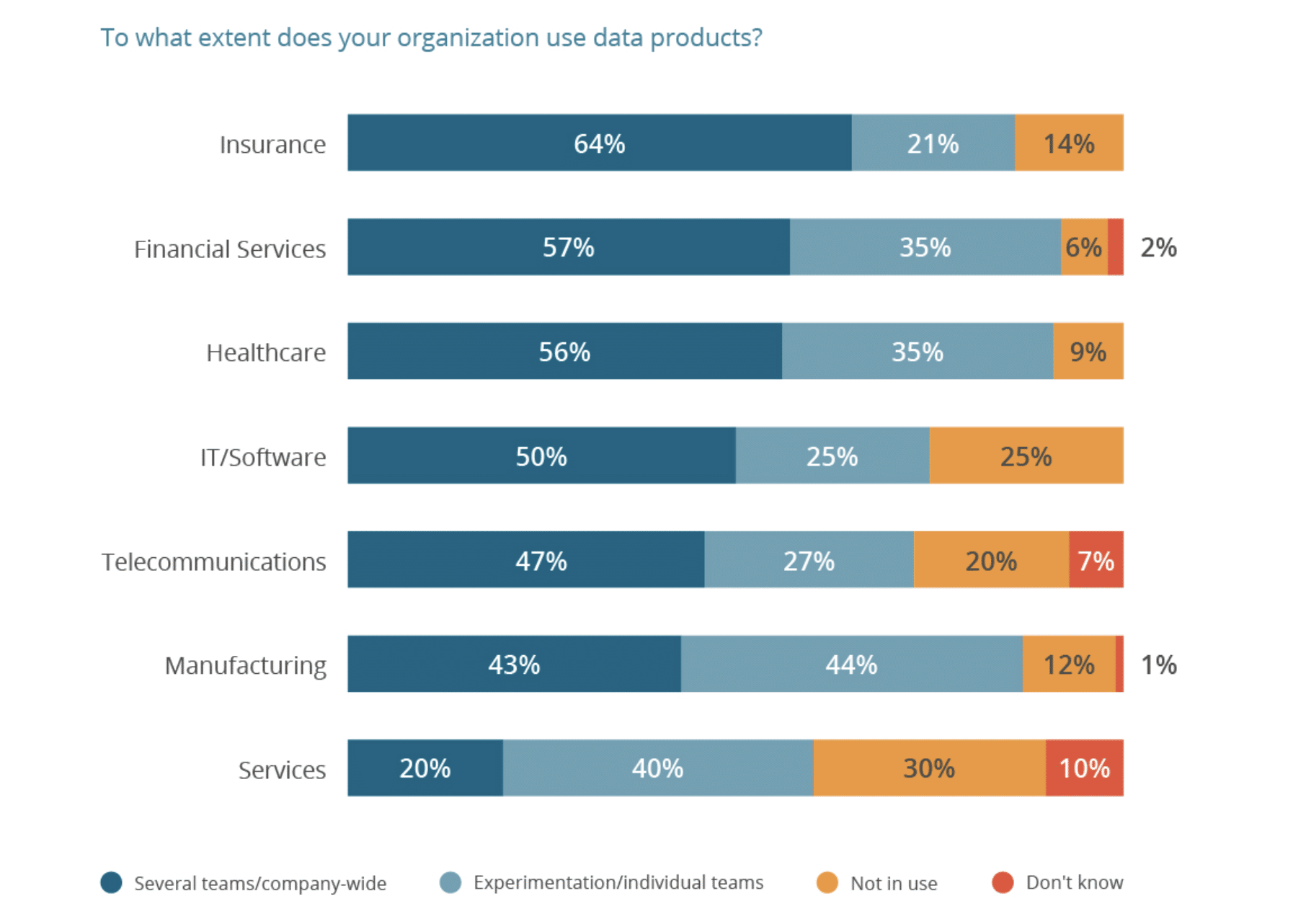
L'adoption des data products selon les secteurs – © BARC 2026
Télécharger le rapport de recherche complet
Cet article présente plusieurs conclusions clés issues de l'étude mondiale menée par BARC et Actian.
Le rapport complet, Data Products Data Contracts 2026 : les fondements du succès de l'IA, examine comment les organisations de tous les secteurs et de toutes les régions adoptent et mettent en œuvre data products data contracts, et comment ces pratiques influencent la maturité de l'IA, gouvernance et les résultats concrets.
Téléchargez le rapport complet pour découvrir les conclusions de cette étude et savoir comment les grandes entreprises déploient l'IA à grande échelle grâce à data products.
Télécharger le rapport complet
Restez connecté
Des informations tirées des données, à votre service.
(par exemple : sales@..., support)
