
Beyond Cloud-by-Default: What New Global Research Reveals About Enterprise AI


Key Takeaways
- Enterprise AI is moving from cloud-by-default toward deliberate workload placement across cloud, on-premises, and edge.
- Cloud remains dominant, with 77% of organizations using it as part of their AI operating model.
- At the same time, 76% say deploying AI workloads outside the cloud has become more important over the past 12 months.
- Workload placement increasingly depends on factors such as control, data sensitivity, sovereignty, performance, resilience, and cost.
- The BARC x Actian research shows that hybrid, workload-specific architectures are becoming central to enterprise AI strategy.
Insights from the 2026 BARC x Actian global research study
Enterprise AI is moving from experimentation into production. As AI becomes embedded in more sensitive, business-critical processes, organizations face a question that mattered less during the experimentation phase: Where should AI workloads actually run?
The short answer: there is no single environment for enterprise AI. Cloud remains dominant, but organizations are increasingly placing workloads across cloud, on-premises, and edge based on their specific requirements.
Cloud has been the natural starting point for enterprise AI. It provides fast access to infrastructure, models, managed services, and the flexibility organizations need to experiment and innovate quickly. But new research suggests that the architecture conversation is evolving.
Actian partnered with BARC, a leading analyst firm for data and analytics, to examine how organizations are deploying AI across cloud, on-premises, and edge environments, and what is influencing those decisions.
Based on insights from 329 respondents across industries and regions, the research reveals an important shift: cloud remains the dominant environment for enterprise AI, but organizations are becoming more deliberate about AI workload placement—when and where individual workloads should run.
BARC × Actian Global Research Report (2026)
Cloud Still Dominates Enterprise AI
Cloud remains firmly at the center of enterprise AI strategies. The research finds that 77% of organizations already use cloud as part of their AI operating model, whether through cloud-only or hybrid architectures.
That isn’t surprising. Cloud infrastructure has played a critical role in accelerating AI adoption by giving organizations flexible access to computing resources, models, development tools, and managed services without requiring them to build and operate the entire technology stack themselves.
For experimentation and many production workloads, those advantages remain compelling. But cloud dominance tells only part of the story.
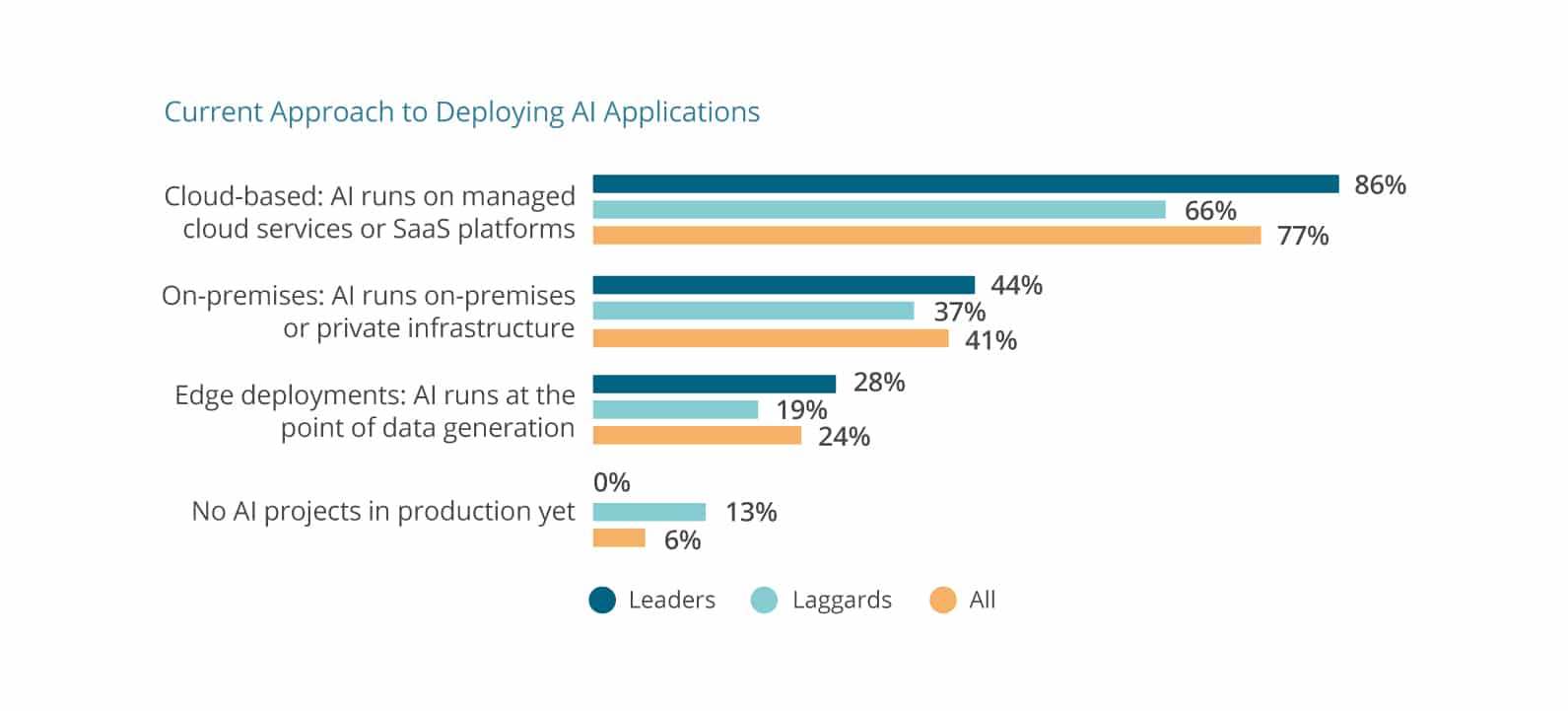
Cloud remains central to enterprise AI, with 77% of organizations using it as part of their operating model. © BARC 2026
Beyond Cloud-by-Default
The shift is already visible: 76% of respondents say deploying AI workloads outside the cloud has become more important over the past 12 months. Cloud dominance and growing interest in non-cloud AI aren’t contradictory. Enterprise AI itself is changing.
As organizations move from pilots and proofs of concept to production, AI increasingly interacts with sensitive data, supports critical business processes, and operates under stricter governance, security, performance, and regulatory requirements. Organizations now need to decide which environment best fits each workload.
Cloud may remain the right environment for one workload. Another may require greater control or proximity to data. Others may span environments as part of a hybrid architecture. This is the shift from cloud-by-default to deliberate workload placement.
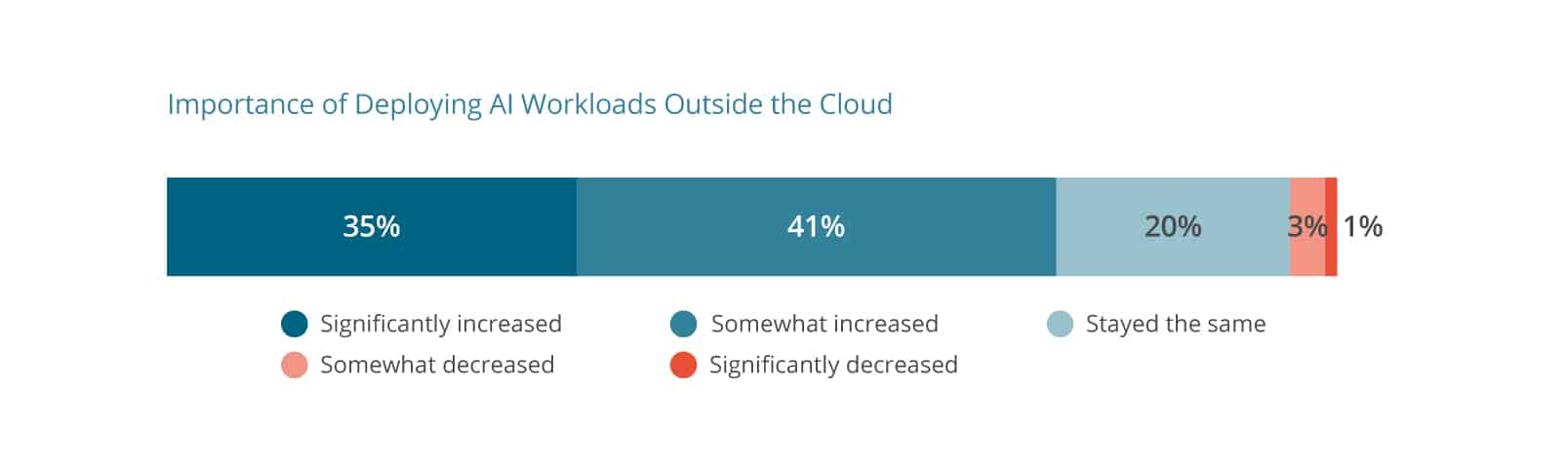
76% of organizations say deploying AI workloads outside the cloud has become more important over the past 12 months. © BARC 2026
This isn’t Cloud vs. On-Premises
The research does not suggest enterprises are abandoning the cloud. Quite the opposite: cloud remains foundational to enterprise AI.
AI architecture is becoming more workload-specific. Organizations increasingly need to weigh factors such as control, data sensitivity, sovereignty, performance, resilience, operational complexity, and economics when deciding where AI workloads should run. This makes the emerging architecture conversation much more nuanced than “cloud versus on-premises.”
So, where should enterprise AI workloads run? It depends on the workload. The right environment best balances its specific requirements.
Download the Full Research Report
This article introduces key insights from the BARC x Actian global research study.
The full report, Where Enterprise AI Runs: Deliberate Workload Placement Across Cloud, On-Premises, and Edge, explores how organizations deploy AI across cloud, on-premises, edge, and hybrid environments, and what drives those decisions.
Based on a global study of 329 respondents across industries, company sizes, and regions, the report examines the benefits and challenges organizations are experiencing, the factors influencing workload placement, and what emerging deployment patterns mean for the future of enterprise AI.
Download the full report to explore the findings and learn how organizations are approaching the next phase of enterprise AI architecture.
Download Full Report
Stay connected
Data insights delivered to you.
(i.e. sales@..., support@...)
