Organizations today struggle with fragmented data landscapes where valuable information remains trapped in departmental silos, inaccessible to the teams that need it most. Data consumers face lengthy delays in submitting IT tickets and waiting days or weeks for access while lacking visibility into what data even exists across the enterprise. These bottlenecks slow decision-making and prevent teams from moving at the speed of business. Meanwhile, data producers spend countless hours responding to repetitive access requests and manual documentation tasks rather than focusing on strategic initiatives. 

Without centralized visibility, organizations inadvertently create duplicate datasets, waste resources on redundant efforts, and struggle to maintain consistent data quality standards. The result? Business users can’t assess data trustworthiness before requesting access, leading to decisions based on unreliable information and missed opportunities to drive real business value. That’s where enterprise data marketplaces can help.

Let’s take a closer look at what an enterprise data marketplace is, how it works, and why businesses need one.

What is a Data Marketplace?

An enterprise data marketplace is a centralized platform where data products are published, discovered, and shared across an organization. Think of it as an internal “app store” for data – different teams can browse available datasets, understand what they contain, request access, and start using them for analytics, reporting, or other business purposes.

The key idea is making data more accessible and reusable across the enterprise. Instead of data sitting in silos where only specific teams know it exists, a data marketplace creates visibility into what data assets are available, who owns them, what they mean, and how to access them. This helps break down data silos and enables self-service analytics.

These marketplaces typically include features like:

  • Data cataloging – Automated discovery and metadata management so users can find relevant datasets.
  • Search and discovery – Business-friendly search capabilities with clear descriptions of what each data product contains.
  • Access management – Workflows for requesting and granting access to data based on governance policies.
  • Data quality indicators – Information about freshness, reliability, and quality of datasets.
  • Usage tracking – Insights into which data products are most valuable and who’s using them.

The marketplace model treats data as a product, with clear ownership, documentation, and service-level expectations. This encourages data producers to maintain high-quality, well-documented datasets and makes it easier for data consumers to find and trust the data they need.

Why Organizations Need an Enterprise Data Marketplace

Breaking Down Data Silos

Traditional data environments create barriers between teams, systems, and departments. Information remains locked within departmental databases, making cross-functional analysis difficult and time-consuming. An internal marketplace eliminates these silos by providing centralized visibility across hybrid and multi-cloud environments, enabling teams to discover related datasets regardless of their location within the technology stack.

Accelerating Time to Insight

When business users can find and access trusted data independently, organizations dramatically reduce the time from question to answer. Instead of submitting IT tickets and waiting days or weeks for data access, users browse available data products, evaluate their relevance, and request access through automated workflows. This self-service capability empowers teams to move at the speed of business rather than the pace of manual processes.

Ensuring Data Quality and Trust

Marketplace platforms integrate directly with existing data quality solutions, displaying trust indicators throughout the discovery experience. Users can assess data reliability before making access requests, viewing:

  • Real-time quality metrics in search results.
  • Data lineage showing transformation history.
  • Trust scores influencing recommendations.
  • Comprehensive quality dashboards.

This transparency enables informed decision-making while leveraging existing quality tool investments.

The Benefits of Using a Data Marketplace

Faster time to insights – Instead of spending weeks figuring out where data lives and who to ask for access, analysts and data scientists can quickly discover and access the datasets they need. This dramatically accelerates analytics projects and decision-making.

Reduced data duplication – When people can’t find existing datasets, they often recreate them, leading to multiple versions of the “same” data with conflicting results. A marketplace makes existing data visible, preventing redundant work and ensuring everyone works from consistent sources.

Better data governance – The marketplace enforces access controls and policies in one place rather than having ad-hoc permissions scattered across systems. 

Increased data democratization – Business users can find and access data without always needing IT or data engineering support. This self-service capability empowers more people across the organization to work with data, not just technical experts.

Improved data quality – When data products are published in a marketplace with quality metrics visible to consumers, data producers have an incentive to maintain high standards. Poor-quality data gets less usage, and feedback mechanisms help improve it over time.

Enhanced collaboration – Teams can see what data products other parts of the organization are creating and using, which often sparks new ideas and prevents teams from working in isolation. It creates a culture of data sharing rather than hoarding.

ROI on data investments – Organizations invest heavily in collecting and storing data. A marketplace ensures those investments actually get used across the enterprise rather than sitting idle in departmental silos.

A data marketplace enables organizations to move faster, make better decisions, and get more value from their data assets.

Transform Your Information into a Strategic Data Asset

Actian Data Intelligence Platform revolutionizes internal data commerce through a federated knowledge graph architecture that creates intelligent, multilateral relationships between data assets. This foundation enables:

  • Automated data product management through continuous scanning and metadata synchronization.
  • Dynamic, context-rich experiences that adapt to user needs.
  • Integration with 75+ enterprise data sources, including Snowflake, Azure, AWS, Tableau, Power BI, SQL Server, Oracle, SAP, MongoDB, and Databricks.
  • Seamless connection with existing data quality and governance tools.

Organizations can create marketplace experiences that transform traditional data catalogs into living ecosystems where teams collaborate, share knowledge, and drive innovation through trusted data products.

Getting Started With Enterprise Data Marketplaces

Implementing an internal marketplace begins with understanding your organization’s data landscape and user needs. Actian empowers data teams to start small and scale progressively, leveraging automated discovery and classification to build comprehensive data product inventories without extensive manual effort. The platform’s dual-application approach ensures both producers and consumers have tools optimized for their workflows, while knowledge graph technology creates the intelligent relationships that make discovery intuitive and effective.

Learn more about creating thriving internal marketplaces with the Actian Data Intelligence Platform or request a personalized demo.


No matter what industry your business is in, you rely on complex and growing data volumes to keep your organization running efficiently and sustainably. There are many ways to collect and organize that data, but to put all that information to use, you need to have trusted systems in place to interpret and optimize that information. The data discovery process aims to simplify your efforts. Here’s what you need to know about the process and why it’s so essential for businesses.

What Exactly is Data Discovery?

Data discovery is the process of collecting data that businesses like yours rely on daily, along with using various tools and programs to analyze the collected information. During analysis, you’ll be able to spot trends, identify patterns, and find ways to improve your operations. This form of data analysis relies on visual presentations of information. As a result, it is easy for anyone, not just experienced data scientists and data analysts, to interpret and understand the insights the data is revealing.

Many data discovery tools use artificial intelligence (AI) to sort through and interpret complex data sets. This effectively makes it easier for data users at all levels of the business to access information clearly and concisely.

Data Discovery vs. Traditional Data Analysis

Traditional data analysis relies on predefined queries to sort and interpret data. This means users need to know what they’re looking for and how to input that specific query into the system to gain access to relevant information.

Data discovery, on the other hand, offers a more flexible approach. Users can interact with the data and sort the information in a way that meets their needs each time. The query can be adjusted on the fly and doesn’t have to conform to pre-existing rules or benchmarks.

Why Data Discovery is Important

Data discovery can simplify your data management and analysis efforts, making data more accessible and user-friendly at all levels. Here are a few benefits of incorporating this type of data management into your organization:

  • Improved Compliance: Data discovery lets you better interpret and understand your data. This makes it easier to spot compliance violations quickly so you can course correct before damage is done.
  • Better Efficiency: This method of data analytics makes it easier to interpret data and get the information you need quickly. This boosts efficiency and helps key stakeholders make important decisions in less time.
  • Real-Time Monitoring of Information: AI systems commonly used for data discovery methods are capable of monitoring information 24/7. This makes it easier to identify risks and make adjustments to keep those risks from turning into major issues.
  • Improved Workflows: Because data discovery systems rely on programs and data analytics software to interpret data, they automate much of your data team’s workflow. This automation frees up teams for more important tasks while also reducing the risk of human error.
  • Deeper Insights into Customer Behavior: Understanding your customers’ needs and behaviors can help you make better business decisions. Data discovery methods help you evaluate those behaviors and identify key areas of improvement to drive sales.

Implementing a data discovery system can help your business make sense of complex data and streamline your operation so you can grow sustainably and strategically.

How the Data Discovery Process Works

Though the discovery data management method can be customized to fit your business’s unique needs, the process you’ll want to use will largely be the same across different industries. These are the four steps you’ll need to take:

1. Set Clear Goals

As with any form of data management, you’ll need to identify clear goals for your discovery process. This will help ensure that the data you collect and analyze meets your business’s needs. Some goals may include monitoring and identifying customer behavior, tracking performance of certain products or services, and other similar targets.

Figure out how those business goals can be achieved by leveraging the data you collect and determine what types of information you want the database to contain. Remember that your goals can change over time, so you may need to re-evaluate throughout the year.

2. Gather Your Data

Data discovery software lets you collect raw data based on your goals and analyze that information to help you figure out where you need to improve and what you’re doing right. Collect data for each key goal you’re trying to reach. Then, let your system analyze the information for you. Comprehensive data discovery tools will help you take that raw data and turn it into visual representations that everyone on your team can understand.

3. Analyze the Visualizations

The data you collect still needs a human layer of review. This is your opportunity to look at the information and see what it tells you. Take your time and go through each dataset closely. If you find that certain information is lacking, go back through the discovery process and fill in the gaps. Your tools will help you do this based on the parameters you specify.

4. Repeat the Process

Data discovery is an ongoing process that can grow and change with your business. It’s not something you do only once. Use the information you’ve gathered to make the necessary changes and repeat the discovery process to see how behaviors have changed. This information can help you make better-informed business decisions that support your long-term goals.

What to Look for in Your Data Discovery Tools

Sorting through tons of data requires comprehensive data discovery software and tools. Every tool works in slightly different ways, so make sure you’re choosing the best programs for your needs from the beginning. Look for these important characteristics as you explore your options and identify ways to power your data strategy:

  • Easy to Use Solutions: The tools you select should be easy to use and designed with the average data team skill set in mind. You shouldn’t have to hire an experienced data scientist to show you how to use the system or interpret the information.
  • Multiple Visualization Methods and Options: Different types of data can benefit from different forms of visualization. Review the methods and options each tool offers and choose the system that can present data in a way that your team can understand and use.
  • AI-Powered Analytics to Make Interpretations Easier and Faster: You have better things to do than spending hours analyzing and interpreting complex datasets. Look for tools that feature AI-powered analytics systems to help take the strain off of your team while still giving you actionable insights for your brand.
  • Mobile-Friendly Interfaces to Improve Accessibility: There may be times when you need to access information away from your headquarters and your computers. Make sure the tools you choose are designed with mobile devices like smartphones and tablets in mind.

The right tools can make all the difference in your data management and data governance efforts.

Gain the Insights Your Business Needs

Data discovery should help your business improve your processes and make accessing and interpreting the information you collect easier and faster. With the Actian Data Intelligence Platform, you can take control of your data and put it to work for your business. Learn more about our platform and see how it can simplify your business.


Next-Gen Data Catalogs

Data management is undergoing a significant transformation with the emergence of next-generation data catalogs. As organizations face an unprecedented surge in data volumes across their operations, sophisticated yet user-friendly tools are becoming increasingly necessary to manage this information overload effectively. Next-generation data catalogs have emerged as a compelling solution, offering an impressive array of advanced features and intuitive functionality that caters to diverse user needs.

Data Catalogs Make Big Moves

The evolution of data catalogs in recent years has been remarkable. While proficient at metadata organization and management, traditional catalog systems were primarily designed with IT professionals in mind, resulting in interfaces and workflows that proved challenging for users with limited technical expertise. As businesses across industries began generating and exchanging increasingly larger volumes of data, a pressing need arose for non-technical users to harness data insights for various business objectives and strategic decision-making processes.


Modern data catalogs have undergone a fundamental shift in their approach, prioritizing user experience and accessibility. These next-generation solutions emphasize intuitive data discovery, comprehensive understanding, and seamless access to critical information regardless of technical proficiency. This transformation aligns perfectly with the contemporary perspective that data represents a valuable organizational asset that should be readily available to all stakeholders who require it for their roles and responsibilities.

Reasons for the Shift

The evolution of data catalogs can be attributed to several compelling factors:

  • More Data Getting Made: The exponential growth in data generation across various sources and platforms necessitates more sophisticated and efficient data discovery, management, and utilization methods.
  • People Want to Crunch Numbers Themselves: Business professionals increasingly seek data autonomy, driving the demand for self-service analytics capabilities through user-friendly catalog interfaces.
  • Moving to the Cloud: The distributed nature of modern data environments, spanning cloud services, on-premises data centers, and third-party applications, creates an urgent need for enhanced visibility and unified data management.
  • Playing by the Rules: Stringent regulatory requirements and compliance standards mandate a comprehensive understanding of data lineage, governance, and metadata management.
  • Smart Tech Gets Smarter: Advanced artificial intelligence and machine learning capabilities continue to evolve, offering increasingly sophisticated automated solutions for data classification, tagging, and discovery processes.

The Eckerson Group recently published a Top Tier Report on Next-Generation Data Catalogs that provides detailed insights into the future trajectory of this technology space. The report emphasizes that next-generation data catalogs need to focus on ease of use, speed of deployment, and affordability to meet evolving business requirements effectively.

In their comprehensive analysis, the report specifically highlighted the Actian Data Intelligence Platform, noting that it stands out as unique among data catalog vendors. The platform supports an enterprise data marketplace in which multiple business domains can share data products in a seamless fashion. When business users request access to a data product, the platform routes their requests through a third-party workflow system, such as Jira or ServiceNow. Actian Data Intelligence Platform also integrates with numerous third-party applications, such as Monte Carlo and Soda, to import metadata into the catalog. This innovative approach demonstrates the platform’s commitment to delivering a comprehensive and integrated data management solution.

Ways to Use and Put Next-Gen Data Catalogs into Action

Next-generation data catalogs are revolutionizing how organizations manage and utilize their data assets. By prioritizing ease of use, data accessibility, and improved decision-making, these innovative tools empower businesses to navigate the complexities of modern data landscapes with unprecedented efficiency. The emergence of enterprise data marketplaces, as exemplified by the Actian Data Intelligence Platform, marks a significant leap forward in collaborative data sharing and governance. These marketplaces facilitate seamless data exchange between different business domains while maintaining strict security protocols and access controls.

As data continues to grow exponentially in volume and importance, the role of next-gen catalogs in driving business success cannot be overstated. Their ability to democratize data access while maintaining robust governance frameworks positions them as indispensable assets for forward-thinking organizations. These catalogs enable organizations to implement comprehensive data governance strategies, ensuring compliance with regulatory requirements while fostering a culture of data-driven decision-making. Through automated metadata management and advanced search capabilities, they significantly reduce the time and effort required to locate and utilize relevant data assets.

Curious about harnessing the power of next-gen data catalogs for your business? Explore Actian and discover how it can transform your data management strategy. In this era of data-driven decision-making, the question isn’t whether you can afford to invest in advanced data catalog solutions—it’s whether you can afford not to. With features like automated data discovery, intelligent metadata management, and seamless integration capabilities, Actian provides a comprehensive solution that addresses the evolving needs of modern enterprises while ensuring scalability and future-readiness.


Blog | Data Management | | 6 min read

Accelerating Innovation: Data Discovery in Manufacturing

data discovery drives competitive manufacturing advantage

The manufacturing industry is in the midst of a digital revolution. You’ve probably heard these buzzwords: Industry 4.0, IoT, AI, and machine learning– all terms that promise to revolutionize everything from assembly lines to customer service. Embracing this digital transformation is key in improving your competitive advantage, but new technology doesn’t come without its own challenges. Each new piece of technology needs one thing to deliver innovation: data.

Data is the fuel powering your tech engines. Without the ability to understand where your data is, whether it’s trustworthy, or who owns the datasets, even the most powerful tools can overcomplicate and confuse the best data teams. That’s where modern data discovery solutions come in. They’re like the backstage crew making sure everything runs smoothly– connecting systems, tidying up the data mess, and making sure everyone has exactly what they need, when they need it. That means faster insights, streamlined operations, and a lower total cost of ownership (TCO). In other words, data access is the key to staying ahead in today’s fast-paced, highly competitive, increasingly sensitive manufacturing market. 

Data Discovery Manufacturing Problems

Data from all aspects of your business is siloed– whether it’s coming from sensors, legacy systems, cloud applications, suppliers or customers– trying to piece it all together is daunting, time-consuming, and just plain hard. Traditional methods are slow, cumbersome, and definitely not built for today’s needs. This fragmented approach not only slows down decision-making but also keeps you from tapping into valuable insights that could drive innovation. And in a market where speed is everything, that’s a recipe for falling behind. 

So the big question is: how can you unlock the true potential of your data?

Data Discovery Manufacturing Solutions

So how do you make data intelligence into a streamlined, efficient process? The answer lies in modern data discovery solutions– the unsung catalyst of a digital transformation motion. Rather than simply integrating data sources, data discovery solutions excel in metadata management, offering complete visibility into your company’s data ecosystem. They enable users– regardless of skill level– to locate where data resides and assess the quality and relevance of the information. By providing this detailed understanding of data context and lineage, organizations can confidently leverage accurate, trustworthy datasets, paving the way for informed decision-making and innovation, 

Key Components

Easy-to-Connect Data Sources for Metadata Management

 One of the biggest hurdles in data integration is connecting to a variety of data sources, including legacy systems, cloud applications, and IoT devices. Modern tools like the Actian Data Intelligence Platform offer easy connectivity, allowing you to extract metadata from various sources seamlessly. This unified view eliminates silos and enables faster, more informed decision-making across the organization.

Advanced Metadata Management

Metadata is the backbone of effective data discovery. Advanced metadata management capabilities ensure that data is well-organized, tagged, and easily searchable. This provides a clear context for data assets, helping you understand the origin, quality, and relevance of your data. This means better data search and discoverability.

Data Discovery Knowledge Graph

A data discovery knowledge graph serves as an intelligent map of your metadata, illustrating the intricate relationship and connections between data assets. It provides users with a comprehensive view of how data points are linked across systems, offering a clear picture of data lineage– from origin to current state. The visibility into the data journey is invaluable in manufacturing, where understanding the flow of information between production data, supply chain metrics, and customer feedback is critical. By tracing the lineage of data, you can quickly assess its accuracy, relevance, and context, leading to more precise insights and informed decision-making.

Quick Access to Quality Data Through Data Marketplace

A data marketplace provides a centralized hub where you can easily search, discover, and access high-quality data. This self-service model empowers your teams to find the information they need without relying on IT, accelerating time to insight. The result? Faster product development cycles, improved process efficiency, and enhanced decision-making capabilities.

User-Friendly Interface With Natural Language Search

Modern data discovery platforms prioritize user experience with intuitive, user-friendly interfaces. Features like natural language search allow users to query data using everyday language, making it easier for non-technical users to find what they need. This democratizes access to data across the organization, fostering a culture of data-driven decision-making.

Low Total Cost of Ownership (TCO)

Traditional metadata management solutions often come with a hefty price tag due to high infrastructure costs and ongoing maintenance. In contrast, modern data discovery tools are designed to minimize TCO with automated features, cloud-based deployment, and reduced need for manual intervention. This means more efficient operations and a greater return on investment.

Benefits

By leveraging a comprehensive data discovery solution, manufacturers can achieve several key benefits:

Enhanced Innovation

With quick access to quality data, teams can identify trends and insights that drive product development and process optimization.

Faster Time to Market

Automated implementation and seamless data connectivity reduce the time required to gather and analyze data, enabling faster decision-making.

Improved Operational Efficiency

Advanced metadata management and knowledge graphs help streamline data governance, ensuring that users have access to reliable, high-quality data.

Increased Competitiveness

A user-friendly data marketplace democratizes data access, empowering teams to make data-driven decisions and stay ahead of industry trends.

Cost Savings

With low TCO and reduced dependency on manual processes, manufacturers can maximize their resources and allocate budgets towards strategic initiatives.

Data is more than just a resource—it’s a catalyst for innovation. By embracing advanced metadata management and data discovery solutions, you can find, trust, and access data. This not only accelerates time to market but also drives operational efficiency and boosts competitiveness. With powerful features like API-led automation, a data discovery knowledge graph, and an intuitive data marketplace, you’ll be well-equipped to navigate the challenges of Industry 4.0 and beyond.

Call to Action

Ready to accelerate your innovation journey? Explore how Actian can transform your manufacturing processes and give you a competitive edge.

Learn more about how our advanced data discovery solutions can help you unlock the full potential of your data. Request a demo.


Summary

This blog post from Actian delves into the concept of federated data governance, highlighting its significance in balancing centralized oversight with decentralized execution. It emphasizes the importance of this model in managing complex data landscapes, especially in large organizations.

Key Takeaways:

  • Hybrid Governance Model: Federated data governance combines centralized policies with decentralized execution, allowing for both standardization and flexibility in data management.
  • Enhanced Collaboration: This approach fosters collaboration across various departments, ensuring that data governance is aligned with business needs while maintaining compliance and security.
  • Scalability: Federated governance models are scalable, making them suitable for organizations of varying sizes and complexities, facilitating efficient data management across diverse systems.

Databases can streamline your business’s processes and make accessing important information easy, fast, and reliable. Organizing the information in those databases can be challenging, especially if you’re trying to migrate information from old systems into newer models. Federated data governance can help you easily organize data without sacrificing the independence necessary for each department to input and structure information in a way they can use.

A federated system is an architectural approach that allows multiple independent databases or data sources to work together as a unified whole while maintaining their autonomy. For end users, this allows access to view and use data from other systems without having to move data to a central repository. Let’s take a closer look.

What is Federated Data Governance?

Strictly speaking, federated data governance is a method of organizing data sources with common standards for items such as security, compliance, and interoperability. This means each data source within an organization share clear and centralized standards or guidelines that govern how the information is managed. Governance standards are usually decided by a data committee or council.

With governance in place, data owners are empowered with the ability to access and share data as well as provide context to data sets that will improve its usability. Individual teams are able to use in a way that works for their needs and often self-0serve access to data without the need for IT resources.

The goal of federated governance is to ensure compliance across data domains without hampering individuals’ ability to create and manage databases in a way that works for them, thereby helping businesses conquer the chaos of data management.

How the Federated Approach to Data Governance Works

Federated governance can be applied to many situations and industries to help streamline processes for both large and small teams. Here are some of the common ways businesses in different sectors can utilize this method of organization: 

  • Healthcare: For healthcare providers with multiple clinics or locations, federated governance can allow each clinic to access key information while still maintaining patient privacy and adhering to HIPAA regulations. Each clinic is able to access and update its individual databases without exposing sensitive data. 
  • Hospitality: Individual hotels or bed and breakfasts can manage their own data according to their needs while still adhering to the parent company’s overarching structure and standards. This helps boost consistency across subsidiaries while allowing individual hotels to do things such as flagging high profile customers.  
  • Finance: Banks and lenders use federated governance to enhance the security of each branch’s and each department’s data while ensuring customer data can be easily shared. This allows the bank to uncover potential opportunities to service customers while also improving customer experience.   

This form of governance can be customized to fit each organization’s unique needs regardless of size.  

Federated vs. Centralized Data Governance: Key Differences

Though both federated and centralized data systems work to help companies manage and organize their information, they do so in different ways. As we mentioned before, federated systems are flexible and allow each team or department to structure their data in the way that makes the most sense for their needs while still adhering to an overarching set of standards. Centralized systems are far more rigid. Only one department oversees the company’s data management, restricting each team’s ability to customize systems.   

The chart below outlines the key differences between federated and centralized systems. 


Federated Data Systems 

Centralized Data Systems 

Ownership  Each team or department establishes its own processes as long as they follow the company’s standards.  One team organizes and manages the company’s data regardless of department or purpose. 
Flexibility  Gives each team independence in data management.  Restricts each team’s data management efforts. 
Best For  Small businesses with small databases   Large established companies or new companies looking to grow quickly 


The Benefits of Using Federated Data Governance in Your Organization

If you’re currently using another form of data governance in your organization, transitioning into a new framework can feel overwhelming. However, switching to a federated data governance system can offer a few unique benefits that are not provided by other methods. This includes but is not limited to the following: 

  • Faster Decisions: When individuals can manage their data based on their needs, they can make decisions and changes faster. This cuts down on missed opportunities and may help businesses save on labor. 
  • Enhanced Compliance: Empowering each team to manage their own data as needed within the approved guidelines and processes increases compliance with company standards. Teams will be less likely to manage data in other places or house sensitive information in locations that aren’t as secure. 
  • Clear Ownership: Each department is responsible for its own data sets. This makes it easier for companies and team members to know who is responsible for maintenance and upkeep and cuts down on stress when trying to identify the best person to fix specific problems. 

How to Implement a Federated Data Model

Implementing a federated data model in your business takes time, but the end result is worth the effort. Here are the steps you need to follow to create a model that works.

1. Assign Roles and Responsibilities

Since you’re giving individual departments or team members the ability to oversee their domain’s data, it’s essential that they understand what’s expected of them. Take the time to assign clear roles and responsibilities to those individuals. You’ll want to outline who owns specific tasks, and the exact responsibilities each person involved has with regard to the data. This will help hold everyone accountable and reduce the risk of tasks falling through the cracks.

2. Define the Scope and Goals of the Data Governance Program

Figure out what you want the data governance program to accomplish. This will help you set your priorities and figure out the structure you need your program to include. Keep in mind that you may want to consider both your short-term and long-term goals when you’re planning your model. By having a clearer vision of where you want to go as your business expands, you’ll be better able to establish a framework that accommodates that growth.

3. Create a Framework

Once you understand your goals, you can create a framework for your federated data model within your existing data mesh by developing a new and more functional framework than you’re currently using. This framework should explain the key policies you need to uphold and how those policies will be followed at every level. Part of this framework may need to include key performance indicators to help you measure success and establish processes to monitor and report your data management efforts.

4. Develop Quality Standards

Think about your primary concerns and what you want your new model to help you improve compared to your old data management system. This can help you establish a benchmark for data quality standards for your new model. For many businesses, this involves setting minimum requirements for data security, privacy, and internal accessibility.

5. Choose a Data Catalog

Your data catalog helps your business actively manage metadata in a single, easy-to-access location. Remember, your metadata makes it easier for your team to search through your datasets and identify the information they need. As you add new information to your model, your metadata grows, so your catalog needs to be able to grow with your company, just like your framework.

Explore your options and choose a data catalog that can integrate with your current systems well without sacrificing security and scalability. Actian Data Intelligence Platform can take the stress out of managing your metadata.

6. Establish Clear Lines of Communication

Each person involved in the data model needs to be able to communicate with each other to make sure everyone is on the same page. As you develop your framework, create a roadmap of communication for your team. Make sure each person knows who the other stakeholders are, how to reach them, and their responsibilities. You may find it beneficial to schedule recurring meetings to keep everyone up to date.

7. Train Your Team

Once the new model is in place, you’ll want to get everyone up to speed quickly. Host training sessions and encourage each domain owner to share their expertise with other owners regularly. Consider hosting webinars, masterclasses, and other training sessions at least once a quarter or as new features are implemented.

Implementing Federated Data Governance Can Simplify Your Business

Federated data governance aims to make managing complex data sets easier for your teams, whether your business is a large multi-branch organization or a small but rapidly growing startup. Once implemented, your team will be better able to update, interpret, and manage data relevant to their needs in a dynamic and agile way.

At Actian, our team wants to take the stress out of implementing new data management models. Request a free demo of our tools and see how easy it can be to take control of your data management processes.


Blog | Data Management | | 7 min read

From Silos to Synergy: Data Discovery for Manufacturing

from silos to synergy blue circle infinity

Introduction to Data Discovery for Manufacturing

Manufacturing organizations often struggle with data silos, where valuable information remains trapped within departmental systems. This hinders the ability to make informed decisions across the entire value chain. Data discovery, facilitated by a data catalog and an enterprise data marketplace, empowers businesses to break down these silos. By providing a centralized and integrated view of all your data assets, these solutions unlock the potential for improved decision-making, increased efficiency, and enhanced competitiveness within the manufacturing sector.

The Problem: Data Silos Impede Visibility

In your organization, each department maintains its own critical datasets– finance compiles detailed financial reports, sales leverages CRM data, marketing analyzes campaign performance, and operations tracks supply chain metrics. But here’s the challenge: how confident are you that you even know what data is available, who owns it, or if it’s quality?

The issue goes beyond traditional data silos. It’s not just that the data is isolated– it’s that your teams are unaware of what data even exists. This lack of visibility creates a blind spot. Without a clear understanding of your company’s data landscape, you face inefficiencies, inconsistent analysis, and missed opportunities. Departments and up duplicating work, using outdated or unreliable data, and making decisions based on incomplete information.

The absence of a unified approach to data discovery and cataloging means that even if the data is technically accessible, it remains hidden in plain sight, trapped in disparate systems without any context or clarity. Without a comprehensive search engine for your data, your organization will struggle to:

  • Identify data sources: You can’t leverage data if you don’t know it exists. Without visibility into all available datasets, valuable information often remains unused, limiting your ability to make fully informed decisions.
  • Access data quality: Even when you find the data, how do you know it’s accurate and up-to-date? Lack of metadata means you can’t evaluate the quality or relevance of the information, leading to analysis based on faulty data.
  • Understand data ownership: when it’s unclear who owns or manages specific datasets, you waste time tracking down information and validating its source. This confusion slows down projects and introduces unnecessary friction. 

The Solution

Now, imagine the transformative potential if your team could search for and discover all available data across your organization as easily as using a search engine. Implementing a robust metadata management strategy—including data lineage, discovery, and cataloging—bridges the gaps between disparate datasets, enabling you to understand what data exists, its quality, and how it can be used. Instead of chasing down reports or sifting through isolated systems, your teams gain an integrated view of your company’s data assets.

  • Data Lineage provides a clear map of how data flows through your systems, from its origin to its current state. It allows you to trace the journey of your data, ensuring you know where it came from, how it’s been transformed, and if it can be trusted. This transparency is crucial for verifying data quality and making accurate, data-driven decisions.
  • Data Discovery enables teams to quickly search through your company’s data landscape, finding relevant datasets without needing to know the specific source system. It’s like having a powerful search tool that surfaces all available data, complete with context about its quality and ownership, helping your team unlock valuable insights faster.
  • A Comprehensive Data Catalog serves as a central hub for all your metadata, documenting information about the datasets, their context, quality, and relationships. It acts as a single source of truth, making it easy for any team member to understand what data is available, who owns it, and how it can be used effectively.

Revolutionizing Your Operations With Metadata Management

This approach can transform the way each department operates, fostering a culture of informed decision-making and reducing inefficiencies:

  • Finance gains immediate visibility into relevant sales data, customer demand forecasts, and historical trends, allowing for more accurate budgeting and financial planning. With data lineage, your finance team can verify the source and integrity of financial metrics, ensuring compliance and minimizing risks.
  • Sales can easily search for and access up-to-date product data, customer insights, and market analysis, all without needing to navigate complex systems. A comprehensive data catalog simplifies the process of finding the most relevant datasets, enabling your sales team to tailor their pitches and close deals faster.
  • Marketing benefits from an integrated view of customer behavior, campaign performance, and product success. Using data discovery, your marketing team can identify the most impactful campaigns and refine strategies based on real-time feedback, driving greater engagement and ROI.
  • Supply Chain Leaders can trace inventory data back to its origin, gaining full visibility into shipments, supplier performance, and potential disruptions. With data lineage, they understand the data’s history and quality, allowing for proactive adjustments and optimized procurement.
  • Manufacturing Managers have access to a clear, unified view of production data, demand forecasts, and operational metrics. The data catalog offers a streamlined way to integrate insights from across the company, enabling better decision-making in scheduling, resource allocation, and quality management.
  • Operations gains a comprehensive understanding of the entire production workflow, from raw materials to delivery. Data discovery and lineage provide the necessary context for making quick adjustments, ensuring seamless production and minimizing delays.

This strategy isn’t about collecting more data—it’s about creating a clearer, more reliable picture of your entire business. By investing in a data catalog, you turn fragmented insights into a cohesive, navigable map that guides your strategic decisions with clarity and confidence. It’s the difference between flying blind and having a comprehensive navigation system that leads you directly to success.

The Benefits: From Fragmentation to Unified Insight

When you prioritize data intelligence with a catalog as a cornerstone, your organization gains access to a powerful suite of benefits:

  1. Enhanced Decision-Making: With a unified view of all data sources, your team can make well-informed decisions based on real-time insights. Data lineage allows you to trace back the origin of key metrics, ensuring the accuracy and reliability of your analysis.
  2. Improved Collaboration Across Teams: With centralized metadata and clear data relationships, every department has access to the same information, reducing silos and fostering a culture of collaboration.
  3. Greater Efficiency and Reduced Redundancies: By eliminating duplicate efforts and streamlining data access, your teams can focus on strategic initiatives rather than time-consuming data searches.
  4. Proactive Risk Management: Full visibility into data flow and origins enables you to identify potential issues before they escalate, minimizing disruptions and maintaining smooth operations.
  5. Increased Compliance and Data Governance: Data lineage provides a transparent trail for auditing purposes, ensuring your organization meets regulatory requirements and maintains data integrity.

Conclusion

Data silos are more than just an operational inconvenience—they are a barrier to your company’s growth and innovation. By embracing data cataloging, lineage, and governance, you empower your teams to collaborate seamlessly, leverage accurate insights, and make strategic decisions with confidence. It is time to break down the barriers, integrate your metadata, and unlock the full potential of your organization’s data.

Call to Action

Are you ready to eliminate data silos and gain a unified view of your operations? Discover the power of metadata management with our comprehensive platform. Visit our website today to learn more and request a demo.


The need for securing data from unauthorized access is not new. It has been required by laws for handling personally identifiable information (PII) for quite a while. But the increasing use of data services in the cloud for all kinds of proprietary data that is not PII now makes data security an important part of most data strategies.

This is the start of a series of blog posts that take a detailed look at how data security can be ensured with Actian Vector. The first post explains the basic concept of encryption at rest and how Actian Vector’s Database Encryption functionality implements it.

Understanding Encryption at Rest

Encryption at rest refers to encryption of data at rest, which means data that is persisted, usually on disk or in cloud storage. This encryption can be used in a database system that is mainly user data in tables and indexes, but also includes the metadata describing the organization of the user data. The main purpose of encryption at rest is to secure the persisted data from unauthorized direct access on disk or in cloud storage, that is without a connection to the database system.

The encryption can be transparent to the database applications. In this case, encryption and decryption is managed by the administrator, usually at the level of databases. The application then does not need to be aware of the encryption. It connects to the database to access and work with the data as if there is no encryption at all. In Actian Vector, this type of encryption at rest is called database encryption.

Encryption at the application level, on the other hand, requires the application to handle the encryption and decryption. Often this means that the user of the application has to provide an encryption key for both, the encryption (e.g. when data is inserted) and the decryption (e.g. when data is selected). While more complicated, it provides more control to the application and the user.

For example, encryption can be applied more fine grained to specific tables, columns in tables, or even individual record values in table columns. It may be possible to use individual encryption keys for different data values. Thus, users can encrypt their private data with their own encryption key and be sure that without having this encryption key, no other user can see the data in clear text. In Actian Vector, encryption at the application level is referred to as function-based encryption.

Using Database Encryption in Actian Vector

In Actian Vector, the encryption that is transparent to the application works at the scope of a database and therefore is called database encryption. Whether a database is encrypted or not is determined with the creation of the database and cannot be changed later. When a database is created with database encryption, all the persisted data in tables and indexes, as well as the metadata for the database, is encrypted.

The encryption method is 256-bit AES, which requires a 32 byte symmetric encryption key. Symmetric means that the same key is used to encrypt and decrypt the data. This key is individually generated for each encrypted database and is called a database (encryption) key.

To have the database key available, it is stored in an internal system file of the database server, where it is protected by a passphrase. This passphrase is provided by the user when creating the database. However, the database key is not used to directly encrypt the user data. Instead, it is used to encrypt, i.e. protect, yet another set of encryption keys that in turn are used to encrypt the user data in the tables and indexes. This set of encryption keys is called table (encryption) keys.

Once the database is created, the administrator can use the chosen passphrase to “lock” the database. When the database is locked, the encrypted data cannot be accessed. Likewise, the administrator also uses the passphrase to “unlock” a locked database and thus re-enable access to the encrypted data. When the database is unlocked, the administrator can change the passphrase. If desired, it is also possible to rotate the database key when changing the passphrase.

The rotation of the database key is optional, because it means that the whole container of the table keys needs to be decrypted with the old database key to then re-encrypt it with the new database key. Because this container of the table keys also contains other metadata, it can be quite large and thus the rotation of the database key can become a slow and computationally expensive operation. Database key rotation therefore is only recommended if there is a reasonable suspicion that the database key was compromised. Most of the time, changing only the passphrase should be sufficient. And it is done quickly.

With Actian Vector it is also possible to rotate the table encryption keys. This is done independently from changing the passphrase and the database key, and can be performed on a complete database as well as on individual tables. For each key that is rotated, the data must be decrypted with the old key and re-encrypted with the new key. In this case, we are dealing with the user data in tables and indexes. If this data is very large, the key rotation can be very costly and time consuming. This is especially true when rotating all table keys of a database.

A typical workflow of using database encryption in Actian Vector:

  • Create a database with encryption:
      1. createdb -encrypt <database_name>

This command prompts the user twice for the passphrase and then creates the database with encryption. The new database remains unlocked, i.e. it is readily accessible, until it is explicitly locked or until shutdown of the database system.

It is important that the creator of the database remembers the provided passphrase because it is needed to unlock the database and make it accessible, e.g. after a restart of the database system.

  • Lock the encrypted database:
      1. Connect to the unlocked database with the Terminal Monitor:
        sql <database_name>
      2. SQL to lock the database:
        DISABLE PASSPHRASE '<user supplied passphrase>'; \g

The SQL statement locks the database. New connect attempts to the database are rejected with a corresponding error. Sessions that connected previously can still access the data until they disconnect.

To make the database lock also immediately effective for already connected sessions, additionally issue the following SQL statement:

      1. CALL X100(TERMINATE); \g
  • Unlock the encrypted database:
      1. Connect to the locked database with the Terminal Monitor and option “-no_x100”:
        sql -no_x100 <database_name>
      2. SQL to unlock the database:
        ENABLE PASSPHRASE '<user supplied passphrase>'; \g

The connection with the “-no_x100” option connects without access to the warehouse data, but allows the administrative SQL statement to unlock the database.

  • Change the passphrase for the encrypted database:
      1. Connect to the unlocked database with the Terminal Monitor:
        sql <database_name>
      2. SQL to change the passphrase:
        ALTER PASSPHRASE '<old user supplied passphrase>' TO
        '<new passphrase>'; \g

Again, it is important that the administrator remembers the new passphrase.

After changing the passphrase for an encrypted database, it is recommended to perform a new database backup (a.k.a. “database checkpoint”) to ensure continued full database recoverability.

  • When the database is no longer needed, destroy it:
      1. destroydb <database_name>

Note that the passphrase of the encrypted database is not needed to destroy it. The command can only be performed by users with the proper privileges, i.e. the database owner and administrators.

This first blog post in the database security series explained the concept of encryption at rest and how transparent encryption — in Actian Vector called Database Encryption — is used.

The next blog post in this series will take a look at function-based encryption in Actian Vector.

Explore Other Blogs on Securing Your Data With Actian Vector:


Organizations across every vertical face numerous challenges managing their data effectively and with full transparency. That’s at least partially due to data often being siloed across multiple systems or departments, making it difficult for employees to find, trust, and unlock the value of their company’s data assets.

Enter the Actian Data Intelligence Platform. This data intelligence solution is designed to address data issues by empowering everyone in an organization to easily find and trust the data they need to drive better decision-making, streamline operations, and ensure compliance with regulatory standards.

The platform serves as a centralized data catalog and an enterprise data marketplace. By improving data visibility, access, and governance, it provides a scalable and efficient framework for businesses to leverage their data assets. The powerful platform helps organizations explore new and sustainable use cases, including these five:

1. Overcome Data Silo and Complexity Challenges

Data professionals are well familiar with the struggles of working in environments where data is fragmented across departments and systems. This leads to data silos that restrict access to critical information, which ends up creating barriers to fully optimizing data.

Another downside to having barriers to data accessibility is that users spend significant time locating data instead of analyzing it, resulting in inefficiencies across business processes. The platform addresses accessibility issues by providing a centralized, searchable repository of all data assets.

The repository is enriched with metadata—such as data definitions, ownership, and quality metrics—that gives context and meaning to the organization’s data. Technical and non-technical users can quickly find and understand the data they need by searching for specific terms, filtering by criteria, or through personalized recommendations. This allows anyone who needs data to quickly and easily find what they need without requiring IT skills or relying on another team for assistance.

For example, marketing analysts looking for customer segmentation data for a new campaign can quickly locate relevant datasets in the Actian Data Intelligence Platform. Whether analysts know exactly what they’re searching for or are browsing through the data catalog, the platform provides insights into each dataset’s source, quality, and usage history.

Based on this information, analysts can decide whether to request access to the actual data or consult the data owner to fix any quality issues. This speeds up the data usage process and ensures that decision-makers have access to the best available data relevant for the campaign.

2. Solve the Issue of Limited Data Access for Business Users

In many organizations, data access is often limited to technical teams such as IT or data engineering. Being dependent on specialty or advanced skills creates bottlenecks because business users must request data from other teams. This reliance on IT or engineering departments leads to delayed insights and increases the workload on technical teams that may already be stretched thin.

Actian Data Intelligence Platform helps by democratizing data access by enabling non-technical users to explore and “shop” for data in a self-service environment. With Actian Data Intelligence Platform’s Enterprise Data Marketplace, business users can easily discover, request, and use data that has been curated and approved by data governance teams. This self-service model reduces the reliance on IT and data specialists, empowering all employees across the organization to make faster, data-driven decisions.

Barrier-free data access can help all users and departments. For instance, sales managers preparing for a strategy meeting can use the Enterprise Data Marketplace to access customer reports and visualizations—without needing to involve the data engineering team.

By using the platform, sales managers can pull data from various departments, such as finance, sales, or marketing, to create a comprehensive view of customer behavior. This allows the managers to identify opportunities for improved engagement as well as cross-sell and upsell opportunities.

3. Gain Visibility into Data Origins and Compliance Requirements

As organizations strive to meet stringent and regulatory requirements that seem to be constantly changing, having visibility into both data origins and data transformations becomes essential. Understanding how data has been sourced, modified, and managed is crucial for compliance and auditing processes. However, without proper tracking systems, tracing this information accurately can be extremely difficult.

This is another area where the platform can help. It provides detailed data lineage tracking, allowing users to trace the entire lifecycle of a dataset. From data’s origin to its transformation and usage, the platform offers a visual map of data flows, making it easier to troubleshoot errors, detect anomalies, and verify the accuracy of reports.

With this capability, organizations can present clear audit trails to demonstrate compliance with regulatory standards. A common use case is in the financial sector. A bank facing a regulatory audit can leverage the Actian Data Intelligence Platform’s data lineage feature to show auditors exactly how financial data has been handled.

By comprehensively tracing each dataset, the bank can easily demonstrate compliance with industry regulations. Plus, having visibility into data reduces the complexity of the audit process and builds trust in data management practices.

4. Provide Ongoing Data Governance

Managing data governance in compliance with internal policies and external regulations is another top priority for organizations. With laws such as GDPR and HIPAA that have strict penalties, companies must ensure that sensitive data is handled securely and data usage is properly tracked.

The platform delivers capabilities to meet this challenge head-on. It enables organizations to define and enforce governance rules across their data assets, ensuring that sensitive information is securely managed. Audit trail, access control, and data lineage features help organizations comply with regulatory requirements. These features also play a key role in ensuring data is properly cataloged and monitored.

Organizations in industries like healthcare that handle highly sensitive information can benefit from the platform. The platform can help companies, like those in healthcare, manage access controls, encryption, and data monitoring. This ensures compliance with HIPAA and other regulations while safeguarding patient privacy. Additionally, the platform streamlines internal governance practices, ensuring that all data users follow established guidelines for data security.

5. Build a Data-Driven Organization

The Actian Data Intelligence Platform offers a comprehensive solution to solve modern data management challenges. By improving data discovery, governance, and access, the platform removes barriers to data usage, making it easier for organizations to unlock the full value of their data assets.

Whether it’s giving business users self-service capabilities, streamlining compliance efforts, or supporting a data mesh approach that decentralizes data management, the platform gives individual departments the ability to manage their own data while maintaining organization-wide visibility. Additionally, the platform provides the tools and infrastructure needed to thrive in today’s data-driven world.

Request a Demo

Organizations looking to improve their data outcomes should consider the Actian Data Intelligence Platform. By creating a single source of truth for data across the enterprise, the solution enables faster insights, smarter decisions, and stronger compliance—all key drivers of business success in the digital age. Find out more by requesting a product demo.


Blog | Actian Life | | 3 min read

Spooktacular Fun: Actian Halloween Celebration

actian halloween party

As the crisp autumn air settles in and leaves turn vibrant shades of orange and yellow, it’s that time of year again—Halloween! This year, Actian went all out to celebrate the spooky season with fun-filled Halloween activities, featuring a pumpkin carving contest, trick-or-treat bingo, and a costume contest!

Pumpkin Carving Contest

actian pumpkin carving

A highlight of our Halloween festivities was undoubtedly the pumpkin carving contest. On the morning of the event, the office was transformed into a pumpkin patch, with tables adorned with bright orange pumpkins, carving tools, and a variety of paints and decorations. The Actian teams got to work on creating their masterpieces.

The creativity displayed was remarkable, featuring everything from classic jack-o’-lanterns with cheerful grins to elaborate designs of cats, mushrooms, and eerie faces. Actian employees showcased their pumpkin artistry in the office gallery, where they could vote for their favorites. Colleagues wandered through the display, casting their votes, and Mollie Kendall emerged as the contest winner with her spooky jack-o’-lantern.

Costume Contest

actian third place costume winner as a mushroom

What office Halloween party would be complete without a costume contest? Actian employees showcased their creativity and Halloween spirit in full force! Costumes included everything from clever pop culture references to DIY masterpieces.

The competition was intense, but in the end, the winners earned well-deserved prizes and bragging rights for the year. This event successfully brought the team together, fostering laughter and celebrating the season through friendly rivalry.

First Place: Karl Schimmel, Actian customer engineer, stole the show with his hilarious Andy Reid costume, which would have made Mahomes proud.

Second Place: La’Quinn Drick Hunter wowed everyone with his impressive Luigi costume, despite not having a Mario to accompany him.

Third Place: Kasey Nolan showcased her creativity with a unique mushroom costume that secured her third place.

With such a variety of innovative costumes, the team is already looking forward to next year’s contest!

A Celebration of Team Spirit

Beyond the contests, the Halloween celebration was a fantastic opportunity for Actian teams to take a break from a very productive year. The atmosphere was filled with joy, and it was heartwarming to see everyone come together to celebrate not just Halloween, but the vibrant culture of Actian, both in person and online.

As the day drew to a close, it was clear that this Halloween celebration was more than just a fun escape from work—it was a reminder of the creativity, teamwork, and community spirit that make our company a great place to be. With smiles, full bellies from treats, and a collection of hilarious memories, we’re already looking forward to next year’s celebration!

As we move into the final mile of the year and start to ramp up on holiday planning,  we hope you enjoyed a peek into the Actian culture we are so proud of and invite you to share your own Halloween fun!


Blog | Databases | | 6 min read

Experience Near-Unlimited Storage Capacity With HCL Informix® 15

hcl informix

We are thrilled to unveil HCL Informix® 15, re-imagined for organizations looking for the best way to modernize out-of-support IBM® Informix® applications. Our customers love HCL Informix because it is fast, reliable, and scalable. With the release of HCL Informix 15, we build upon this proud heritage with:

  • HCL Informix 4GL, a fourth-generation business application development environment that is designed to simplify the building of data-centric business applications, now available from Actian.
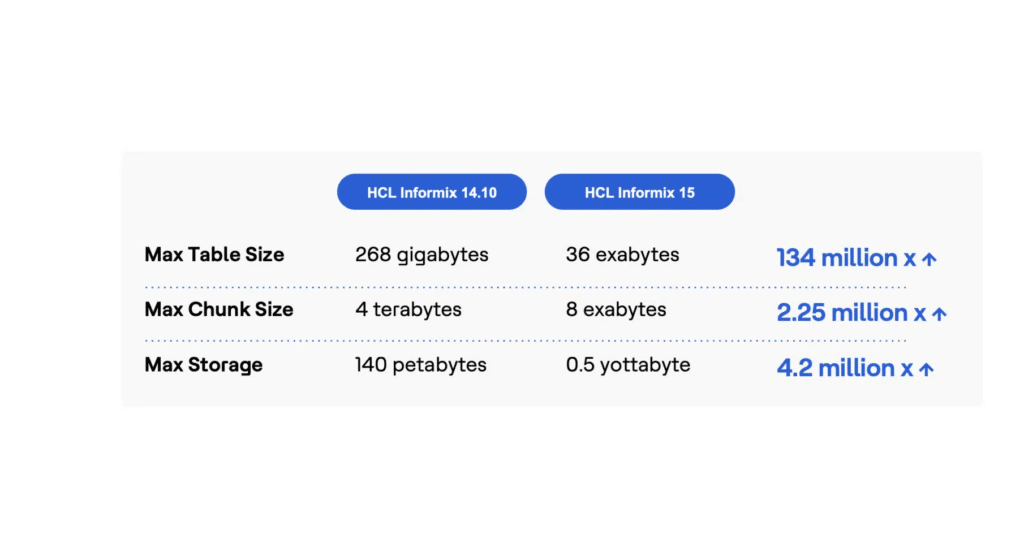
  • Larger row and page addresses that enhance scalability for large-scale data storage and processing. The new maximum capacity for a single instance is four times the estimated size of the internet.
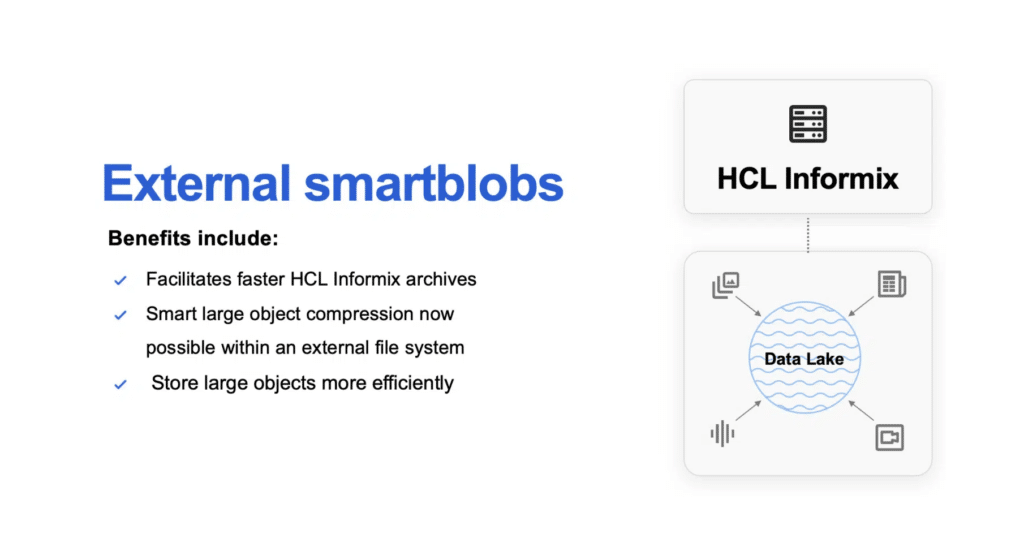
  • External smartblobs enables the storage of binary large objects like static documents, videos and photos in an external file system to facilitate faster archiving.
  • Invisible indexes help developers and DBAs fine-tune queries by identifying which indexes are critical to specific queries by flexibly omitting them to see if they impact query runtime. 

These capabilities fortify HCL Informix’s already solid foundation to underpin the next generation of mission-critical applications. They reflect our vision for a more powerful offering that guarantees seamless business continuity and secures the longevity of your organization’s existing applications.

HCL Informix 15 now includes cloud-enabled product capabilities including a Kubernetes containerization deployment option and updated REST APIs (previously only available in HCL OneDB). For customers using HCL OneDB 1.0 and 2.0, we will adhere to the announced lifecycle dates and work with you on a recommended in-place upgrade to HCL Informix.

HCL Informix customers like Equifax are looking forward to taking advantage of these new capabilities to improve their business use cases in the near future.

“HCL Informix 15 will empower Equifax to quickly process a steady stream of payments, claims decisions, tax verifications, and more, enabling us to make data-driven decisions,” said Nick Fuller, Associate Vice President of Technology at Equifax. “Its capacity to handle vast amounts of data gives us confidence in its ability to meet our demand for rapid and efficient processing.”

Watch the Webinar >

HCL Informix: Building an Advanced Database for Modern Enterprise Applications

4GL: Easily maintain and recompile existing 4GL applications

hcl-informix-4gl

While many IBM Informix customers are familiar with 4GL, Actian is now offering HCL Informix 4GL and HCL Informix SQL for the first time.  HCL Informix customers can leverage 4GL and ISQL to develop and debug applications, including building new menus, forms, screens, and reports with ease. 4GL reduces the time it takes to build and maintain HCL Informix applications and perform database operations like querying, updating, and managing data. Informix 4GL has a powerful report writer that enables the creation of complex reports. This capability is particularly useful for generating business reports from data stored in HCL Informix.

HCL Informix 4GL accelerates the building of applications such as:

  • Accounting Systems: Track money owed by and to the business, including invoicing, payment processing, and reports.
  • Inventory Management Systems: Manage storage locations, stock movements, and inventory audits.
  • Human Resources Systems: Maintain detailed records of employee information, performance, and benefits. 

HCL Informix 15 Server Re-Architected for Massive Storage Capacity Improvement

Larger Row and Page Addresses: Manage Large Data Sets Without Compression

Have peace of mind knowing that data volume limitations are an issue of the past with HCL Informix 15. That means improved reliability and better use of resources because organizations won’t need to compress or fragment tables.

When Informix Turbo launched in 1989, Informix architects believed 4 bytes would more than suffice for uniquely addressing each row so each page could hold a max of 255 rows and each table could have a maximum of 16.7 million pages. Now, some of the largest HCL Informix customers are pushing those original limits to their edge.  While it is possible to fragment tables to get around the max page limit, that’s an imperfect solution at scale. So we’ve expanded storage limits dramatically so max storage capacity is half a yottabyte, four times the estimated size of the internet.

large-data-sets-hcl-informix

External Smartblobs: Store Large Objects With Ease

external-smartblobs
Large objects like video or audio have traditionally been difficult for transactional databases like HCL Informix to manage because they need to be compressed to store the object efficiently, which takes time.

With HCL Informix 15, external Smartblobs enable developers to store the objects in a file system, while only keeping a record of the metadata. Instead of compressing the data, users can now create a special smartblob space to store the file metadata, with the object files stored externally.

External Smartblobs delivers benefits across a variety of use cases including:

  • Quality Assurance: Analyze how well a real-time monitoring system built on HCL Informix detects faulty products on an assembly line. Auditors can identify the product that was discarded in the metadata to find the image files of the faulty product without impacting the underlying application. 
  • Tax Authority: Tax administrators need to capture tax returns in case they need to audit a company or individual. They can store the static tax return documents with a specific ID and access them through the HCL Informix application just by using the metadata.

Invisible Indexes: Optimize Your Queries Faster

Indexes are special data structures that improve the speed of data retrieval operations on a database table. They work similarly to an index in a book, allowing the database to find and access the data faster without having to scan every row in a table. However, not every index will be used for the queries in an application. HCL Informix 15 enables users to make certain indexes invisible when running an application to help test which indexes impact queries and which ones do not for better operational efficiency.

Invisible indexes support real-world use cases such as:

  • E-commerce Platforms often deal with large volumes of transactions and queries. Invisible indexes can be used to test and optimize query performance without disrupting the shopping experience.
  • Healthcare System databases require efficient data retrieval for patient records and research. Invisible indexes can help optimize these queries without affecting the overall system.
  • Customer Relationship Management (CRM) systems handle vast amounts of customer data. Invisible indexes can be used to improve the performance of specific queries related to customer interactions and their history.

Start Your Modernization Project With HCL Informix 15

The Actian team is ready to support you as you get started on your modernization project with HCL Informix 15. 

Check out the on-demand webinar “Secure Your Future with HCL Informix® 15” to learn more about HCL Informix 15. Also, see how your peers are using HCL Informix to modernize their applications. Plus, wait until the end to hear about our limited one-time offer.

Watch the Webinar >

Additional Resources: 

Informix is a trademark of IBM Corporation in at least one jurisdiction and is used under license.

Blog | Data Intelligence | | 7 min read

The Game-Changing Data Intelligence Platform for Data Democratization

data democratization concept cubes

Managing, discovering, and utilizing all relevant data effectively is a critical challenge for organizations, regardless of their industry. As both data volumes and the number of sources grow, so does the complexity of organizing and accessing that information, especially when it resides across disparate systems and platforms.

Actian Data Intelligence Platform is designed to address these challenges head-on. It enables both technical and non-technical users to quickly and efficiently find, access, and trust enterprise data, regardless of where it’s stored.

What Sets the Actian Platform Apart for Data Democratization?

Actian Data Intelligence Platform is a comprehensive metadata management solution that streamlines data governance, simplifies data discovery, and manages vast data assets. It’s built with flexibility and ease-of-use at its core, catering to both data professionals and everyday data users who don’t have advanced IT skill sets.

One benefit that sets the platform apart is its ability to automate processes, ensuring that organizations can keep pace with their rapidly evolving data environment without extensive manual effort. The platform is powered by two essential applications:

  1. Studio. This application is geared toward data professionals, including chief data officers (CDOs), data engineers, data stewards, and data governance teams. It is designed to make data documentation easy and automated, allowing teams to enrich and manage their data with precision. Users can curate data assets, ensuring they are well-organized and readily accessible.

For organizations struggling with the complexity of metadata management, Studio simplifies the process by automating the collection and curation of data, reducing manual overhead and increasing accuracy. Data stewards, in particular, can use the platform to ensure that their organization’s data is both trustworthy and compliant with internal and external regulations.

  1. Explorer. This application is designed for everyday users, making data exploration and discovery simple and intuitive. Whether users are data scientists, analysts, or business stakeholders, the platform allows them to find relevant data quickly and easily. Its interface is user-friendly, ensuring that even those without a deep technical background can access the data they need to make informed decisions.

The self-service nature of Explorer is one of its standout features. It allows business leaders and data teams to access data when they need it, streamlining workflows and accelerating decision-making across departments.

4 Key Differentiators Empower Data-Driven Organizations

Four primary features distinguish the Actian Data Intelligence Platform from other data management solutions, making it a top choice for modern organizations:

  1. API-Based Automation. The solution is a fully API-driven platform, which means that organizations can automate their entire data cataloging process. This level of automation reduces the need for manual updates and ensures that the data catalog stays up-to-date as the data environment evolves. This automation also helps scale metadata management across complex environments with ease.
  2. Universal Connectivity. Actian Data Intelligence Platform supports a wide range of data sources, from traditional databases to cloud services. This universal connectivity makes it an incredibly versatile tool, capable of managing diverse data types across multiple platforms. Organizations with hybrid data environments can also rely on the Actian Data Intelligence Platform to seamlessly discover and manage all their data assets in one place.
  3. Powerful Knowledge Graph. A comprehensive knowledge graph enables a progressive design for data discovery. As data needs grow, the knowledge graph adapts, helping uncover relationships between data points, enriching the overall understanding of data assets. This dynamic feature provides deeper insights and allows organizations to maximize the value of their data.
  4. Intuitive User Experience. The platform is designed with simplicity in mind. It requires no training to use, making it accessible for users of all levels. Whether users are experienced data professionals or business analysts, it offers an experience that is both intuitive and powerful, allowing for quick adoption and effective use across the organization.

Modern Capabilities to Advance Data Discovery

A data discovery platform like the Actian solution is essential for unifying, governing, and leveraging data effectively. In addition to meeting organizations’ needs for data intelligence, the Actian Data Intelligence Platform offers a variety of innovative capabilities that ensure data is connected, compliant, and easily accessible:

  • Business Glossary. Actian’s Business Glossary allows organizations to establish a consistent business language across all data consumers. This feature is crucial for ensuring that everyone in the organization is working from the same definitions and standards, fostering collaboration and transparency. Teams can easily define rules, set policies, and visualize relationships between business terms through an intuitive, automated interface.
  • Data Compliance. In an era of increased regulation, data compliance is critical. Actian helps organizations stay compliant with regulations by detecting personal information and providing suggestions on how to tag and manage sensitive data. This capability allows data stewards to handle compliance issues with greater autonomy, ensuring that data usage across the organization adheres to legal requirements.
  • Data Discovery. The Actian platform takes inspiration from marketplaces and e-commerce websites, offering smart search capabilities that allow users to find the data they need quickly and efficiently. Whether users know exactly what they are looking for or are exploring potential use cases, the platform’s data discovery capabilities provide smart recommendations and a 360-degree view of relevant data.
  • Data Governance. The platform’s data governance capabilities help drive business initiatives by ensuring that data is trusted, secure, and compliant. Actian’s approach to governance is collaborative and non-intrusive, adapting to the specific needs of each organization and ensuring that data governance evolves with the organization’s data landscape.
  • Data Lineage. Actian provides comprehensive data lineage capabilities, allowing data teams to map the entire lifecycle of data, from collection to storage and use. This context-rich view helps organizations understand their data’s origins, relationships, and evolution over time, which is critical for regulatory compliance and improved analytics.
  • Data Quality. Through its ability to connect with data quality management (DQM) solutions, the Actian platform provides users with data quality metrics during the discovery phase. This ensures that teams can trust the data they are working with, avoiding risks and driving better outcomes.
  • Data Shopping. Similar to an online shopping experience, Actian’s Enterprise Data Marketplace allows users to browse, request, and gain access to relevant datasets with ease. This intuitive data shopping experience democratizes data access across the organization, empowering users to leverage data for strategic decision-making without needing to be data experts.
  • Data Stewardship. The platform helps data stewards manage large volumes of data by automating data documentation and enhancing metadata management. Data stewardship reduces the burden on data teams, increases productivity, and ensures that organizations can maintain high data standards without the need for extensive manual input. 

Make Data Usable and Accessible to Everyone

At its core, Actian is a smart data intelligence platform that enables organizations to find, trust, and unlock the value of their enterprise data. By offering both technical and non-technical users the tools they need to access and understand their data, the platform empowers informed decision-making, drives productivity, and fosters collaboration.

With capabilities such as Studio and Explorer, organizations can maximize the value of their data while maintaining governance and compliance. Whether it’s enriching data, ensuring regulatory compliance, or democratizing access to data across the enterprise, the platform provides a scalable, flexible solution that adapts to the evolving needs of today’s data-driven businesses. Experience it for yourself with a live tour.


In today’s digital age, data has become the new currency. It powers decisions, strategies, and operations across industries. However, managing data effectively is far from simple. The complexity of modern data environments is a significant roadblock to driving tangible business outcomes, despite the substantial investments made in data and analytics.

The Disconnect Between Data and Business Outcomes

Many organizations invest heavily in data technologies, expecting this will lead to improved business performance. Yet a common challenge persists: Despite all the data at their disposal, companies are still struggling to convert that data into meaningful, high-value outcomes. This disconnect stems from the overwhelming complexities of data, particularly as organizations attempt to scale their data initiatives.

Scaling brings new hurdles. Companies relying on legacy systems or outdated methodologies often find themselves bogged down by complex data architectures and cumbersome workflows. As the volume of data grows, so do the complexities of managing, governing, and leveraging it effectively. Manual processes and legacy tools simply cannot keep pace with the demand for real-time insights and actionable information.

In addition, many organizations fail to modernize their approach to data and analytics governance, which is crucial for a successful digital transformation and fully optimizing data. Without proper governance, data becomes fragmented, difficult to access, and ultimately less valuable to the business. These issues lead to costly projects that either fail outright or deliver a low return on investment (ROI), causing businesses to miss critical opportunities.

Benefit From the Exponential Growth of Data

One of the most pressing challenges organizations face today is the exponential growth of data, coming from more sources than ever. Data flows from countless sources, including:

  • Internal systems
  • Cloud services
  • Customer interactions
  • IoT devices
  • Social media
  • Other sources

This data influx places immense pressure on traditional tools and methods, which are proving to be insufficient in managing, governing, and securing vast amounts of data. As data grows in volume and variety, so does the need for automation. That’s because manual processes can no longer handle the scale required to keep data accurate, secure, and accessible. Information gaps arise, and organizations miss out on valuable insights that could drive competitive advantage.

This places a growing need for a data intelligence solution. Additionally, there is increased awareness that without a streamlined, automated approach to data intelligence, organizations won’t be able to effectively manage their expanding data landscape.

The Three Critical Questions of Data Management

At the heart of data management challenges are three critical questions that every organization must address to optimize the full potential of their data:

  1. Where is my data? Data is often scattered across multiple systems, departments, and geographic regions. Without a unified view, it’s nearly impossible to leverage data effectively. Siloed data environments hinder innovation and slow down decision-making processes.
  2. Can I trust my data? Data quality remains a major issue for many organizations. In fact, many companies don’t measure the financial cost of poor data quality, which makes it difficult to determine how inadequate data is impacting the business. When data is inaccurate or incomplete, it undermines decision-making and leads to inefficiencies. Trustworthy data is ultimately the foundation of trustworthy business decisions.
  3. Can I easily access the data? At many companies, access to data is often restricted due to compliance rules, security measures, or siloed systems. This lack of access prevents teams from fully leveraging the data needed to innovate and respond to market changes quickly. Data should be readily available to every person and application that needs it.

Key Capabilities of a Modern Data Intelligence Platform

Addressing data challenges requires a comprehensive solution that centralizes, verifies, and governs data efficiently. This is where a data intelligence platform that democratizes data across the organization becomes essential.

A data intelligence platform provides a unified approach to managing, governing, and leveraging data, regardless of where it’s stored. It aligns data practices with business objectives, ensuring that data is accurate, secure, and accessible when needed. It addresses the key aspects of data management:

  • Data Integration. Connecting data from various sources into a single, unified view is mandatory for making informed decisions. A data intelligence platform integrates data seamlessly, providing a holistic view of all data assets across the organization.
  • Data Quality. Maintaining data accuracy, consistency, and reliability is critical to ensuring trustworthy insights. A data intelligence platform automates data quality processes, including cleansing, monitoring, and enrichment, to ensure that data remains useful and accurate.
  • Data Governance. Effective data governance is crucial for managing data security, privacy, and compliance. A data intelligence platform helps establish and enforce data governance policies, ensuring that data is used appropriately and remains protected.
  • Analytics and Insights. A data intelligence platform enables analytics and machine learning capabilities, empowering organizations to extract valuable insights from their data. This allows for predictive and prescriptive decision-making, helping businesses stay ahead of the competition.
  • Data Cataloging. Metadata management is a key component of any data intelligence platform. By cataloging data assets, a platform makes it easier for users to discover, understand, and access the data they need, even without deep technical expertise.
  • Self-Service Capabilities. Data professionals, business users, and decision makers need the ability to access and analyze data without relying on IT teams or advanced skill sets. A data intelligence platform empowers users with self-service tools, making it easier to derive insights and act on them quickly.

The Business Impact of Data Intelligence

Implementing a data intelligence platform has a direct impact on operational efficiency and business outcomes. When employees spend less time searching for and cleaning data, they can focus on using that data to drive innovation and deliver value. This operational efficiency translates directly into revenue potential.

Likewise, trust in data also leads to confidence in the decisions derived from it. With trustworthy data, organizations can move faster, capitalize on market opportunities, and make strategic pivots when necessary.

Data governance, a core component of data intelligence, also ensures compliance with privacy and security regulations, protecting sensitive data and minimizing risk. In addition, good data leads to better business outcomes. Accurate forecasts, informed decisions, and faster responses to changing market conditions all stem from having the right data at the right time.

Solving Complexity With the Right Data Intelligence Platform

Managing data in today’s digital landscape is complex, but with the right tools, organizations can overcome the challenges of scale, governance, and data quality. A data intelligence platform, like the Actian Data Intelligence Platform, provides a comprehensive solution for integrating, managing, and leveraging data across the enterprise.

By addressing the critical questions of data management—where is data, can it be trusted, and can it be easily accessed—a data intelligence platform unlocks the full potential of an organization’s data. This allows businesses to drive operational efficiency, improve decision-making, and deliver better business outcomes.

In a world where data is the new currency, investing in a data intelligence platform is business-critical. To find out more, take a Product Tour