
BARC x Actian Research: Why Organizations are Investing in Data Products



Key Takeaways
- Organizations adopt data products primarily to ensure trustworthy data for AI (60%) and decision-making (59), not just to improve access.
- AI initiatives are increasing the need for reliable, consistent, and well-governed data inputs.
- Data products and data contracts provide structure through ownership, quality standards, and stable data interfaces.
- Regulatory pressure is accelerating adoption, especially in industries requiring strong governance and traceability.
Insights from the 2026 BARC x Actian global research study of 300+ enterprise data leaders
Organizations across industries are investing heavily in AI. Yet many initiatives still struggle to move beyond experimentation and deliver consistent business value.
To better understand what separates AI initiatives that scale from those that stall, Actian partnered with BARC, a leading global analyst firm for data and analytics, to conduct a global research study of enterprise data leaders.
Based on insights from more than 300 respondents across industries and regions, the study examines how organizations adopt and operationalize data products and data contracts, and how these approaches influence the success of AI initiatives.
One of the most revealing insights from the research is why organizations are adopting data products in the first place.
 BARC × Actian Global Research Report (2026)
Trustworthy Data is the Primary Driver of Data Product Adoption
The research shows that organizations are not adopting data products primarily to increase data access. Instead, the strongest motivation is trust.
When respondents were asked about the main drivers for implementing data products, two factors clearly dominated:
- Trustworthy inputs for AI systems (60%).
- Trustworthy inputs for decision-making (59%).
These two drivers ranked significantly higher than traditional objectives such as improving data accessibility or enabling broader data democratization.
This finding reflects a shift in how organizations think about data management. Earlier waves of data modernization focused heavily on enabling data access across the organization. While accessibility remains important, enterprises increasingly recognize that reliable outcomes require reliable data foundations.
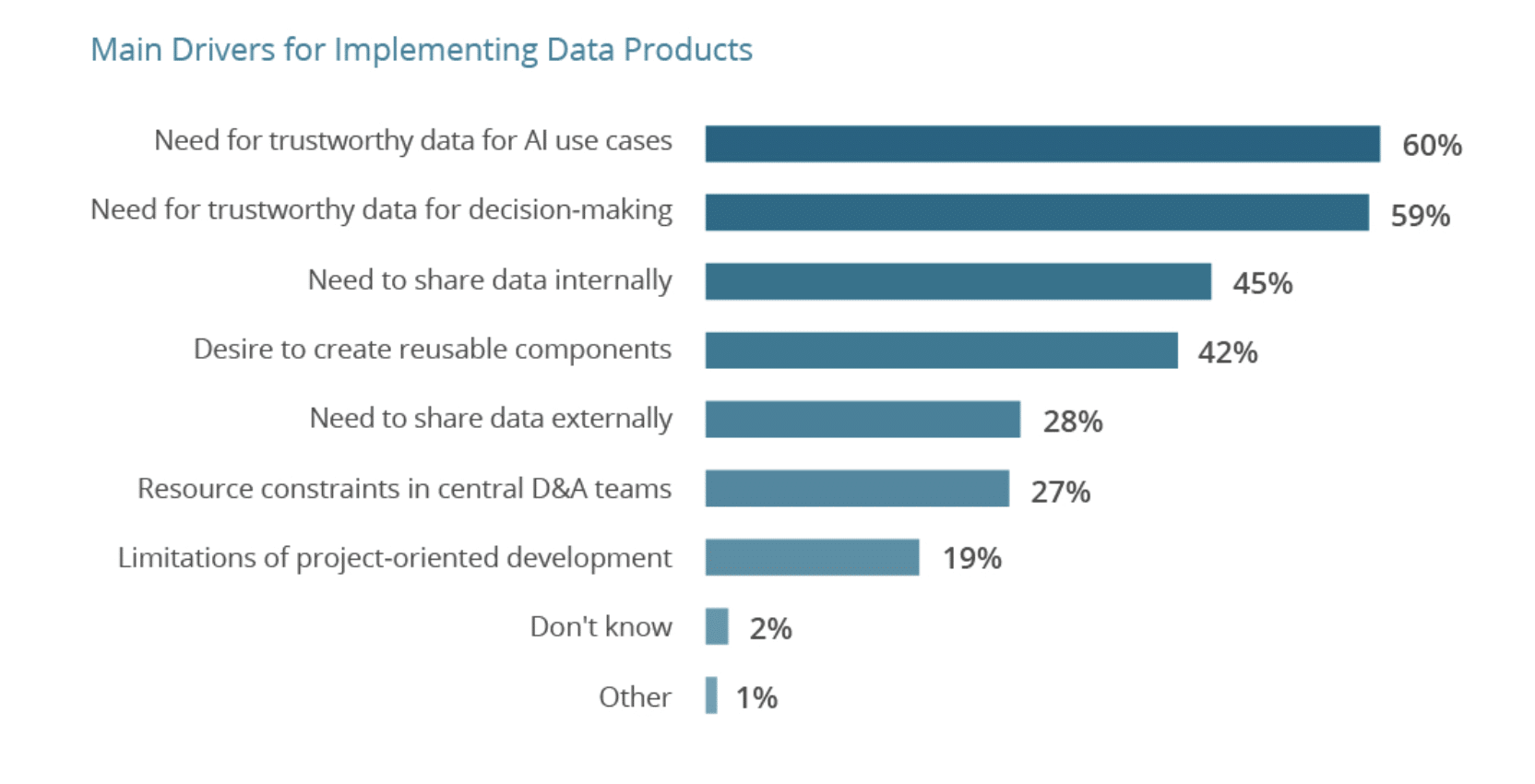
What are the main drivers for implementing data products? – © BARC 2026
AI is Raising the Stakes for Data Reliability
The growing importance of trustworthy data is closely linked to the rapid rise of AI initiatives.
AI systems are highly sensitive to the quality and consistency of their inputs. Inconsistent datasets, unclear ownership, or undocumented changes to data structures can quickly undermine model performance and erode trust in AI-driven decisions.
As organizations expand their AI initiatives, they increasingly require data environments that provide:
- Clear ownership and accountability.
- Defined data quality standards.
- Stable interfaces between data producers and consumers.
In many organizations, data contracts formalize these expectations between producers and consumers, helping ensure that changes to data structures or quality standards do not disrupt downstream AI and analytics systems.
Data products help provide this structure by organizing data assets as managed products with defined governance, quality expectations, and reusable interfaces.
These characteristics make data products particularly well-suited to support AI systems operating at enterprise scale.
Regulation is Accelerating Data Product Adoption
Another important factor influencing adoption is regulatory pressure.
Highly regulated industries—including financial services, healthcare, and energy—are among the earliest adopters of data product approaches. These sectors have long been required to maintain strong data governance, traceability, and compliance controls.
As regulatory requirements around data usage, privacy, and AI transparency continue to expand, many organizations are formalizing their data management practices. Data products provide a practical way to meet these expectations by introducing clearer ownership, standardized data definitions, and stronger governance mechanisms.
In this context, regulatory requirements often act as a catalyst for the adoption of structured data management approaches, such as data products.
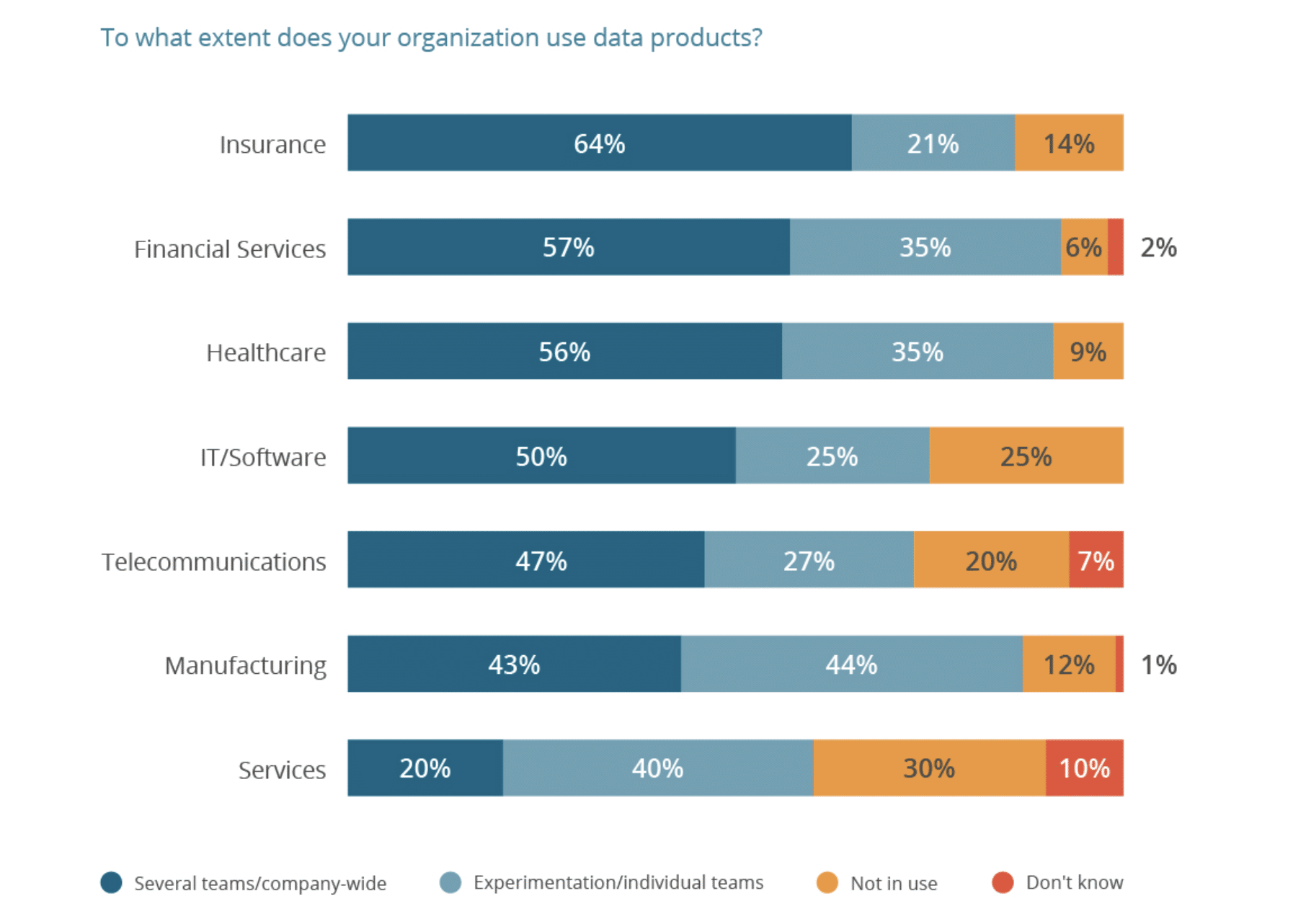
Adoption of data products varies by industry – © BARC 2026
Download the Full Research Report
This article introduces several key insights from the BARC x Actian global research study.
The full report, Data Products and Data Contracts in 2026: The Foundation for AI Success, explores how organizations across industries and regions are adopting and operationalizing data products and data contracts—and how these practices influence AI maturity, governance, and real-world outcomes.
Get the full report to explore the findings and learn how leading organizations are scaling AI with data products.
Download Full Report
Stay connected
Data insights delivered to you.
(i.e. sales@..., support@...)
