
One knowledge graph. Every data source.
Our federated knowledge graph connects your entire data environment into a single intelligence layer without forcing every domain to give up control. Better search, better governance, better AI.

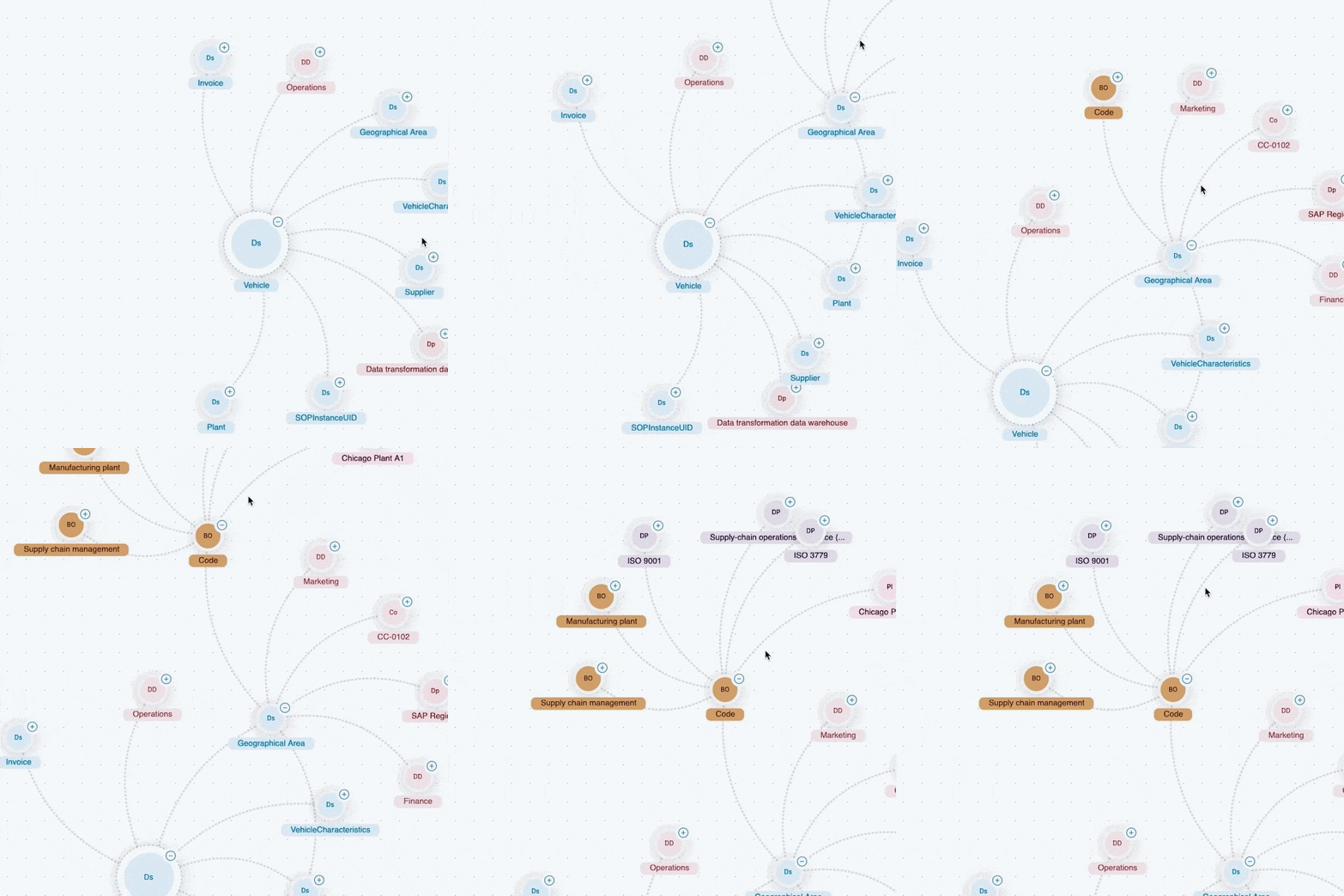







Your data is everywhere—your AI can only use what it can find and understand
of organizations argue over whose data is correct due to inconsistent definitions
Source: Gartner
hours lost per employee every week searching for siloed data
Source: Forrester
of CIOs will adopt federated governance models to accelerate AI adoption by 2026
Source: IDC
Know your data so you can trust your AI

Make compliance easier
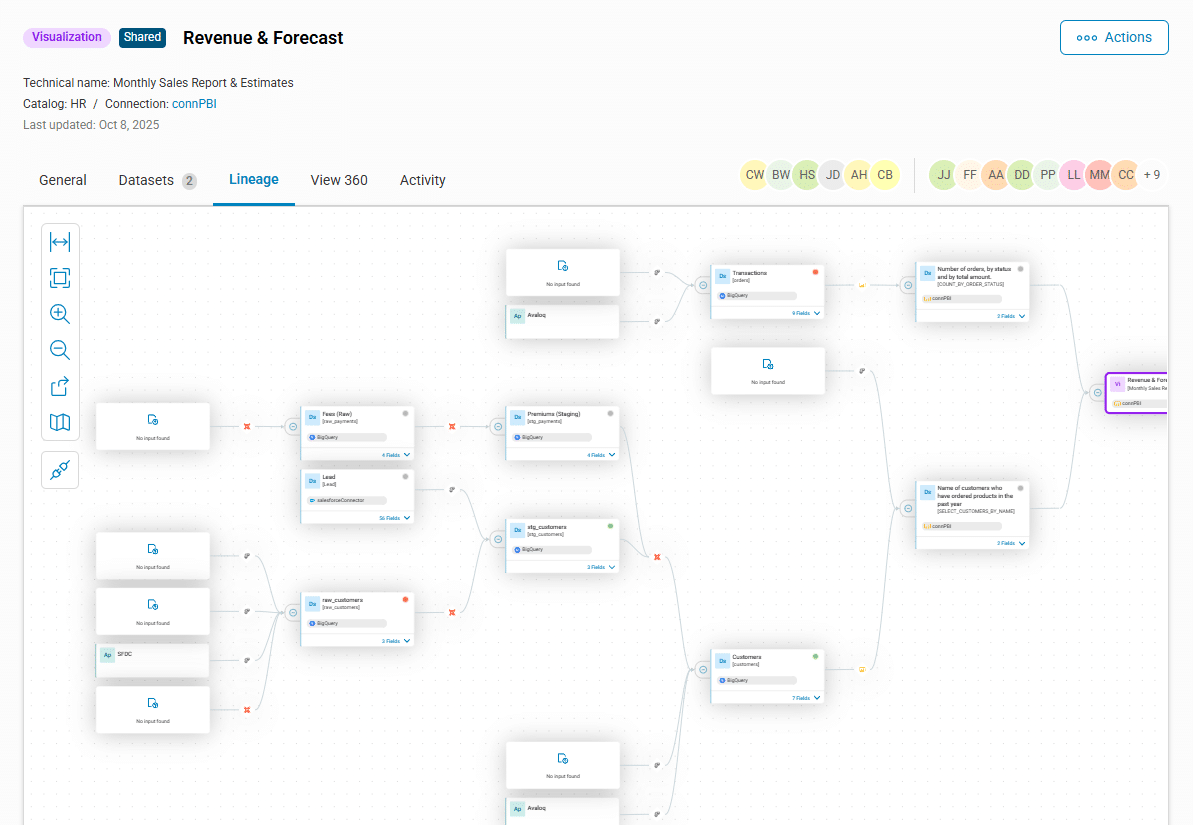
End-to-end relationship mapping and data lineage give compliance teams the traceability they need, without manual documentation.

Enable self-service analytics
An enterprise data marketplace with trusted and governed data products means your users can find the data they need for self-service analytics, fast.

Stop AI guesses
AI agents work from shared, approved business definitions rather than inferring meaning from column names and table structures.

Centralize definitions
Federated architecture lets every domain own its data while contributing to a unified semantic layer. No waiting on one team to model and publish everything.
One federated knowledge graph, built for every team that touches your data

Data discovery
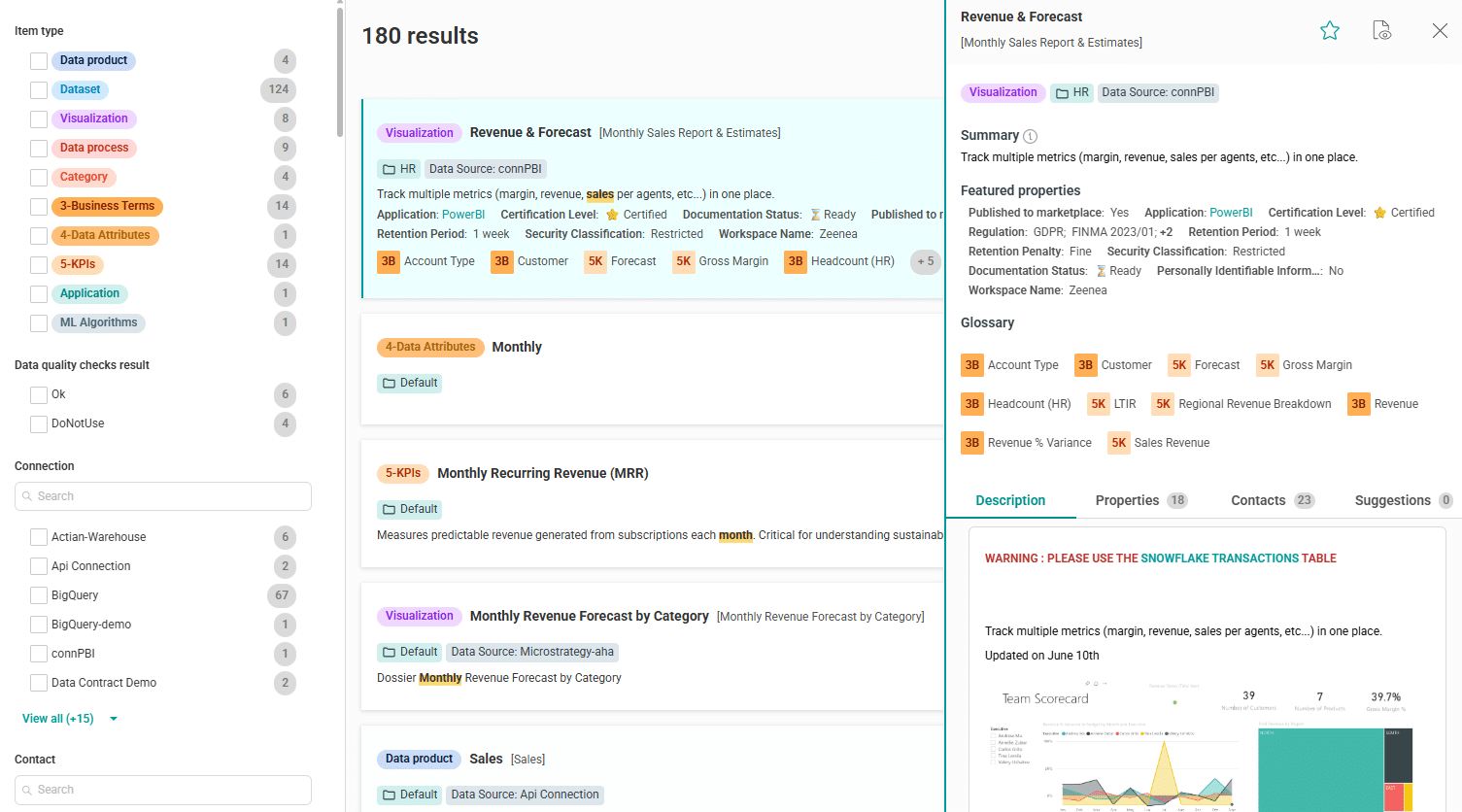
- Smart search: Concept-based search across all your metadata, powered by the knowledge graph. Users find what they’re looking for on the first try because search understands relationships between concepts, not just string matches across table names.
- Natural language: Business users query data in plain language through Actian AI Analyst, which automatically grounds its answers in the business definitions, glossary terms, and metadata maintained in your Data Intelligence Platform catalog.
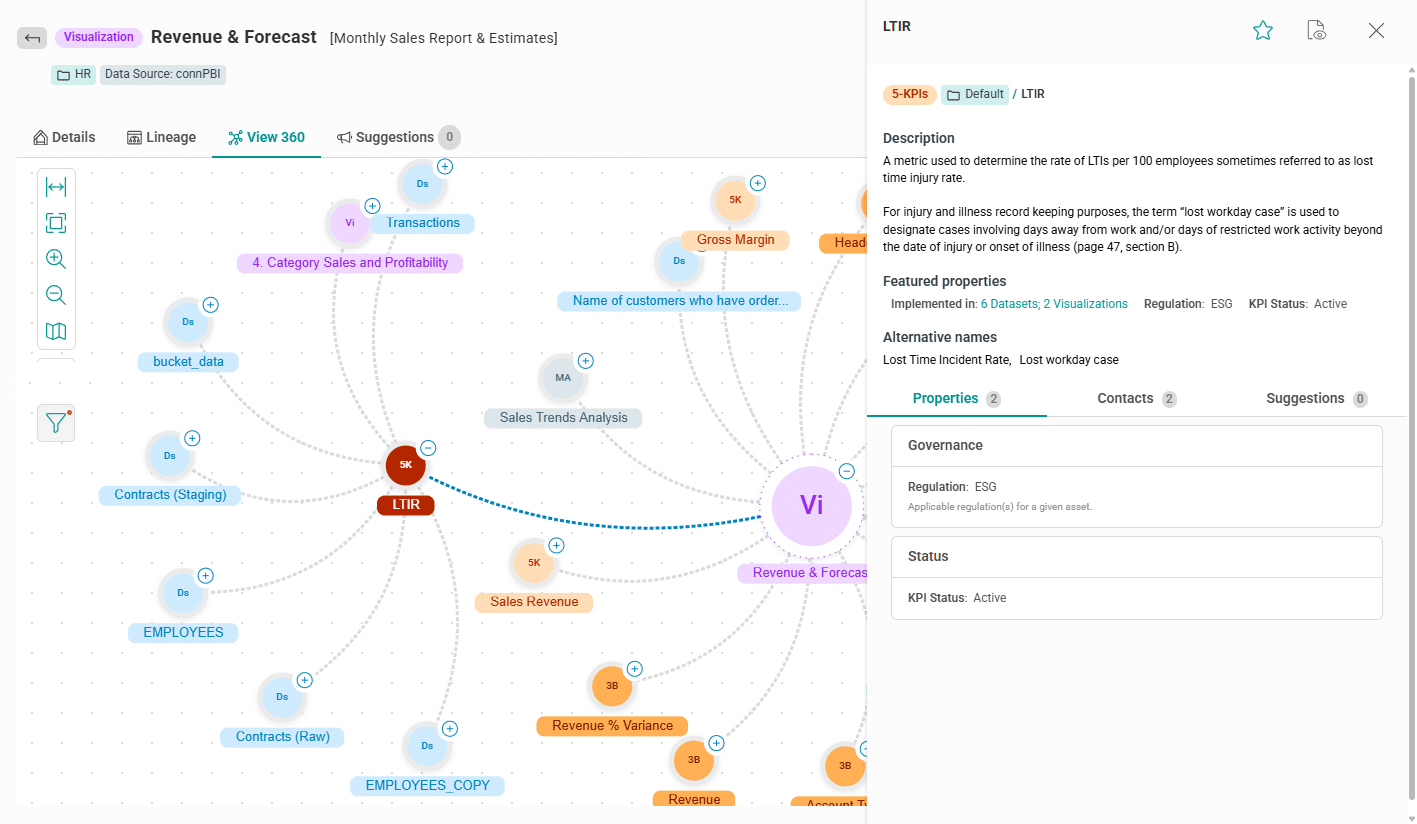
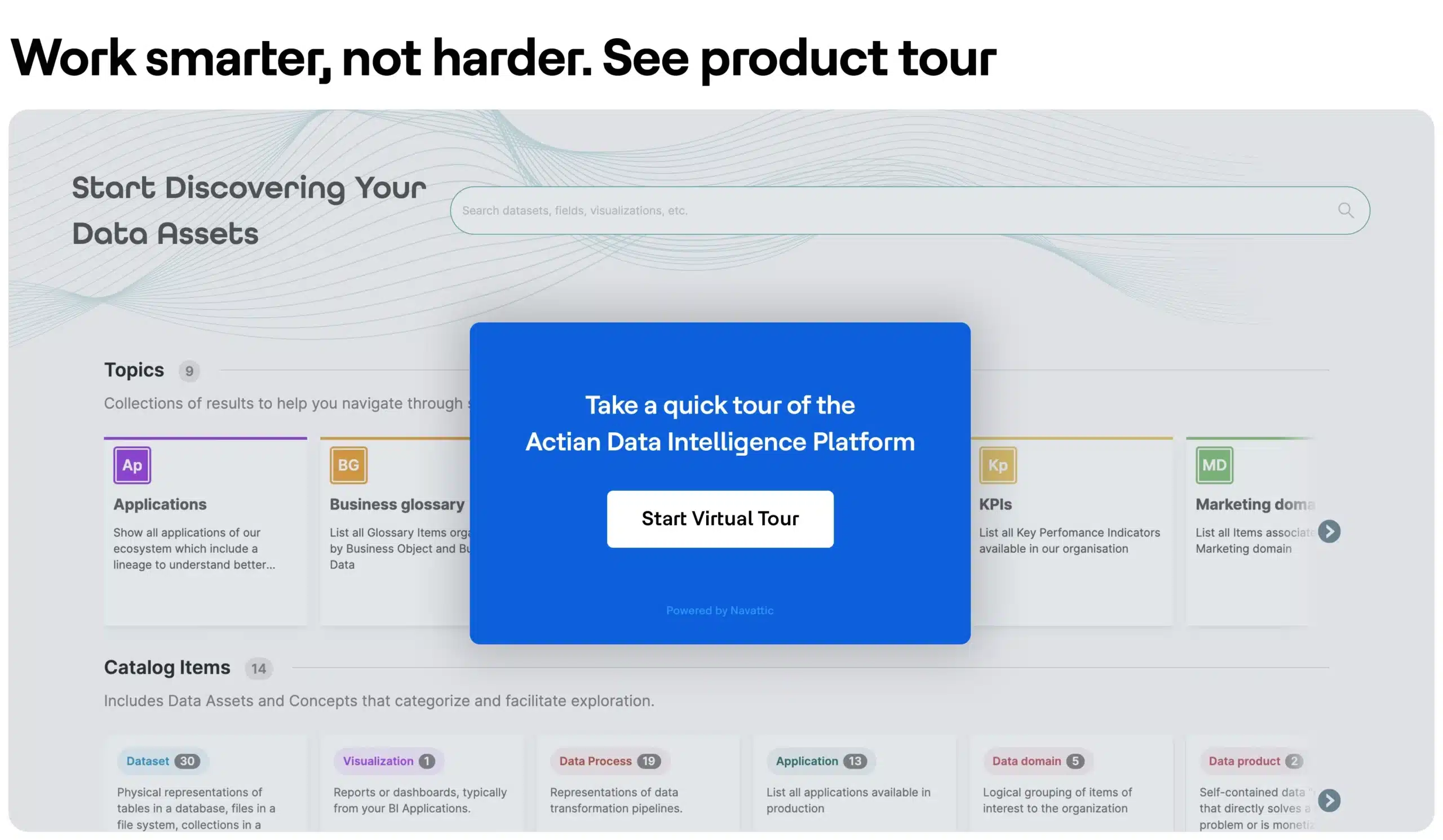
- Interactive exploration: Visually explore the relationships between your datasets and catalog entities directly in the knowledge graph. Click any item to see its documentation, related assets, and metadata in full context.
- AI assistance: Built-in AI assistance for categorization, tagging, and automated metadata discovery and synchronization keeps your graph current and your data more discoverable.
- Enterprise data marketplace: Business users accelerate self-serve analytics with context and confidence when they select verified data products from the enterprise data marketplace, without filing a ticket.
Data governance
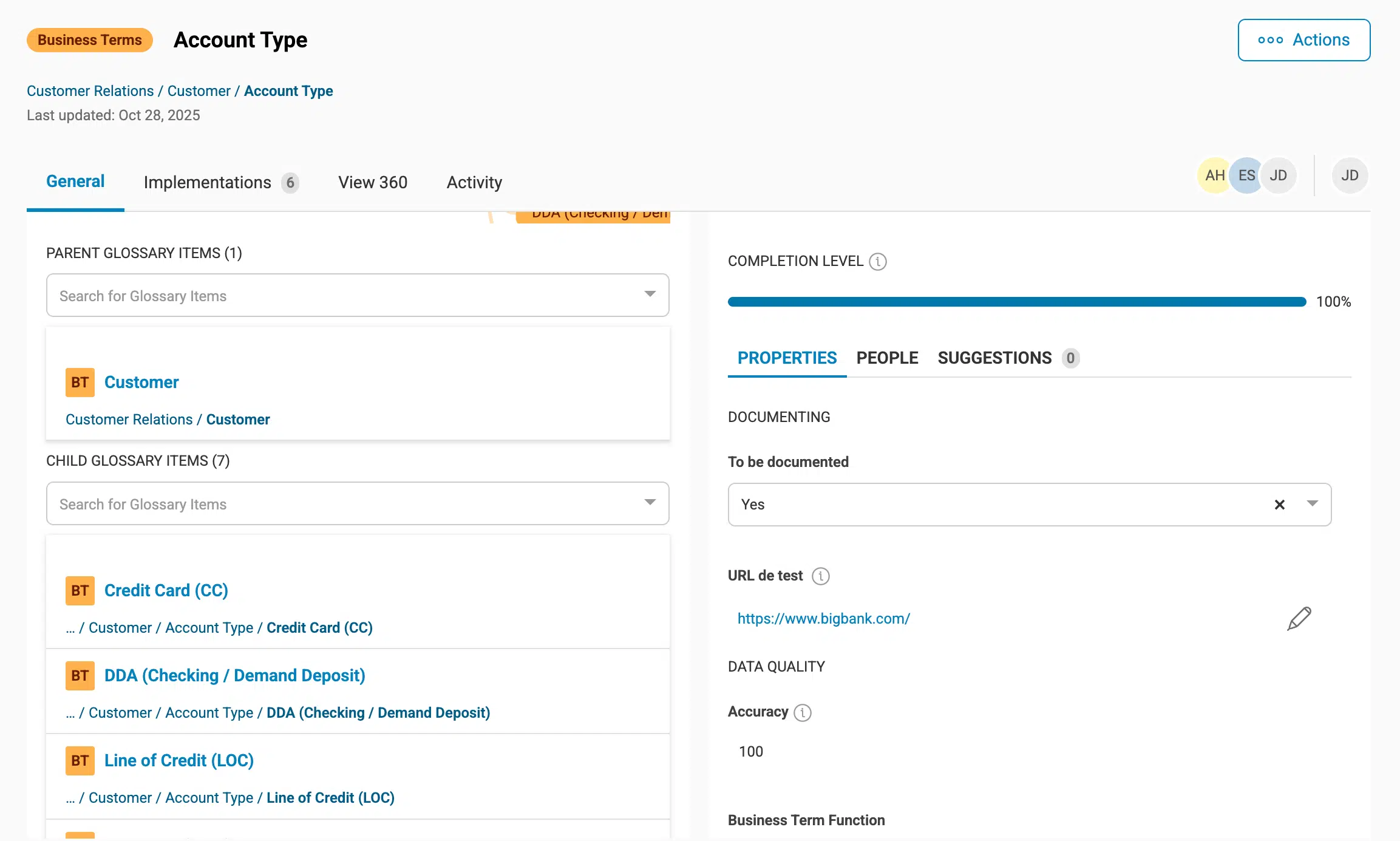
- Shared definitions: Centralized KPI and business definitions in Actian’s data catalog ensure that across departments and AI projects alike, calculating the same metric produces the same result—every time.
- Defined relationships: Map how datasets connect to business processes, compliance requirements, and analytical goals so users discover both the data and the understanding needed to use it effectively.
- Flexibility for growth: Ontology management and comprehensive taxonomy accommodate new platforms, evolving schemas, and changing pipelines without restructuring. Your knowledge graph grows as your organization does.
- Broad connectivity: Full visibility into your entire data environment with 100+ native connectors, custom connectors, and open architecture, including ODCS and ODPS standard support.
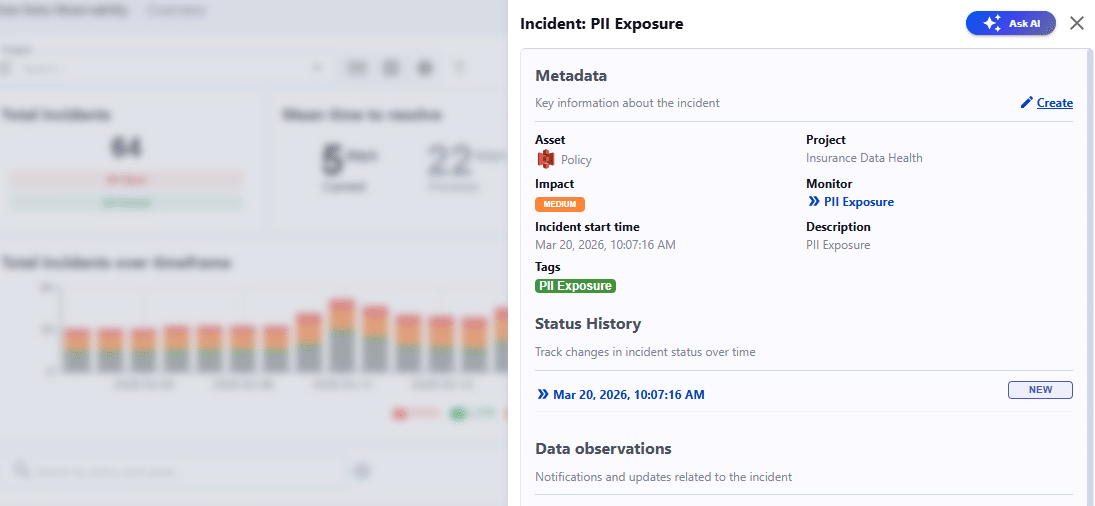
- PII and security visibility: Automatic PII flagging, security classification, and tagging tools protect sensitive data and support compliance, even across complex and distributed data environments.
AI readiness
- Unified context layer: Connect metadata, lineage, governance policies, and observability signals into a single intelligence layer across your organization. Gartner states that without knowledge graphs and semantic enrichment, data fabric implementations will not provide the rich contextual data needed to avoid hallucinations in generative AI.
- Federated for discoverability: Actian’s federated architecture lets AI systems discover and access data across organizational boundaries without compromising domain-level governance.
- Context-sourced AI Analyst: When Actian AI Analyst connects to your catalog, it automatically syncs your governed business definitions and glossary terms into its semantic layer. Answers are grounded in the real relationships your knowledge graph describes, not inferences from column names or table structures.
- MCP server: Context and data quality results made available directly in your favorite AI assistants and agent workflows via the MCP server, securely and at scale.
Data engineering
- Dynamic automated updates: New metadata and relationships are automatically discovered and incorporated, so your knowledge graph stays current without manual intervention.
- Knowledge-graph-powered lineage: Track your data’s location and movements from start to finish with lineage powered by the full relationship context of the federated knowledge graph.
- Data quality and observability: Surface data quality issues before they cause problems downstream. Proactive, shift-left quality rules deploy fast with AI assistance.
Modern data architectures
- Federated by design: Actian’s federated knowledge graph lets domain teams own and manage their data while contributing to a unified semantic layer. Data mesh, data fabric, and data product architectures all require this balance of autonomy and consistency. Actian delivers it without forcing centralization.
- Data products with context: Attach lineage, governance policies, quality scores, and business definitions to data products in the enterprise marketplace so consumers know exactly what they’re getting before they use it.
- Domain autonomy at scale: Onboard new divisions, departments, and business units over time without restructuring. The flexible catalog metamodel and support for any organizational topology mean your knowledge graph grows with your organization.
- Open standards: ODCS and ODPS support make it straightforward to import and export data products across platforms, keeping your architecture interoperable as it evolves.
- Scalable governance: A phased, iterative implementation approach means governance doesn’t require a big-bang deployment. Start with one domain, expand organically, and maintain consistency across the graph as you scale.
Every source connected and every relationship captured
More sources added to your knowledge graph means a stronger context layer, which means better data, analytics, and AI outcomes. Native support for 100+ sources, automatically discovered and kept current.
Modern data stack sources (Snowflake, Redshift, S3)
Legacy data environments (on-premise)
Semi-structured data (JSON, Parquet)
High-performance engines (Iceberg)
Specialized and NoSQL databases (Cassandra, DynamoDB)
BI tools (PowerBI, Tableau)
Every source connected and every relationship captured
More sources added to your knowledge graph means a stronger context layer, which means better data, analytics, and AI outcomes. Native support for 100+ sources, automatically discovered and kept current.
Modern data stack sources (Snowflake, Redshift, S3)
Legacy data environments (on-premise)
Semi-structured data (JSON, Parquet)
High-performance engines (Iceberg)
Specialized and NoSQL databases (Cassandra, DynamoDB)
BI tools (PowerBI, Tableau)












The world’s most data-intensive organizations run on Actian’s knowledge graph







A Knowledge Graph That Grows With Your Organization
Actian’s federated architecture means you can start with one domain and expand organically. Most teams deploy in weeks, not months.
Book a 30-minute demo to see:
- Why federation outperforms centralized models at enterprise scale.
- How concept-based search changes data discovery for business users.
- What adoption looks like in customer environments with 1,000+ weekly active users.

Request a Product Demo
(i.e. sales@..., support@...)
