
Ein Wissensgraph. Alle Datenquellen.
Unser vernetzter Wissensgraphen verbindet Ihre gesamte Datenlandschaft zu einer einzigen intelligenten Ebene, ohne dass die einzelnen Bereiche die Kontrolle abgeben müssen. Bessere Suche, bessere Governance, bessere KI.

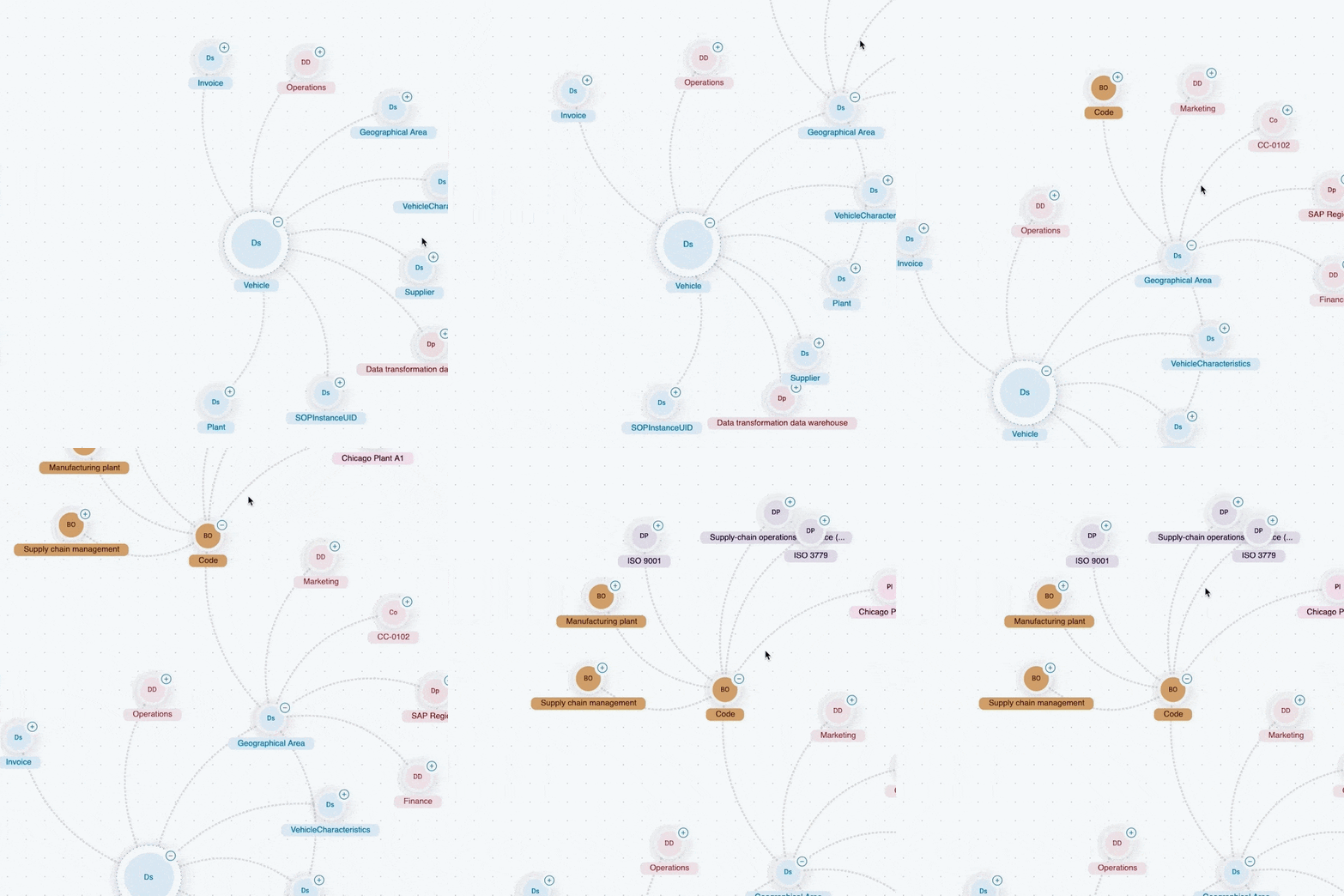







Ihre Daten sind überall – Ihre KI kann nur das nutzen, was sie findet und versteht
der Unternehmen streiten sich aufgrund uneinheitlicher Definitionen darüber, wessen Daten korrekt sind
Quelle: Gartner
Stunden Zeitverlust pro Mitarbeiter pro Woche bei der Suche nach isolierten Daten im Silo
Quelle: Forrester
der CIOs werden bis 2026 föderierte Governance-Modelle einführen, um die Einführung von KI zu beschleunigen
Quelle: IDC
Machen Sie sich mit Ihren Daten vertraut, damit Sie Ihrer KI vertrauen können

Compliance vereinfachen
Eine durchgängige Abbildung von Beziehungen und die Datenherkunft bieten Compliance-Teams die erforderliche Rückverfolgbarkeit, ohne dass eine manuelle Dokumentation erforderlich ist.

Self-Service-Analytics aktivieren
Ein Unternehmens- datenmarktplatz mit vertrauenswürdigen und kontrollierten Datenprodukten ermöglicht es Ihren Nutzern, die für ihre Self-Service-Analytics benötigten Daten schnell zu finden.

Schluss mit KI-Mutmaßungen
KI-Agenten stützen sich auf gemeinsame, genehmigte Geschäftsdefinitionen, anstatt die Bedeutung aus Spaltennamen und Tabellenstrukturen abzuleiten.

Definitionen zentralisieren
Dank der föderierten Architektur kann jede Domäne ihre eigenen Daten verwalten und gleichzeitig zu einer einheitlichen semantischen Ebene beitragen. Es muss nicht darauf gewartet werden, dass ein einzelnes Team alles modelliert und veröffentlicht.
Ein föderierter Wissensgraph
Entwickelt für alle Teams, die mit Ihren Daten arbeiten.

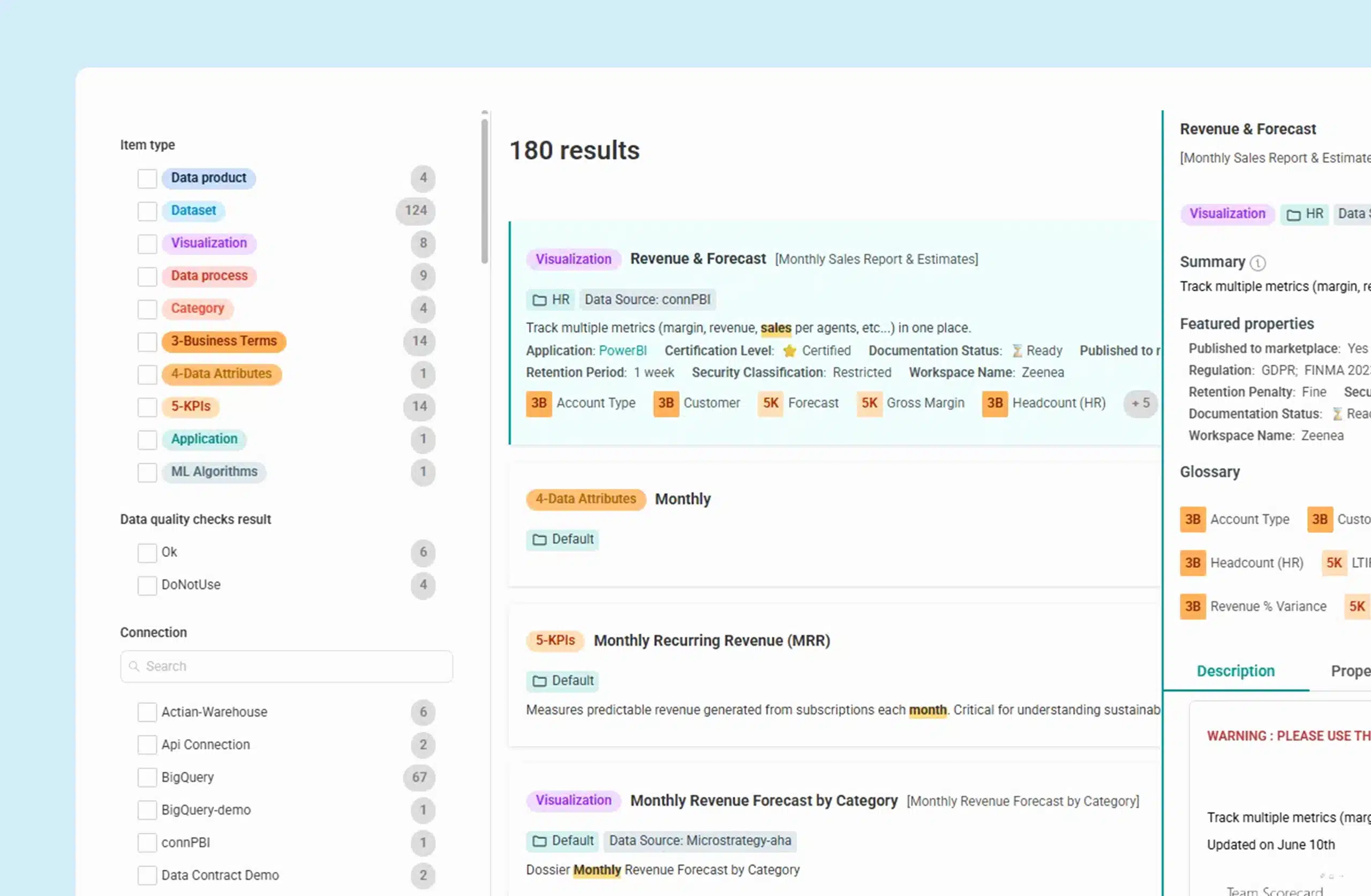
Daten-Discovery
- Intelligente Suche und interaktive Analyse: Mit der konzeptorientierten Suche finden Nutzer schnell, wonach sie suchen, und können die Ergebnisse dann im Kontext mithilfe visueller Beziehungskarten über Datensätze und Katalogressourcen hinweg erkunden.
- KI-Unterstützung: Abfragen in natürlicher Sprache über AI Analyst ermöglichen katalogbasierte Antworten. Zusätzliche KI-Unterstützung bei der Kategorisierung, der Vergabe von Tags sowie der Ermittlung und Synchronisierung von Metadaten trägt dazu bei, den Katalog auf dem neuesten Stand zu halten.
- Unternehmensdatenmarktplatz: Beschleunigen Sie Self-Service-Analysen mit Zuversicht: Wählen Sie geprüfte Datenprodukte aus dem Unternehmensdatenmarktplatz aus, ohne ein Ticket erstellen zu müssen.
Data Governance
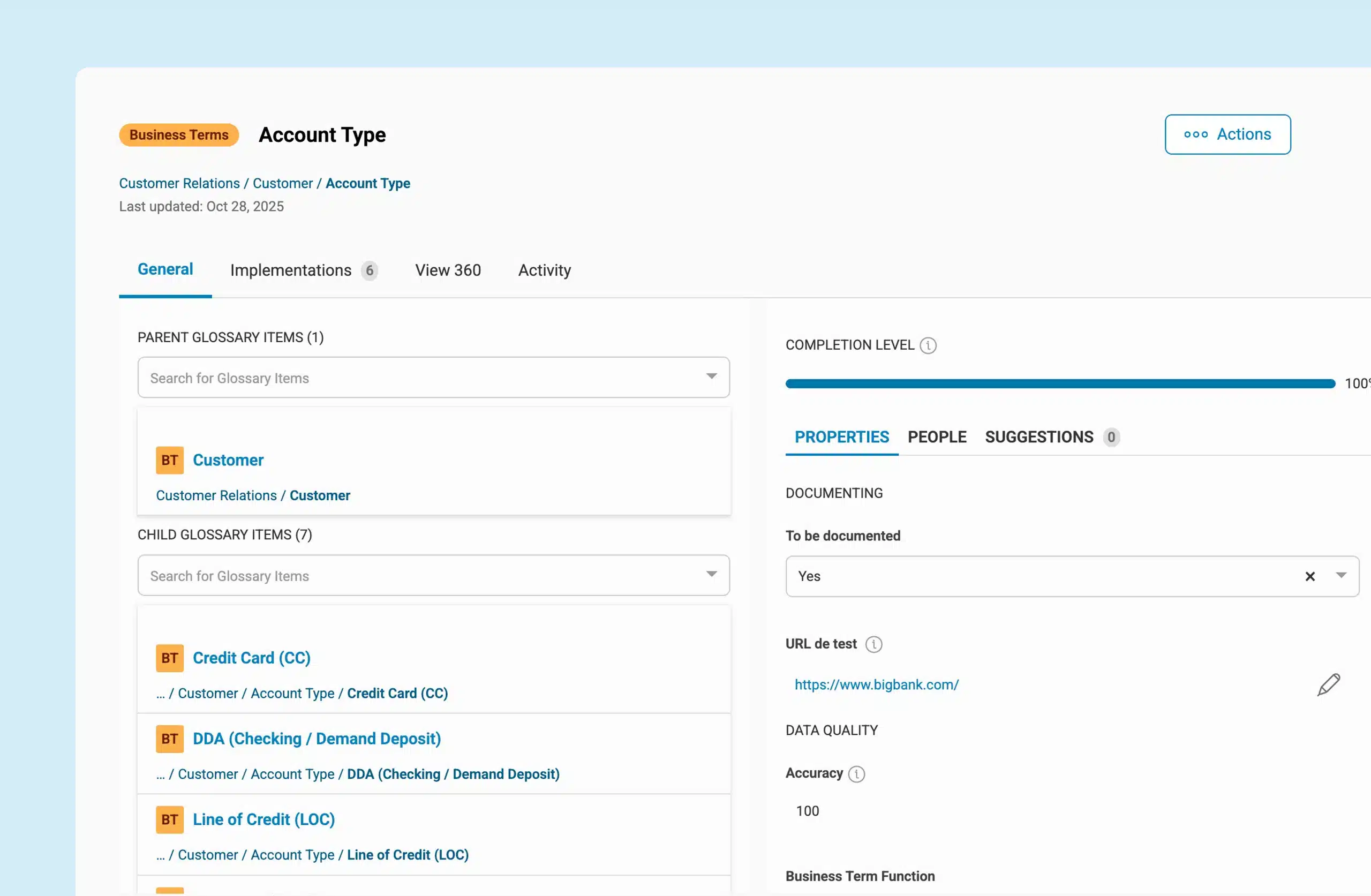
- Gemeinsame Definitionen: Zentralisieren Sie KPI- und Geschäftsdefinitionen und stellen Sie dar, wie Datensätze mit Geschäftsprozessen, Compliance-Anforderungen und Analysezielen zusammenhängen – und schaffen Sie so Beständigkeit das erforderliche Wissen, um Daten unternehmensweit effektiv zu nutzen.
- Flexibilität für Wachstum: Ontologieverwaltung und umfassende Taxonomie ermöglichen die Einbindung neuer Plattformen, sich weiterentwickelnder Schemata und sich ändernder Pipelines, ohne dass Ihr Wissensgraph umstrukturiert werden muss.
- Transparenz bei personenbezogenen Daten und Sicherheit: Tools zur automatischen Kennzeichnung personenbezogener Daten, Sicherheitsklassifizierung und Tagging schützen sensible Daten und unterstützen die Einhaltung von Vorschriften, selbst in komplexen und verteilten Datenumgebungen.
KI-Bereitschaft
- Einheitliche Kontext-Ebene: Verbinden Sie Metadaten, Herkunftsnachweis und Governance zu einer einzigen kontextbezogenen Informationsschicht für Ihr gesamtes Unternehmen: eine entscheidende Komponente zur Vermeidung von KI-Halluzinationen.
- Kontextbasierter KI-Analyst: Der KI-Analyst verbindet sich mit Ihrem Katalog und synchronisiert sich mit dessen semantischer Ebene, sodass Antworten auf dem Wissensgraphen basieren und nicht auf Schlussfolgerungen.
- MCP-Server: Stellen Sie Kontext- und Datenqualitätsergebnisse über den MCP-Server direkt in Ihren bevorzugten KI-Assistenten und Agenten-Workflows sicher und in großem Maßstab bereit.
Data Engineering
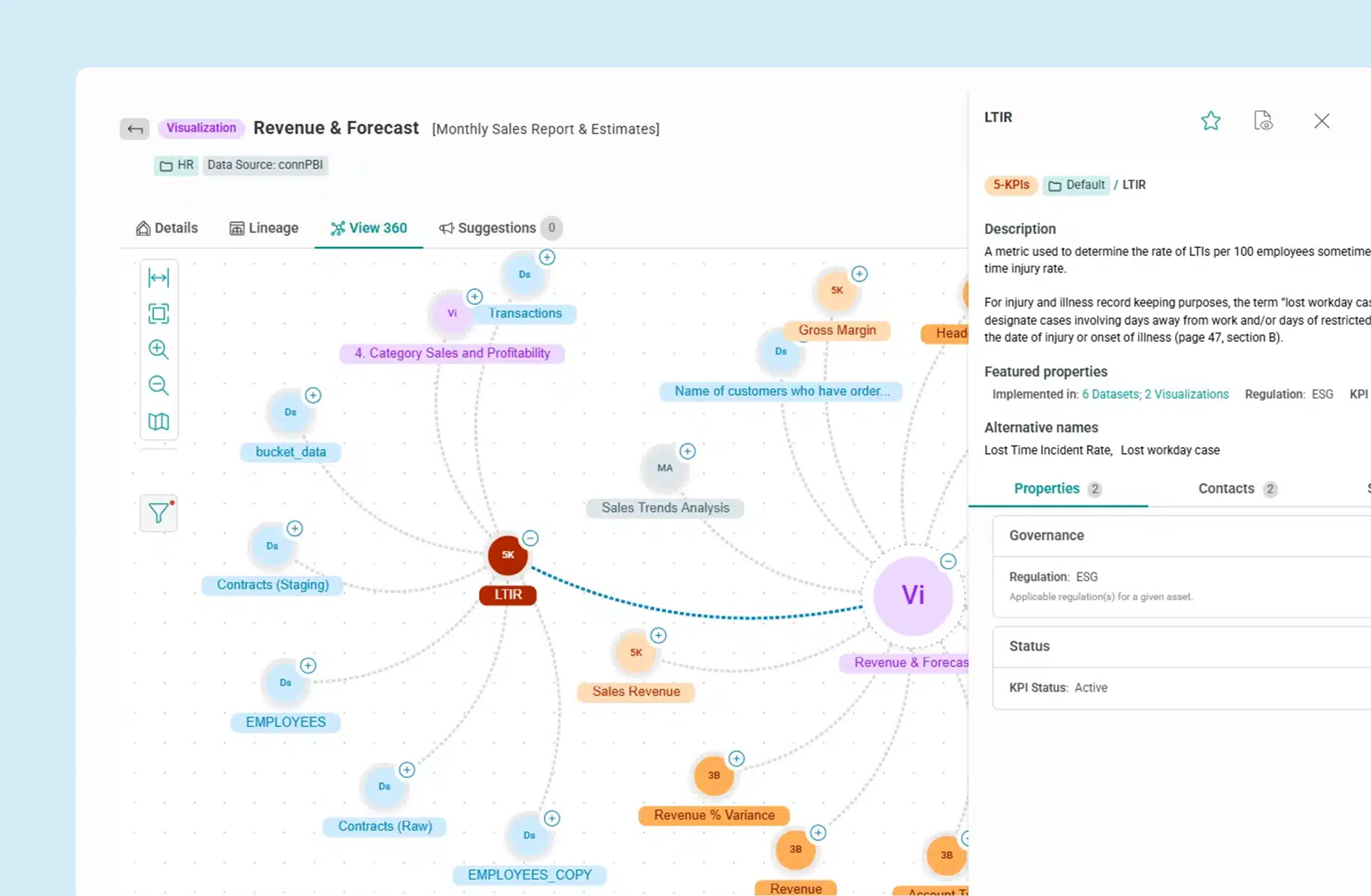
- Dynamische automatische Aktualisierungen: Neue Metadaten Beziehungen werden automatisch erkannt und integriert, sodass Ihr Wissensgraph ohne manuelles Eingreifen stets auf dem neuesten Stand bleibt.
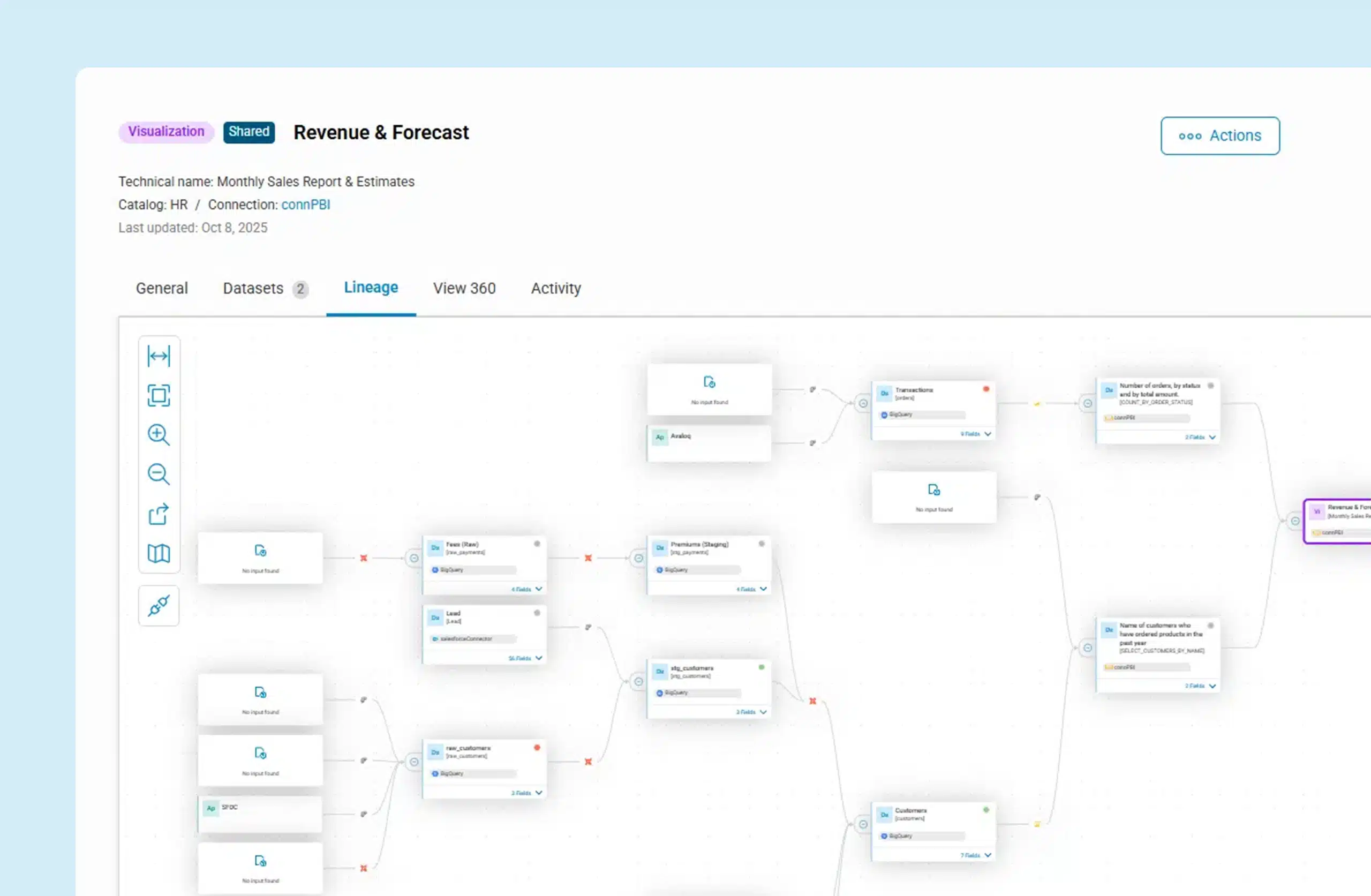
- Auf einem Wissensgraphen basierende Herkunftsverfolgung: Verfolgen Sie den Standort und die Bewegungen Ihrer Daten von Anfang bis Ende mit einer Herkunftsverfolgung, die auf dem vollständigen Beziehungskontext des föderierten Wissensgraphen basiert.
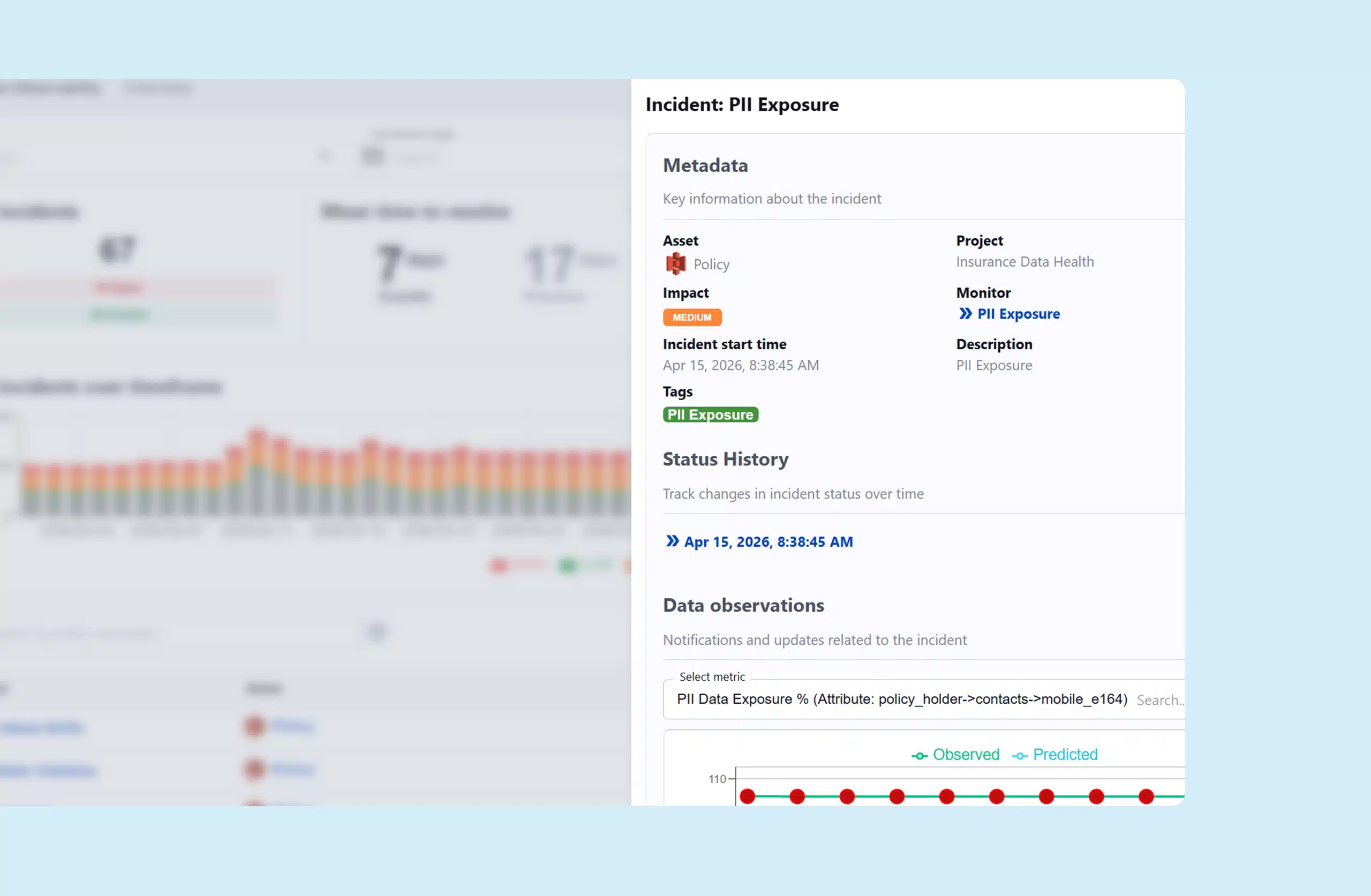
- Datenqualität und Beobachtbarkeit: Beheben Sie Probleme mit der Datenqualität, bevor sie nachgelagerte Probleme verursachen. Proaktive, vorausschauende Qualitätsregeln lassen sich mit KI-Unterstützung schnell implementieren.
Moderne Datenarchitekturen
- Von Grund auf föderiert: Domänen-Teams besitzen und verwalten Daten selbst und tragen gleichzeitig zu einer einheitlichen semantischen Ebene bei, was Autonomie und Beständigkeitgewährleistet – ohne erzwungene Zentralisierung.
- Datenprodukte mit Kontext: Fügen Sie Datenprodukten Herkunftsinformationen, Governance-Richtlinien, Qualitätsbewertungen und Geschäftsdefinitionen hinzu, damit die Nutzer genau wissen, was sie erhalten.
- Skalierbare Governance: Ein schrittweiser, iterativer Implementierungsansatz bedeutet, dass Governance keine Deployment erfordert. Beginnen Sie mit einer Domäne und skalieren Sie organisch, wobei Sie Beständigkeit den Graphen aufrechterhalten. Offene Standards stellen sicher, dass Ihre Architektur interoperabel bleibt.
Machen Sie die Produkttour zum Knowledge Graph
Jede Quelle ist vernetzt und jede Beziehung berücksichtigt
Weitere Quellen, die Ihrem Wissensgraphen hinzugefügt werden, führen zu einer stärkeren Kontextschicht, was zu besseren Daten, Analytics und KI-Ergebnissen führt. Native Support für über 100 Quellen, die automatisch erkannt und auf dem neuesten Stand gehalten werden.
Jede Quelle ist vernetzt und jede Beziehung berücksichtigt
Weitere Quellen, die Ihrem Wissensgraphen hinzugefügt werden, führen zu einer stärkeren Kontextschicht, was zu besseren Daten, Analytics und KI-Ergebnissen führt. Native Support für über 100 Quellen, die automatisch erkannt und auf dem neuesten Stand gehalten werden.













Die Unternehmen mit dem weltweit höchsten Datenaufkommen nutzen den Knowledge Graph von Actian
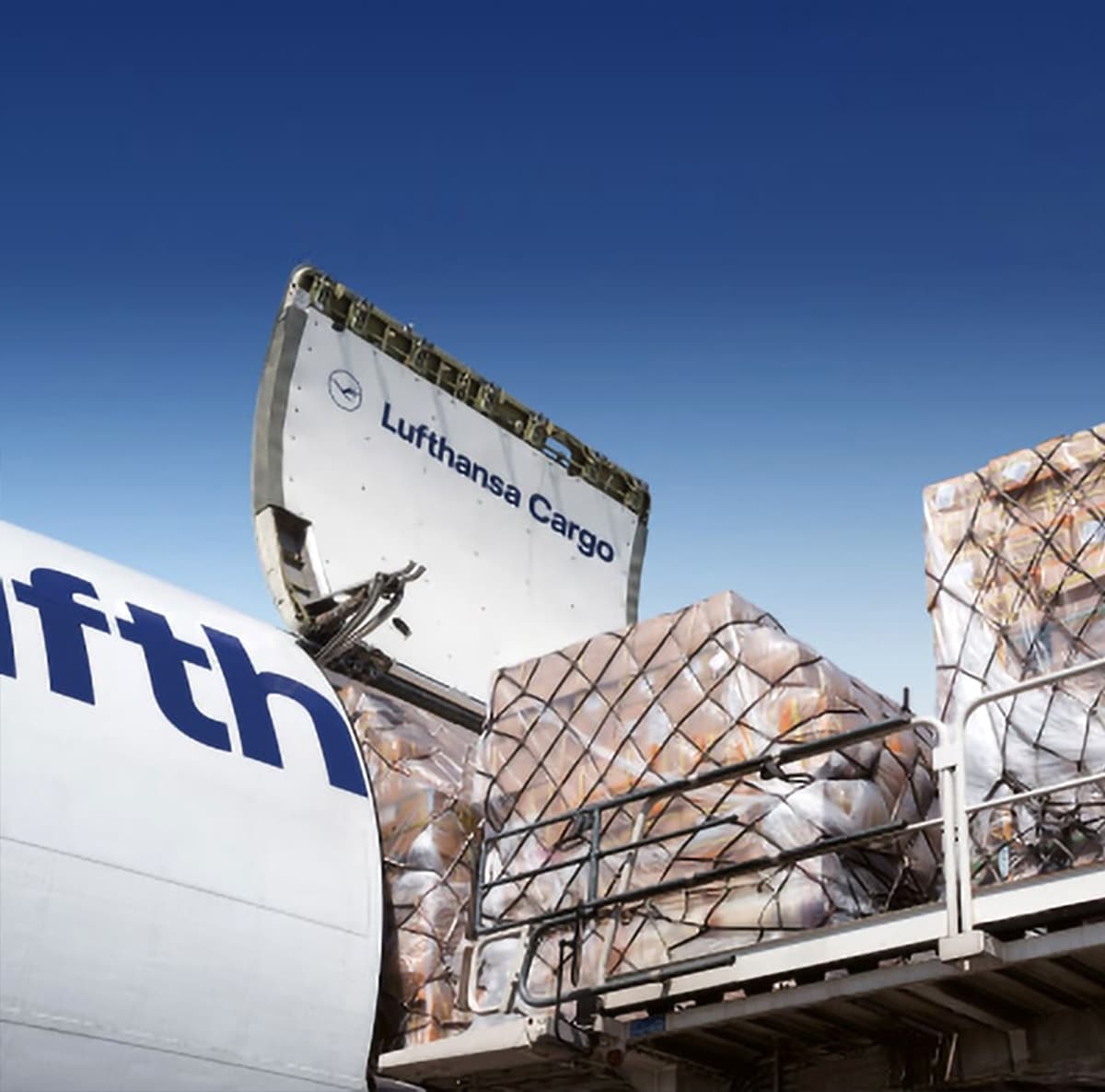






Ein Wissensgraph, der mit Ihrem Unternehmen wächst
Dank der föderierten Architektur von Actian können Sie mit einer Domäne beginnen und schrittweise expandieren. Die meisten Teams führen das Deployment innerhalb von Wochen statt Monaten durch.
Buchen Sie eine 30-minütige Demo und erfahren Sie:
- Warum föderale Modelle im Unternehmensmaßstab besser abschneiden als zentralisierte Modelle.
- Wie die konzeptbasierte Suche die Daten-Discovery für Nutzer verändert.
- So sieht die Akzeptanz in Kundenumgebungen mit mehr als 1.000 aktiven Nutzern pro Woche aus.

Demo anfordern
(z. B. sales@..., support@...)
