
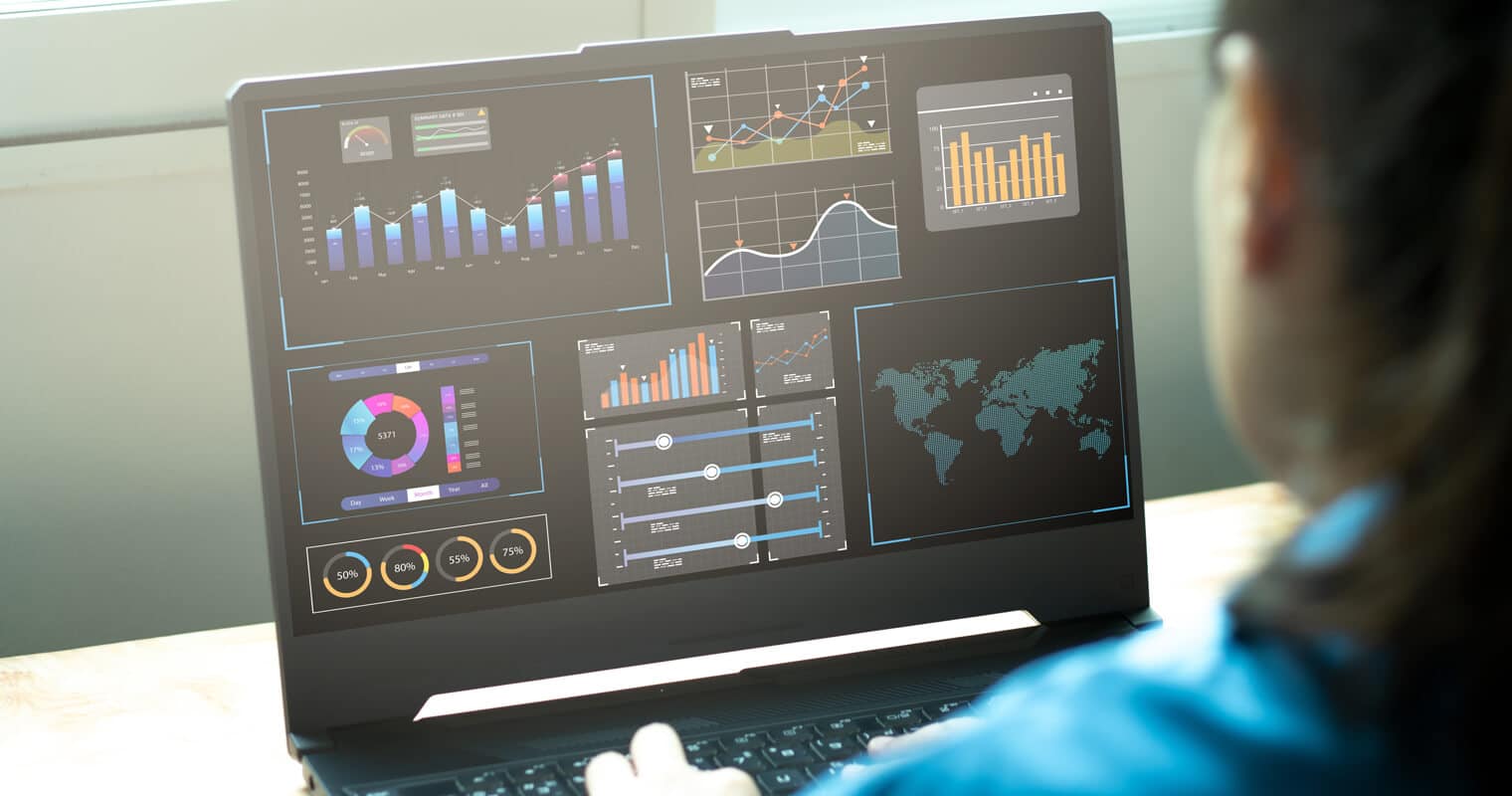
Operational analytics uses real-time data to drive business decisions that enable an organization to respond to current changes.
Why is Operational Analytics Important?
Operational analytics improves decision-making by providing up-to-date insights about the business. Decisions made on out-of-date data are less likely to be effective. Operational analytics uses current data to identify trends that can be extrapolated into the future to explore different scenarios before deciding on a course of action. Businesses operate in a dynamic environment where competitors can change pricing or tactics, and customers can alter their buying habits without notice. Being aware of such changes means a business can better respond to them. Investment in operational insights is justified by the improved outcomes that result from more informed decision-making.
Using Operational Analytics
The following are some examples of the impact of real-time analytics in diverse industries.
Digital Twins
Digital twins analyze data from operational systems to verify that they are operating within predefined specifications. For example, in engineering, quality control ensures products operate within tight tolerances. Sensors can detect deviations and make adjustments in real-time or alert operators of potential issues before a shutdown or failure occurs.
Manufacturing Supply Chains
Managing the supply of raw materials and parts is critical to manufacturers as production lines grind to a halt when material supply is interrupted. Keeping supply bins stocked relies on a complex chain of activities. In an automotive factory, each parts bin has a defined replenishment level. When that level is reached, it triggers an alert to the warehouse. When the warehouse is constrained, the alert goes out to a yard management system that calls a trailer with the appropriate parts to the door. Many facilities use a geofence to track inbound deliveries in real-time, so the replenishment of parts is prioritized in line with demand.
Retail Operations
Retailers can use operational analytics to predict what products to stock based on customer demand. The product mix is analyzed at the checkout to understand better what stock to carry. Analyzing the success or failure of in-flight promotions helps make operational changes to remedy failures and boost successful promotions. Retailers can also analyze social media feeds to understand how products are perceived.
Sales and Marketing
Operational analytics plays a significant role in sales and marketing. The customer journey is carefully planned, starting with keyword research to identify potential buyers based on search terms. Landing pages ask anonymous buyers to engage and provide their name, email address, and email campaigns to further educate and engage prospects. A-B testing helps to determine the most engaging email subject lines before a mass mailing. Just as marketing adjusts its outbound messages, sales tests different voicemails and outbound calls simultaneously to gain a conversation. Both organizations use real-time performance metrics to measure success and adjust as necessary.
Ride-Hailing Services
Ride-hailing is a fluid business that relies heavily on operations analytics and real-time data. Central servers are always aware of their coverage of different geographical zones. Suppose an area is experiencing high demand and a shortage of available drivers. In that case, a surge in pricing promotion kicks in to attract more drivers to a city center or airport. For example, as a conference ends, the spike in demand shows up in the driver app, so the drivers know where to head to make the most money and reduce the wait time for passengers.
Benefits of Operational Analytics
- Increased Efficiency: Operational decisions based on up-to-date facts are more effective.
- Greater Confidence: Making data-based decisions increases confidence and reduces the risk of poorly researched operational decisions.
- Lower Risk: Justifying a decision based on real data can reduce the negative impact of a decision made solely on intuition.
- Improved Collaboration: Business intelligence (BI) dashboards are easy to share with stakeholders and help build consensus. Sharing information across the business amplifies success and allows others to learn from mistakes.
The Challenges of Operational Analytics
The industry has evolved from overnight reporting to real-time data. It can be complex to set up real-time feeds. There is an operational resource cost to processing data in real time. The growth in popularity of real-time data analytics is a testament to its value to businesses. Technologies such as cloud computing, lower-cost storage, and open streaming strands have mitigated many cost challenges that block wider adoption.
Actian Data Intelligence Platform and Operational Analytics
Actian Data Intelligence Platform is purpose-built to help organizations unify, manage, and understand their data across hybrid environments. It brings together metadata management, governance, lineage, quality monitoring, and automation in a single platform. This enables teams to see where data comes from, how it’s used, and whether it meets internal and external requirements.
Through its centralized interface, Actian supports real-time insight into data structures and flows, making it easier to apply policies, resolve issues, and collaborate across departments. The platform also helps connect data to business context, enabling teams to use data more effectively and responsibly. Actian’s platform is designed to scale with evolving data ecosystems, supporting consistent, intelligent, and secure data use across the enterprise. Request your personalized demo.
FAQ
Operational analytics uses real-time data to drive business decisions that enable an organization to respond to current changes in the business environment.
Operational analytics improves decision-making by providing up-to-date insights about the business, allowing organizations to respond effectively to changes in competitor pricing, tactics, and customer buying habits.
Traditional analytics relies on historical data for future strategies, while operational analytics uses current, real-time data to identify trends and explore different scenarios before deciding on a course of action.
Key benefits include increased efficiency through fact-based decisions, greater confidence in decision-making, lower risk by reducing reliance on intuition alone, and improved collaboration through easily shareable BI dashboards.
Operational analytics is used across diverse industries including manufacturing (supply chain management), retail (product stocking and promotions), sales and marketing (customer journey optimization), engineering (digital twins), and ride-hailing services (demand-based pricing).
Setting up real-time data feeds can be complex and there are operational resource costs to processing data in real time, though cloud computing, lower-cost storage, and open streaming standards have mitigated many adoption barriers.
In manufacturing, operational analytics manages supply chains by monitoring parts bins, triggering warehouse alerts at replenishment levels, and tracking inbound deliveries in real-time using geofencing to prioritize parts based on demand.
Sales and marketing teams use operational analytics to optimize customer journeys through keyword research, A-B testing of email subject lines, and real-time performance metrics to measure success and adjust campaigns as necessary.