
Was ist Daten-Stewardship: Ein praktischer Leitfaden für moderne Datenteams



Wichtigste Erkenntnisse
- Daten-Stewardship die Kombination aus Menschen, Prozessen und Werkzeugen, die Daten auffindbar, vertrauenswürdig und nutzbar macht.
- Sein Zweck geht über die Governance hinaus: Es fördert die Zuverlässigkeit von KI, die Einhaltung von Vorschriften, die Datenqualität und die effektive Nutzung von Daten über verschiedene Bereiche hinweg.
- Ein praxisorientiertes Datenverwaltungsprogramm beginnt mit der Festlegung von Zuständigkeitsbereichen, Verantwortlichen, Datenverwalter und einem Betriebsmodell, gefolgt von der Katalogisierung der Daten, der Erfassung der Datenherkunft und der Festlegung klarer Richtlinien.
- Eine solide Verwaltung hängt auch davon ab, dass Qualitätsprüfungen, Überwachung und Korrekturmaßnahmen automatisiert werden, während Menschen weiterhin für Ausnahmen und Ermessensentscheidungen einbezogen werden.
- Der Erfolg sollte anhand klarer KPIs gemessen werden, wie beispielsweise Abdeckung der Verantwortlichkeiten, Abdeckung der Datenherkunft, Datenqualität, Geschwindigkeit der Datenermittlung und Zeit bis zur Behebung von Vorfällen.
Einleitung
Daten-Stewardship bezeichnet die Gesamtheit der Personen, Praktiken und Werkzeuge, die Daten auffindbar, vertrauenswürdig und nutzbar machen. Heutzutage ist Daten-Stewardship nicht nur ein Punkt auf der Governance-Checkliste – es ist das operative Rückgrat für die Zuverlässigkeit von KI, die Einhaltung gesetzlicher Vorschriften (z. B. DSGVO, HIPAA, neue KI-Vorschriften) und dezentrale Datenarchitekturen. Dieses Playbook verwandelt die Frage „Was ist Daten-Stewardshipin ein praktisches Programm, das Sie domänenübergreifend mit messbaren Ergebnissen umsetzen können.
Die Kosten des Nichtstuns
Eine mangelhafte Datenverwaltung führt zu langsameren Analysen, Modellabweichungen, Compliance-Risiken, Doppelarbeit und verpassten Geschäftschancen. Zu den typischen Ursachen zählen unklare Zuständigkeiten, manuelle Datenkorrekturen und isolierte Tools, die die Datenherkunft und -provenienz verschleiern. Eine effektive Datenverwaltung mindert diese Risiken und beschleunigt die Wertschöpfung durch Daten und KI.
Ein 5-stufigesFramework für Daten-Stewardship
Dieses Framework Richtlinien in wiederholbare Abläufe Framework . Nutzen Sie es als Checkliste für die Einführung oder Ausweitung von Stewardship-Maßnahmen.
Schritt 1: Definieren Sie Domänen, Verantwortliche und das Betriebsmodell
- Ordnen Sie wichtige Datenbereiche den Geschäftsbereichen zu (Vertrieb, Produkt, Risiko, Klinik usw.).
- Bestimmen Sie Datenverantwortliche (zuständig) und Bereichsdatenverwalter (verantwortlich).
- Wählen Sie ein Betriebsmodell: zentralisiert, dezentral (eingebettet) oder hybrid. Dezentrale Modelle eignen sich gut für Data-Mesh-Architekturen.
Schritt 2: Katalogisieren, klassifizieren und Abstammungslinien erfassen
- Veröffentlichen Sie einen Datenkatalog Geschäftsglossar alle wichtigen Ressourcen.
- Erfassen Sie den automatisierten Datenfluss von den Quellen über die Verarbeitungsschritte bis hin zu den Empfängern.
- Daten nach Sensibilität, regulatorischem Geltungsbereich und Einschränkungen bei der KI-Nutzung klassifizieren.
Schritt 3: Festlegung von Richtlinien, Standards und Verwaltungsverträgen
- Governance-Richtlinien in umsetzbare Standards umsetzen: Namensgebung, Qualitätsschwellenwerte, Aufbewahrungsfristen, Zugriffsregeln.
- Erstellen Sie Verwaltungsvereinbarungen, in denen SLAs, Eskalationspfade und Genehmigungsabläufe teamübergreifend festgelegt werden.
Schritt 4: Automatisierung von Qualitätssicherung, Überwachung und Fehlerbehebung
- Automatisieren Sie die Profilerstellung, Aktualitätsprüfungen, die Erkennung von Schemaabweichungen und Anomalie .
- Leiten Sie Vorfälle anDatenverwalter weiter,Datenverwalter klaren Abhilfemaßnahmen und versionierten Korrekturen.
- Beziehen Sie Menschen bei der Klassifizierung und der Behandlung von Ausnahmen mit ein.
Schritt 5: Messen, iterieren und Ergebnisse kommunizieren
- Verfolgen Sie KPIs, berichten Sie der Geschäftsleitung über Trends und passen Sie die Prioritäten an die geschäftlichen Anforderungen an.
- Verwenden Sie Scorecards, um den Nutzen aufzuzeigen (Zeitersparnis, verhinderte Vorfälle, Compliance-Abdeckung).
- Training regelmäßige Audits institutionalisieren.
RACI-Beispiel für die Verwaltung
- Verantwortlich: Domain Data Steward (Probleme einordnen, Metadaten pflegen)
- Verantwortlich: Datenverantwortlicher (geschäftliche Entscheidungen, Genehmigungen)
- Befragt: Dateningenieure, Compliance, Sicherheit
- Empfänger: Datennutzer, Analytics-/ML-Teams, Führungskräfte
KI-gestützte Unternehmensführung
KI und Automatisierung entlasten Datenverwalter manuellen Bereinigungsaufgaben und übertragen ihnen stattdessen Aufgaben der Überwachung und des Risikomanagements:
- Metadaten automatisierte Metadaten und die semantische Klassifizierung reduzieren den manuellen Tagging-Aufwand.
- Die Ableitung von Abstammungsbeziehungen und Abhängigkeitsgraphen verbessern die Rückverfolgbarkeit von Modellen und Berichten.
- Anomalie meldet mögliche Datenvorfälle; Datenverwalter und beheben diese.
- „Human-in-the-Loop“-Workflows stellen sicher, dass automatisierte Vorschläge im Hinblick auf Richtlinien und Kontext überprüft werden.
Rollen- und Persona-Matrix
- Datenverantwortlicher (Unternehmen): legt die Zielsetzung fest, genehmigt den Zugriff und definiert Wertkennzahlen.
- Domänen-Datenverantwortlicher (geschäftlich/funktional): Verantwortlich für Metadaten, Qualitätsregeln und Korrekturmaßnahmen.
- Technischer Beauftragter / Datenverwalter (IT/Technik): Implementiert Datenpipelines und sorgt für die Einhaltung der Zugriffskontrollen.
- Dateningenieur: Erstellt Datenumwandlungen, implementiert Datenherkunftsnachverfolgung und Überwachungsmaßnahmen.
- Compliance- und Datenschutzbeauftragter: legt regulatorische Kontrollen und Prüfungsverfahren fest.
- Analyst / ML-Ingenieur: verarbeitet Daten, meldet Probleme, überprüft die Datenherkunft für Modelle.
KPI und messbare Ziele
Verfolgen Sie eine kleine Auswahl aussagekräftiger Kennzahlen:
- Prozentualer Anteil der kritischen Datensätze, denen ein Verantwortlicher und ein Betreuer zugewiesen wurde.
- Zeit, einen Datensatz zu entdecken Datensatz Suche → nutzbar).
- Prozentualer Anteil der Datensätze mit durchgängiger Herkunftsverfolgung.
- Datenqualitätsbewertung (Beständigkeit, Vollständigkeit, Genauigkeit) und Entwicklung.
- Durchschnittliche Zeit bis zur Behebung von Datenvorfällen.
- Prozentualer Anteil der Serienmodelle mit rückverfolgbarer Datenherkunft.
Häufige Fallstricke und wie man sie vermeidet
- Fallstrick: Tool-First-Ansatz – Vermeiden Sie den Kauf von Tools, bevor Sie Arbeitsabläufe und Rollen definiert haben.
- Fallstrick: Zentraler Engpass – einbetten Datenverwalter Domänen zur Skalierung.
- Fallstrick: Fehlende Unterstützung durch die Führungsebene — Gewinnen Sie einen Förderer aus der Führungsebene, um der Stewardship-Arbeit Priorität einzuräumen.
- Fallstrick: Unklare Kennzahlen – Definieren Sie KPIs vor der Messung; verknüpfen Sie diese mit den Geschäftsergebnissen.
- Fallstrick: Fehlende Anreize – Verknüpfen Sie die Verantwortlichkeiten für die Verwaltung mit Leistungszielen und Projektakzeptanzkriterien.
Anwendungsbeispiele aus der Industrie
Gesundheitswesen
Korrekte elektronische Patientenakten, Datenherkunft für klinische Studien und automatisierte Klassifizierung personenbezogener Gesundheitsdaten zur Einhaltung der HIPAA-Vorschriften.
Finanzdienstleistungen
Konsistente Kundendaten für die Kundenidentifizierung (KYC), Nachverfolgbarkeit für die aufsichtsrechtliche Berichterstattung und verlässliche Eingabedaten für Kreditmodelle.
Telekommunikation
Einheitliche Kundenprofile, Qualitätsprüfungen der Netzwerktelemetrie und Compliance-Berichte für Teilnehmerdaten.
Fertigung und Lieferkette
Rückverfolgbarkeit von Bauteilen und Lieferanten, Daten für Modelle zur vorausschauenden Instandhaltung sowie ESG-Berichterstattung zu Emissionsdaten.
ESG- und Nachhaltigkeitsberichterstattung
Eine verantwortungsvolle Verwaltung gewährleistet nachvollziehbare und überprüfbare Datensätze für CO₂-Bilanzierungen und Angaben von Lieferanten.
Operationalisierung in großem Maßstab: Menschen, Prozesse und Plattformen
Erfolgreiche Programme vereinen:
- Ein Governance Framework Treuhandvereinbarungen.
- Ein Katalog, automatisierte Herkunftsverfolgung, Beobachtbarkeit und Qualitätswerkzeuge.
- Schulungen, Leitfäden und regelmäßige Überprüfungen.
- Klare Verknüpfung zwischen Governance-Richtlinien und der Durchsetzung auf der Plattform (Zugriffskontrollen, Maskierung, Aufbewahrung).
Actian unterstützt Daten-Stewardship Best Practices
Actian bietet eine umfassende Suite von Datenmanagement , die Daten-Stewardship in Unternehmen. Die Actian Analytics AI-Plattform bietet eine solide Grundlage für die Umsetzung effektiver Daten-Stewardship Programme. Die Datenintegrations-Tools, darunter DataConnect, helfen Unternehmen dabei, die Datenqualität aufrechtzuerhalten, indem sie leistungsstarke Fähigkeiten (Extract, Transform, Load) Fähigkeiten Qualitätsprüfungen bereitstellen. Unternehmen können die Actian Data Intelligence-Plattform nutzen, um die Datenspeicherung und -nutzung gemäß Data Governance zu standardisieren, was die Demokratisierung der Daten fördert und gleichzeitig Daten-Stewardship für die Beteiligten Daten-Stewardship und verständlicher macht.
Actians Lösungen lassen sich nahtlos in Data Governance integrieren und unterstützen Unternehmen bei der Ausrichtung ihrer Daten-Stewardship Praktiken mit umfassenderen Governance-Initiativen in Einklang zu bringen. Da Unternehmen wachsen und sich weiterentwickeln, ist die Actian Data Platform so konzipiert, dass sie mit wachsenden Datenmengen und Nutzer skaliert und kontinuierliche Unterstützung für Daten-Stewardship Bemühungen. Mehr Hilfe bei der Erstellung groß angelegter Daten-Stewardship Initiativen finden Sie im Blog "Die Wichtigkeit von Daten-Stewardship Vereinbarungen über Unternehmen hinweg."
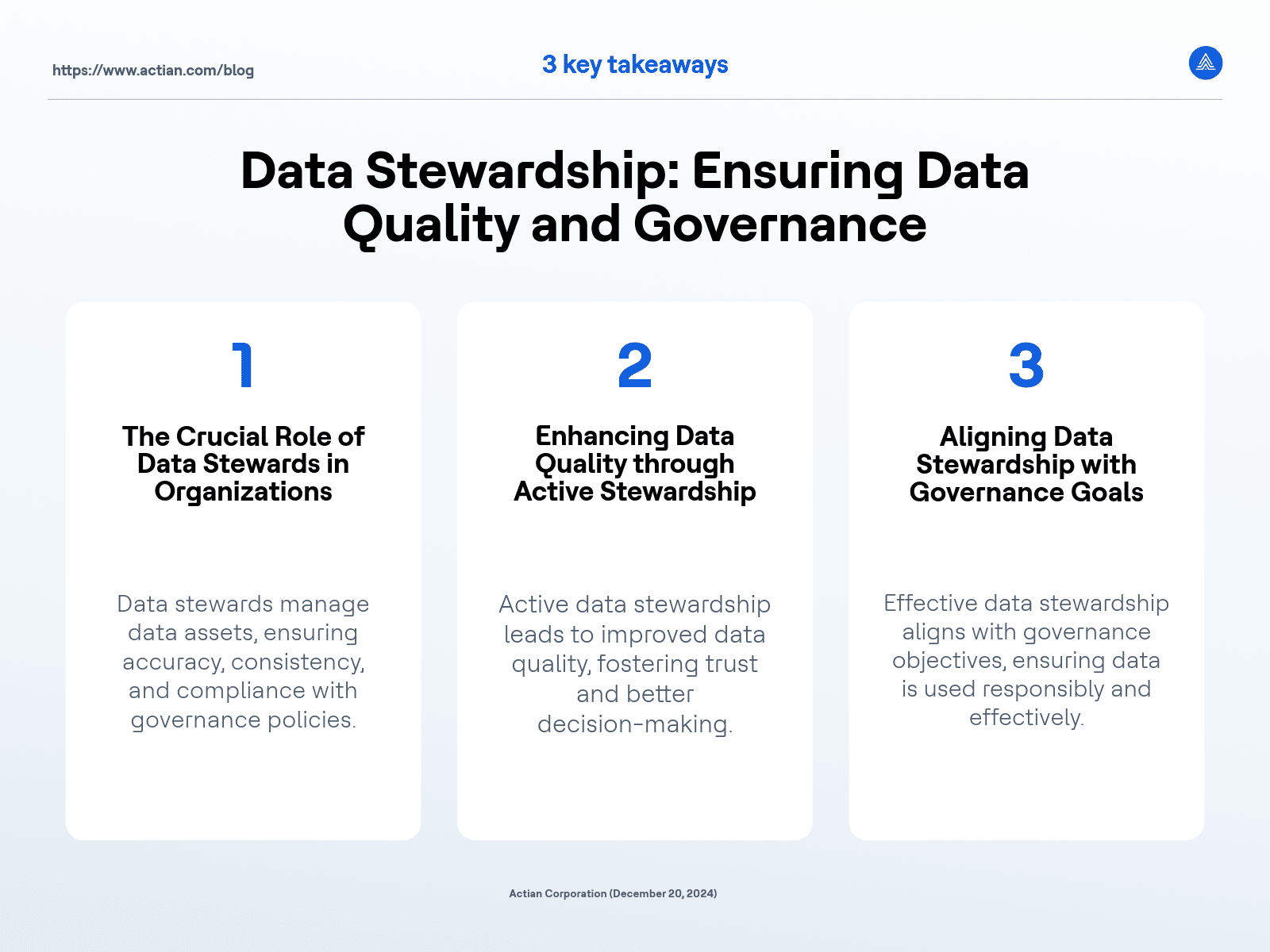
Wichtigste Erkenntnisse

Bleiben Sie in Verbindung
Datenanalysen direkt bei Ihnen.
(z. B. sales@..., support@...)
