
Simplify terms with a business glossary
Establish a shared data language that eliminates confusion, accelerates analytics, and empowers every team to trust the data they use.


Elevate your data understanding

Define rules, policies, and KPIs
Establish governance rules that maximize trust in enterprise data and streamline operations for greater productivity.

Design reliable glossary models
Automatically design reliable glossary models that foster clarity and avoid data misunderstandings.

Visualize relationships and unlock insight
See how business terms connect and influence one another, empowering smarter data discovery and more informed decision-making.

Enable AI readiness
Provide semantic context to enable machine learning models to understand the data.
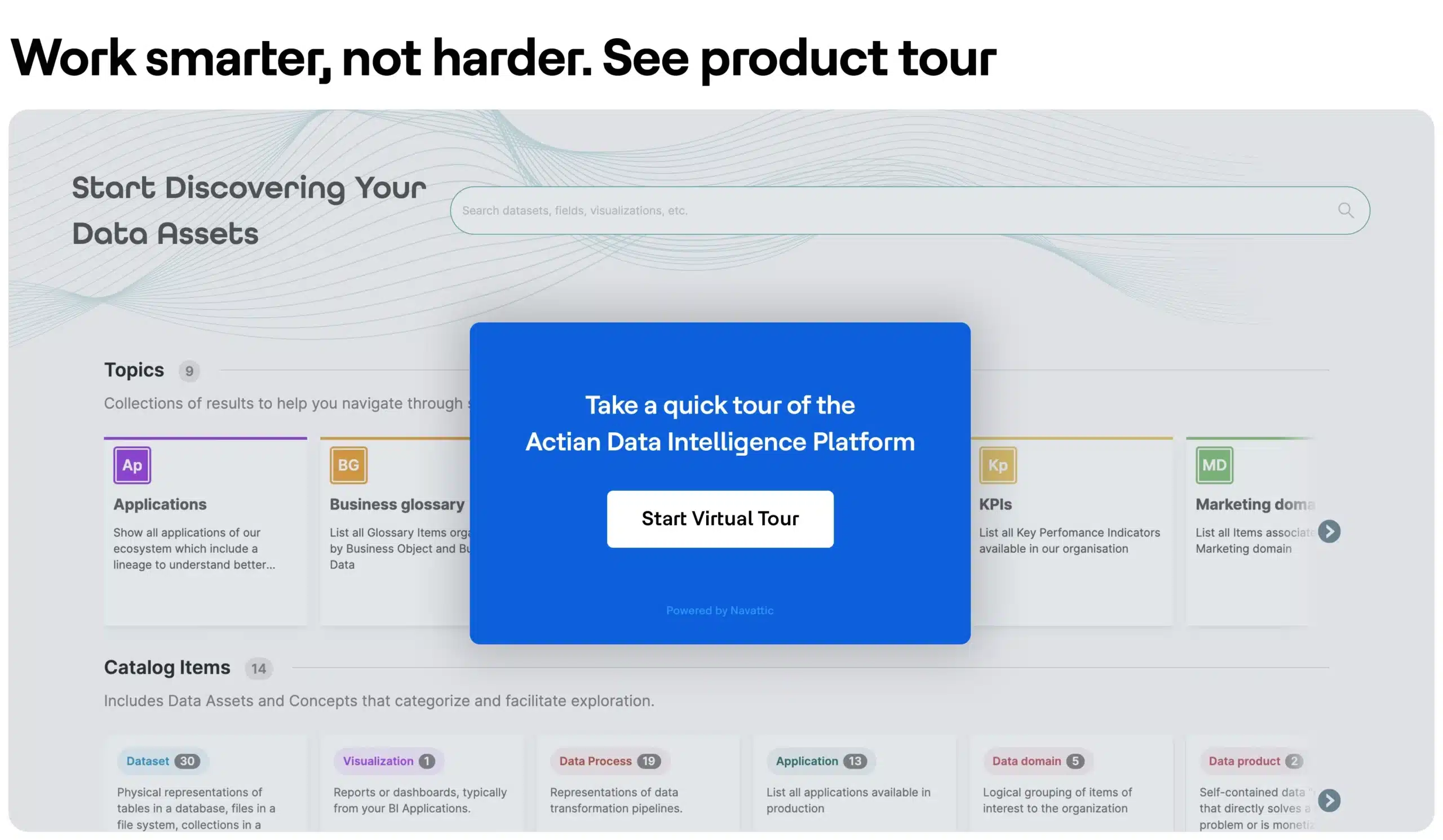
What is a Business Glossary?
A business glossary is a centralized repository of standardized business terms, definitions, and context that creates a common language across your entire organization. It translates data into business meaning that everyone can understand, from executives and analysts to data scientists and operational teams.
Actian’s business glossary solution eliminates confusion by providing enterprise data definitions that everyone agrees on, understands, and trusts. By connecting business terminology directly to technical metadata, data lineage, and governance policies within a unified platform, Actian transforms isolated vocabulary lists into living, actionable intelligence that powers better decisions across your organization.
A business glossary matters more than ever

Eliminate miscommunication between technical and non-technical teams. When everyone uses the same definitions for critical terms, cross-functional collaboration improves dramatically, reducing misunderstandings that slow projects and create conflicting reports across departments.

Set the authoritative source for metrics, KPIs, and business concepts. A single source of truth prevents teams from creating competing definitions for the same terms, ensuring dashboards, reports, and analytics consistently reflect the organization’s agreed-upon understanding of key business measurements.

Make complex data accessible to everyone across the organization. Clear, jargon-free business definitions enable non-technical users to understand and confidently use data for decision-making, transforming data from a technical asset controlled by specialists into strategic intelligence available throughout the enterprise.

Clear term ownership, approval workflows, and compliance documentation all benefit from shared definitions. Designated business owners maintain definition accuracy, and approval processes ensure changes are validated. This documented governance satisfies regulatory requirements and reduces compliance risk through transparent, auditable management of business terminology.

Reduce time spent clarifying terminology and reconciling conflicting definitions. Analysts and data scientists spend less time debating what metrics mean and more time generating insights, dramatically shortening the time from question to answer while improving confidence in analytical outputs and recommendations.

Provide semantic context that helps machine learning models understand data correctly. Business glossaries give AI systems the contextual understanding needed to interpret features accurately, select appropriate training data, and generate trustworthy predictions that transform experimental models into production-ready intelligent applications.
-
![shared business language]()
Eliminate miscommunication between technical and non-technical teams. When everyone uses the same definitions for critical terms, cross-functional collaboration improves dramatically, reducing misunderstandings that slow projects and create conflicting reports across departments.
-
![trusted data definitions]()
Set the authoritative source for metrics, KPIs, and business concepts. A single source of truth prevents teams from creating competing definitions for the same terms, ensuring dashboards, reports, and analytics consistently reflect the organization’s agreed-upon understanding of key business measurements.
-
![support data literacy]()
Make complex data accessible to everyone across the organization. Clear, jargon-free business definitions enable non-technical users to understand and confidently use data for decision-making, transforming data from a technical asset controlled by specialists into strategic intelligence available throughout the enterprise.
-
![Strengthen data governance frameworks]()
Clear term ownership, approval workflows, and compliance documentation all benefit from shared definitions. Designated business owners maintain definition accuracy, and approval processes ensure changes are validated. This documented governance satisfies regulatory requirements and reduces compliance risk through transparent, auditable management of business terminology.
-
![Accelerate analytics initiatives]()
Reduce time spent clarifying terminology and reconciling conflicting definitions. Analysts and data scientists spend less time debating what metrics mean and more time generating insights, dramatically shortening the time from question to answer while improving confidence in analytical outputs and recommendations.
-
![Actian presents AI Readiness at Gartner London]()
Provide semantic context that helps machine learning models understand data correctly. Business glossaries give AI systems the contextual understanding needed to interpret features accurately, select appropriate training data, and generate trustworthy predictions that transform experimental models into production-ready intelligent applications.
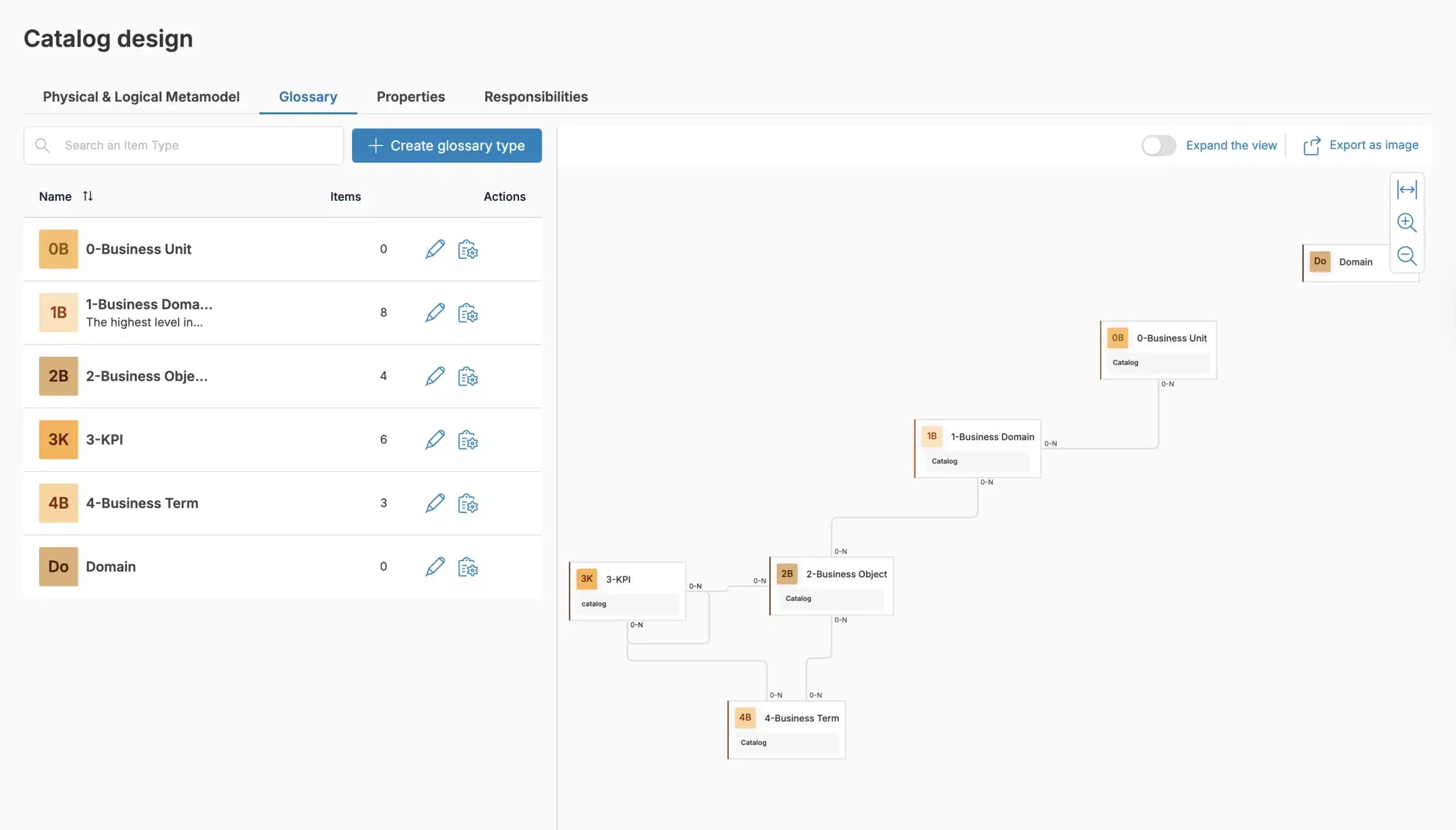
Beyond flat hierarchies: Intelligent relationships
Actian’s knowledge graph approach models business concepts as connected networks of relationships that enable:
- Semantic relationships between related business terms (synonyms, parent-child concepts, related metrics).
- Technical connections linking business terms to databases, tables, columns, and data products.
- Governance associations tying terms to policies, compliance requirements, and approval workflows.
- Lineage dependencies showing how business metrics flow through transformations and analytical processes.
Usage patterns reveal which teams, reports, and applications rely on specific business concepts.
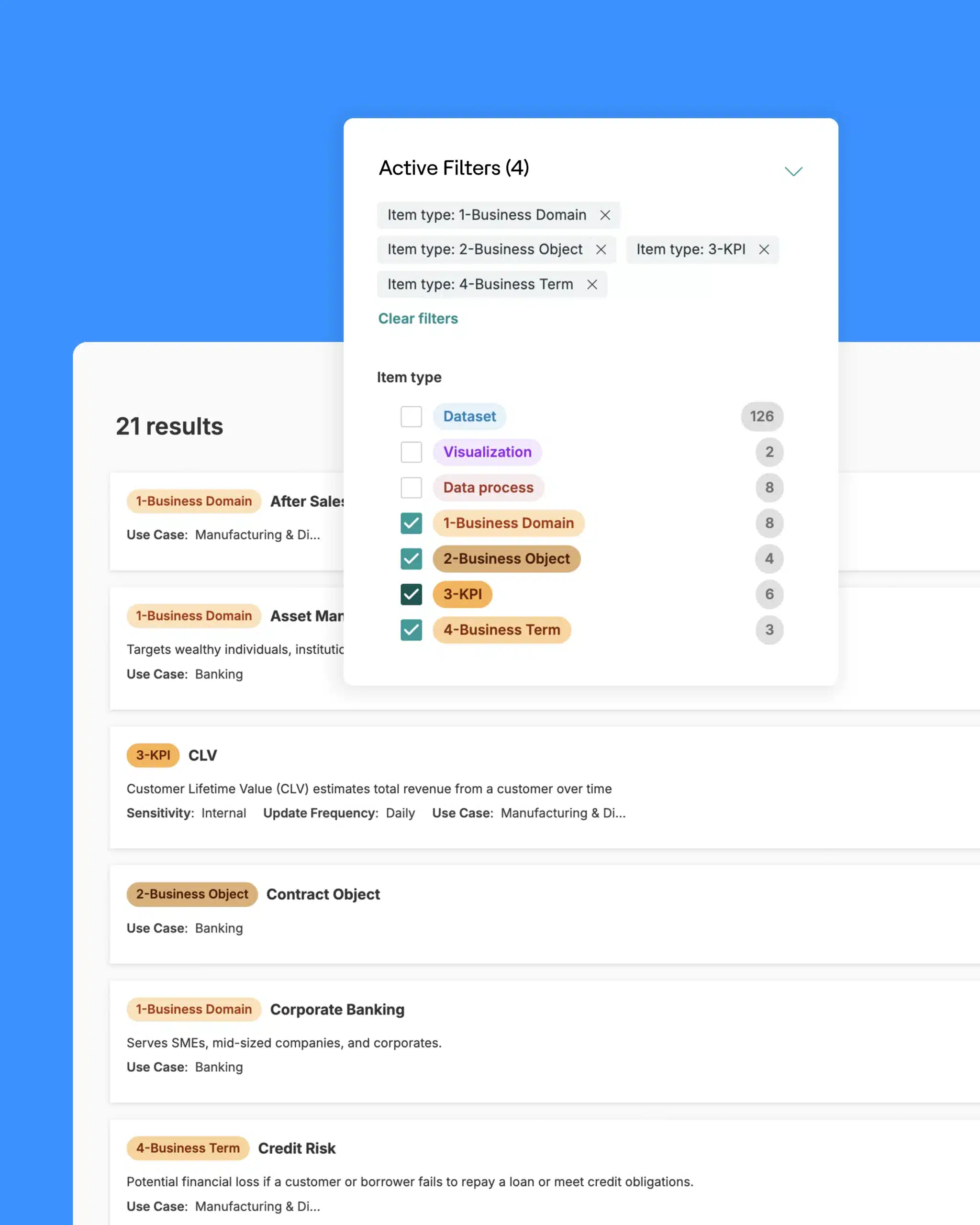
Automated discovery and classification
Actian’s machine learning algorithms continuously analyze metadata across your data landscape to:
- Suggest business term classifications based on content patterns, usage frequency, and semantic analysis.
- Identify undocumented concepts that appear frequently in queries, reports, or conversations.
- Recommend relationships between business terms and technical assets.
- Flag inconsistencies when the same concept appears under different names across systems.
Integrate with the complete Data Intelligence Platform
Actian connects business vocabulary directly to the systems, workflows, and governance processes where it matters most:
- Unified with data catalog: Business terms appear alongside technical metadata, providing complete context for data assets.
- Connected to data lineage: Trace how business metrics transform from source systems through analytical pipelines to consumption.
- Embedded in discovery: Search results include relevant business context, helping users find data based on business meaning.
- Enforced through governance: Business glossary definitions inform access policies, data quality rules, and compliance documentation.
- Accessible through Studio and Explorer: Data stewards manage glossaries through Studio’s comprehensive administrative interface while business users discover terms through Explorer’s intuitive marketplace experience.

Business Glossary: An Essential Component of a Data Catalog
Get eBookBeyond glossaries: The complete data intelligence foundation
Business glossaries solve critical terminology challenges, but they deliver maximum value as part of a comprehensive data intelligence infrastructure. Actian Data Intelligence Platform combines business glossary management with:
- Knowledge graph technology that connects business concepts to technical assets through intelligent relationships.
- Automated metadata management that keeps glossaries synchronized with evolving data landscapes.
- Data lineage tracking that shows how business metrics transform from source to consumption.
- Federated governance that enables domain teams to manage their terminology while maintaining enterprise consistency.
Marketplace-style discovery that makes business definitions accessible through intuitive search and exploration.
FAQ
A business glossary is a centralized repository that defines business terms and concepts, creating a common vocabulary across your organization. Actian empowers data teams through automated business glossary capabilities that eliminate manual documentation overhead.
Key automation features include:
- Smart recommendations that suggest business term classifications based on content analysis.
- Template-driven documentation with drag-and-drop interfaces for quick glossary creation.
- Automated mapping between business concepts and technical data assets.
Actian transforms business glossary management into a dynamic, context-rich intelligence system powered by a federated knowledge graph.
A business glossary supports data intelligence by providing a shared semantic layer that defines how data is understood, interpreted, and governed across the organization.
Data intelligence depends on more than knowing where data lives—it requires clarity about what data means, how it should be used, and which definitions are authoritative. A business glossary establishes standardized business terms, metrics, and concepts, and links them directly to data assets, lineage, and governance policies.
Within a data intelligence platform, the glossary connects human understanding to technical metadata. Business users can discover data using familiar language, while data teams ensure that reports, analytics, and AI models are built on consistent definitions. This alignment reduces ambiguity, prevents conflicting interpretations, and improves trust in analytics and automated decisions.
By grounding metadata, governance, and lineage in a shared vocabulary, a business glossary ensures data intelligence is usable at scale—supporting self-service analytics, regulatory compliance, and reliable AI outcomes.
Traditional business glossaries operate as flat lists or rigid hierarchical structures. Actian revolutionizes this approach through a knowledge graph architecture that creates intelligent, multilateral relationships between business concepts.
Traditional Limitations:
- Static lexicons with limited browsing capabilities.
- Rigid thesaurus structures requiring extensive upfront modeling.
- Limited relationship representation between concepts.
- Manual maintenance overhead.
Actian’s Knowledge Graph Advantage:
- Dynamic, context-aware business term relationships.
- Flexible metamodel that evolves with your organization.
- Automated discovery and classification of business concepts.
- Interactive 360-degree view of relationships and dependencies.
Our graph-based approach empowers organizations to represent complex business vocabularies without the constraints of traditional hierarchical models.
Actian integrates a business glossary and a data catalog through a knowledge graph foundation. This integration empowers users to understand not just what data exists, but what it means in a business context.
Integration capabilities include:
- Semantic Search Enhancement: Business terms improve search relevance and ranking algorithms.
- Automated Asset Tagging: Business concepts are automatically linked to relevant technical assets.
- Lineage Enrichment: Data lineage visualization includes business context alongside technical transformations.
- Quality Indicators: Business glossary terms inherit data quality metrics from connected technical assets.
Our unified approach eliminates the need for separate tools while providing rich context that enhances metadata management and governance workflows.
Actian provides two dedicated applications optimized for different personas and business glossary workflows:
- Actian Studio: For data stewards and governance teams.
- Comprehensive Glossary Administration: Create, modify, and manage business term hierarchies.
- Metamodel Configuration: Define custom business concept types and their relationships.
- Governance Workflow Management: Establish approval processes and stewardship responsibilities.
- Advanced Relationship Mapping: Configure how business terms connect to technical assets.
- Actian Explorer: For business users and data consumers.
- Intuitive Glossary Browsing: Search and explore business terms through marketplace-style interfaces.
- One-Click Access: Instantly access predefined business definitions relevant to specific use cases.
- Context-Rich Discovery: View business terms alongside relevant data assets and quality indicators.
- Interactive Exploration: Navigate business concept relationships through visual graph interfaces.
Our dual-approach democratizes business glossary access while maintaining governance control.
A business glossary provides the semantic foundation that transforms AI from experimental models into production-ready, trustworthy systems by adding business context to technical data.
AI Empowerment Capabilities:
- Context Enrichment: Business definitions help AI systems understand not just what data is, but how it should be used.
- Trust Indicators: Business glossary terms include quality indicators essential for AI model training.
- Relationship Intelligence: Knowledge graph technology provides the rich context AI systems require for accurate interpretation.
- Production Readiness: Comprehensive business vocabulary enables AI initiatives to scale beyond isolated experiments.
AI-Ready Data Foundation:
- Automated business term discovery captures context needed for model training.
- Business glossary integration ensures AI systems access governed, trustworthy data.
- Semantic relationships support advanced AI applications requiring business understanding.
Learn more about creating an AI-ready data foundation with the Actian Data Intelligence Platform.
Find, Trust and Unlock the Value of Your Data
Easy to set up. Easy to use. Easy to scale. Schedule to meet with one of our data experts to:
- Understand how Actian gives access to a comprehensive and reliable data asset landscape.
- Browse through our data discovery software and its features.
- Get pricing information.
 Understand how Actian gives access to a comprehensive and reliable data asset landscape.
Request a Product Demo
(i.e. sales@..., support@...)
