
Diagramas de linaje de datos: el linaje de datos para el cumplimiento normativo y la gobernanza


Principales conclusiones
- Explica los diagramas de linaje de datos y su función en el seguimiento de los datos a lo largo de su ciclo de vida.
- Muestra cómo el linaje contribuye al cumplimiento normativo, la gobernanza, la seguridad y la preparación para auditorías.
- Destaca ventajas clave como la mejora de la calidad de los datos, la transparencia y la rendición de cuentas.
- Ofrece pasos y buenas prácticas para visualizar el linaje de los datos de forma eficaz.
- Destaca las herramientas de Actian para la visualización automatizada y escalable del linaje de datos.
Las organizaciones modernas generan cada día enormes cantidades de datos. Sin embargo, esta avalancha de información conlleva una necesidad inherente de transparencia, control y rendición de cuentas. El linaje de datos—el proceso de seguimiento y visualización del recorrido de los datos y sus transformaciones a lo largo de su ciclo de vida— desempeña un papel fundamental a la hora de mantener la calidad, la seguridad y el cumplimiento normativo de los datos. Una de las formas más eficaces de comprender y comunicar el linaje de datos es mediante los diagramas de linaje de datos.
Estos diagramas ofrecen una representación visual de los movimientos, cambios y usos de los datos dentro de los sistemas, lo que facilita el seguimiento, la gestión y la auditoría de los flujos de datos. En este artículo, analizaremos la importancia de los diagramas de linaje de datos, cómo visualizar el linaje de datos para mejorar el cumplimiento normativo y la gestión, y las mejores prácticas para crear diagramas de linaje eficaces.
¿Qué es el linaje de datos?
El linaje de los datos se refiere al seguimiento y la visualización de los datos a medida que circulan por los distintos sistemas, aplicaciones y procesos de una organización. Permite seguir la trayectoria de los datos desde su origen hasta su destino final, documentando cada transformación e interacción que experimentan a lo largo del proceso. Esta visión global es fundamental para garantizar que los datos sean fiables, trazables y cumplan con la normativa vigente.
Los diagramas de linaje de datos ofrecen una representación gráfica de este recorrido, lo que aporta claridad sobre el flujo y las relaciones de los datos entre los distintos sistemas, partes interesadas y procesos. Estos diagramas permiten realizar un seguimiento de cómo se recogen, transforman, almacenan y consultan los datos, lo que permite a las organizaciones gestionar los datos de forma eficaz y garantizar que se cumplan las leyes de privacidad y las políticas internas de gobernanza.
La importancia de los diagramas de linaje de datos para el cumplimiento normativo y la gobernanza
Veamos algunas de las razones por las que los diagramas de linaje de datos son importantes para el cumplimiento normativo y la gobernanza:
Cumplimiento normativo
Normativas como el Reglamento General de Protección de Datos (RGPD), la Ley de Privacidad del Consumidor de California (CCPA) y otras leyes de protección de datos exigen a las organizaciones que garanticen la transparencia en lo que respecta a sus datos. Por ejemplo, el RGPD exige que las organizaciones puedan hacer un seguimiento de dónde se almacenan los datos personales, cómo se tratan y quién tiene acceso a ellos. Mediante el uso de diagramas de linaje de datos, las organizaciones pueden responder rápidamente a estas preguntas y proporcionar la documentación necesaria para las auditorías normativas y las solicitudes de los interesados, como el derecho de acceso a los datos y el derecho de supresión.
Calidad e integridad de los datos
Los diagramas de linaje de datos ayudan a las organizaciones a visualizar cómo se transforman los datos a lo largo de los distintos sistemas, lo que les permite identificar con precisión dónde podrían surgir errores o incoherencias en los datos. Al realizar un seguimiento del flujo de datos, las organizaciones pueden garantizar que estos se mantengan precisos, coherentes y de alta calidad a lo largo de todo su ciclo de vida. Esto resulta especialmente importante para mejorar los procesos de toma de decisiones que dependen de datos limpios y fiables.
Mayor seguridad y gestión de riesgos
Al visualizar el linaje de los datos, las organizaciones pueden identificar dónde se encuentran los datos confidenciales, quién accede a ellos y cómo se procesan. Esto ayuda a garantizar que se apliquen los protocolos de seguridad de datos adecuados, minimizando el riesgo de accesos no autorizados o fugas de datos. Si una organización se enfrenta a filtración de datos, el diagrama de linaje de datos también puede utilizarse para rastrear los datos afectados y evaluar rápidamente el impacto.
Auditabilidad y rendición de cuentas
Los diagramas de linaje de datos proporcionan un registro auditable que ayuda a las organizaciones a mantener un historial claro de cómo se procesan, consultan y modifican los datos. Esta documentación es esencial para las auditorías internas, las revisiones externas de cumplimiento normativo y las investigaciones. Una visibilidad clara de los flujos de datos contribuye a garantizar la rendición de cuentas, ya que resulta más fácil identificar quién es responsable de cualquier cambio o error en los datos.
Mejora de la gobernanza
Un diagrama de linaje de datos bien mantenido permite a las organizaciones aplicar las políticas de gobernanza de datos. Al comprender cómo se utilizan los datos en toda la organización, las empresas pueden mejorar la gestión de los datos, establecer políticas de control de acceso y definir claramente la titularidad de los activos de datos. Esto refuerza la gobernanza al garantizar que los datos se traten de acuerdo con las normas y las mejores prácticas de la organización.
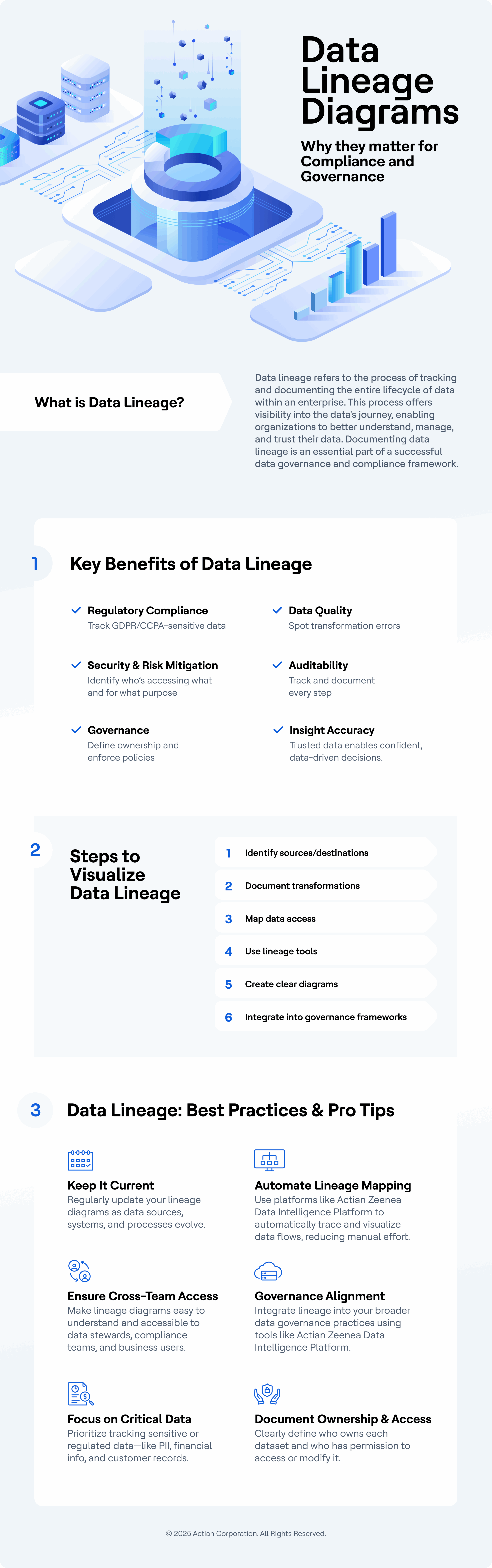
Seis pasos para visualizar el linaje de los datos
La creación de diagramas de linaje de datos es una parte esencial para mantener la gobernanza de los datos y garantizar el cumplimiento normativo. A continuación se indican los pasos clave para visualizar el linaje de datos de forma eficaz:
1. Identificar las fuentes y los destinos de los datos
El primer paso para crear un diagrama de linaje de datos consiste en identificar las fuentes y los destinos de los datos. Entre ellos se incluyen bases de datos, aplicaciones, fuentes de datos externas y consumidores de datos. Las fuentes de datos pueden ser sistemas transaccionales, API externas o incluso datos generados por los usuarios. Los destinos pueden ser almacenes de datos, lagos de datos o herramientas de inteligencia empresarial.
A efectos de cumplimiento normativo, este paso permite determinar el origen y el destino de los datos sensibles o regulados. De este modo, se garantiza que se apliquen las medidas de seguridad y cumplimiento adecuadas en cada etapa del ciclo de vida de los datos.
2. Documentar las transformaciones y los procesos de los datos
Los datos no permanecen estáticos. Por el contrario, suelen sufrir diversas transformaciones a medida que se desplazan por los distintos sistemas. En el diagrama de linaje de datos de una organización, los responsables de los datos deberán realizar un seguimiento de cómo se transforman, limpian o agregan los datos en cada etapa. Esto puede implicar el uso de procesos de extracción, transformación y carga (ETL), reglas de negocio o algoritmos de aprendizaje automático.
La visualización de las transformaciones de datos es especialmente importante para garantizar la integridad y la calidad de los datos. Por ejemplo, si los datos se agregan o se anonimizan para cumplir con la normativa de privacidad, este paso debe documentarse claramente.
3. Traslado y acceso a los datos cartográficos
A medida que los datos circulan por distintos sistemas, pueden ser consultados por diferentes equipos o departamentos. Identificar quién accede a los datos y con qué finalidad es fundamental para la gobernanza de los datos, ya que ayuda a garantizar el cumplimiento de las políticas de control de acceso. Por ejemplo, puede que solo el personal autorizado pueda acceder a determinados datos, o que estos se utilicen únicamente para funciones empresariales específicas.
Los diagramas de linaje de datos también pueden ayudar a identificar accesos no autorizados a los datos, garantizando que solo puedan acceder a la información sensible o privada aquellas personas que cuenten con la autorización adecuada.
4. Utilizar una herramienta de linaje de datos
Visualizar manualmente el linaje de los datos en entornos de datos grandes y complejos puede resultar una tarea abrumadora. Afortunadamente, existen varias herramientas de linaje de datos que automatizan el proceso de seguimiento y visualización de los flujos de datos. Estas herramientas se conectan a los sistemas de datos y representan las relaciones, las transformaciones y los procesos en tiempo real.
Una herramienta muy utilizada es la plataforma Actian Data Intelligence, que permite a los usuarios realizar un seguimiento de las transformaciones de los datos mediante el linaje automático. Las funciones de linaje de datos de la plataforma permiten a los equipos de datos obtener una visión completa del ciclo de vida de sus datos, desde su recopilación hasta su uso, almacenamiento y conservación a lo largo del tiempo.
Este tipo de herramientas se integran con los sistemas existentes y documentan y visualizan automáticamente el linaje de los datos a lo largo de diversas fuentes de datos y procesos.
5. Crea diagramas claros y prácticos
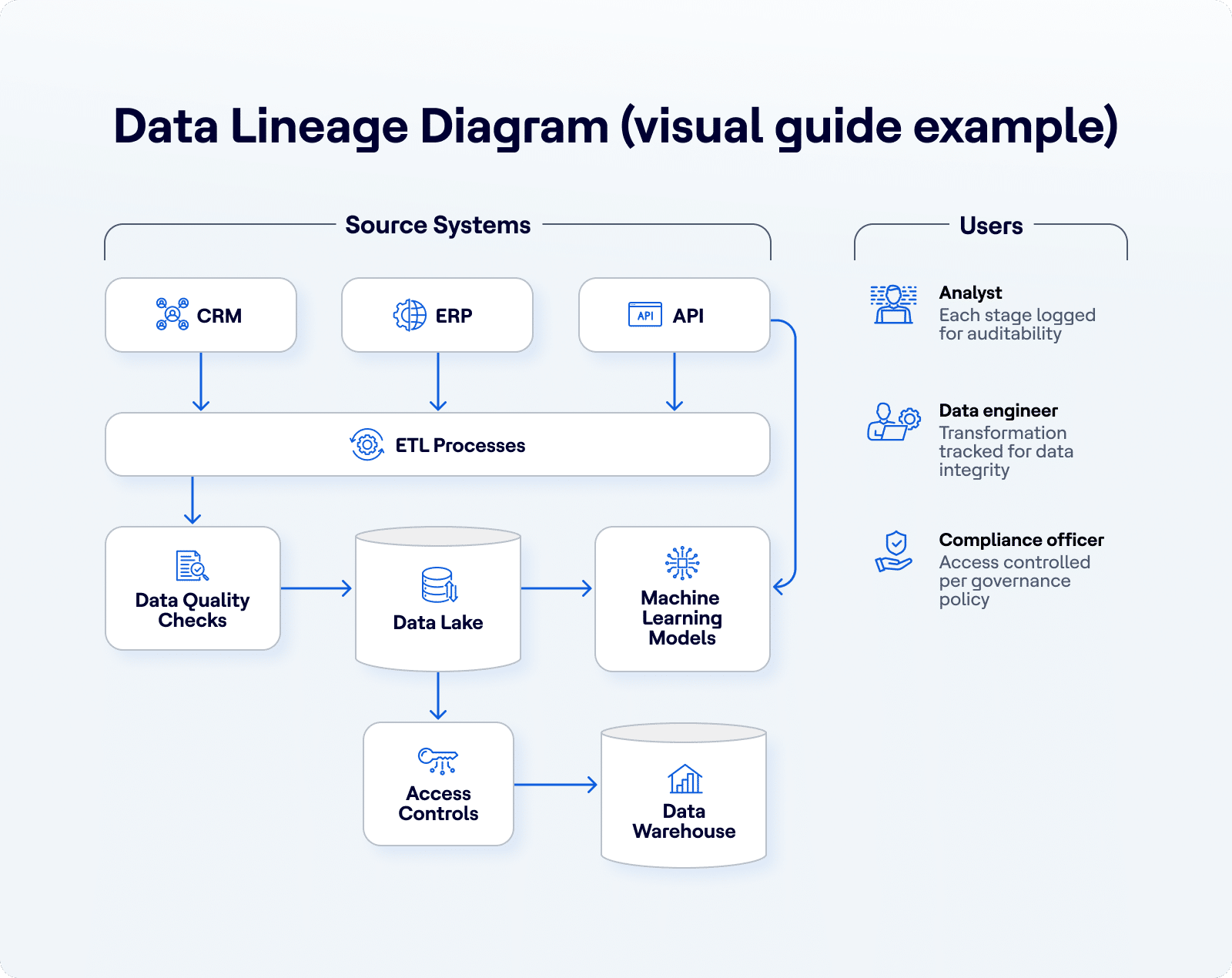
A la hora de diseñar un diagrama de linaje de datos, el objetivo es crear una visualización clara y fácil de entender que permita a las partes interesadas —como los responsables de cumplimiento normativo, los ingenieros de datos y los directivos— seguir fácilmente los flujos y las transformaciones de los datos. El uso de códigos de colores, etiquetas y formas sencillas para representar las diferentes fuentes de datos, sistemas y transformaciones puede facilitar la comprensión de los diagramas. Cuanto más claro sea el diagrama, más fácil resultará para los usuarios seguir el recorrido de los datos e identificar cualquier riesgo o problema potencial.
Un buen diagrama de linaje de datos debería incluir:
- Representación del flujo de datos: flechas o líneas que trazan el recorrido de los datos a medida que se desplazan por los sistemas.
- Detalles de la transformación: Información sobre cómo se modifican, limpian o procesan los datos.
- Propiedad y acceso: Identificación clara de los administradores, propietarios y usuarios de los datos que tienen acceso a ellos.
6. Integrar el linaje de los datos en los marcos de gobernanza y cumplimiento normativo
Una vez que los diagramas de linaje de datos estén listos, intégralos en marcos más amplios de gobernanza de datos y cumplimiento normativo. Utilízalos para aplicar controles de acceso, normas de calidad de los datos y protocolos de seguridad. Actualiza periódicamente los diagramas para reflejar los cambios en los flujos de datos o en los procesos, asegurándote de que toda la documentación de cumplimiento se mantenga actualizada y precisa.
Además, los diagramas de linaje pueden resultar útiles a la hora de responder a auditorías, solicitudes de acceso a datos y otras tareas relacionadas con el cumplimiento normativo. Estos diagramas facilitan la demostración del compromiso de una organización con la gobernanza de datos.
Buenas prácticas para la creación y el uso de diagramas de linaje de datos
A continuación se indican algunas prácticas recomendadas para crear y utilizar diagramas de linaje de datos:
- Actualiza periódicamente: A medida que evolucionen las fuentes de datos, los sistemas y los procesos, asegúrate de actualizar los diagramas de linaje de datos para reflejar estos cambios.
- Incorporar la automatización: Utilice herramientas de automatización para realizar un seguimiento del linaje de los datos en tiempo real, reduciendo así el trabajo manual y mejorando la precisión.
- Garantizar la accesibilidad: Asegúrese de que todas las partes interesadas de la organización, incluidos los equipos de cumplimiento normativo y los usuarios de la empresa, puedan acceder fácilmente a los diagramas de linaje de datos y comprenderlos.
- Céntrese en los datos críticos: dé prioridad a la visualización del linaje de los datos para los elementos de información sensibles o críticos, como la información de identificación personal (PII), los datos financieros y los datos de los clientes.
La plataforma Actian Data Intelligence puede ayudar a satisfacer las necesidades en materia de linaje de datos
Los diagramas de linaje de datos son una herramienta de gran valor para las organizaciones que desean mejorar sus prácticas de gobernanza de datos y cumplimiento normativo. Al disponer de representaciones visuales claras del movimiento y las transformaciones de los datos, las organizaciones pueden garantizar que sus datos se gestionan de forma responsable y cumplen los requisitos normativos.
Ya sea para prepararse para una auditoría, gestionar los riesgos o garantizar la integridad de los datos, la visualización del linaje de los datos permite a las empresas tomar decisiones más fundamentadas, mejorar la transparencia y minimizar los riesgos de incumplimiento normativo. Con las herramientas y prácticas adecuadas, los diagramas de linaje de datos constituyen una piedra angular de una gobernanza de datos eficaz.
Las empresas pueden utilizar la plataforma Actian Data Intelligence para mapear automáticamente las relaciones entre sistemas, aplicaciones e informes, creando así un ecosistema de datos rico en contexto. Solicita hoy mismo una demostración personalizada de la plataforma.

Mantente conectado
Te ofrecemos información detallada sobre los datos.
(por ejemplo, sales@..., support@...)
