
Data Lineage Diagrams: Data Lineage for Compliance and Governance


Summary
- Explains data lineage diagrams and their role in tracking data across its lifecycle.
- Shows how lineage supports compliance, governance, security, and audit readiness.
- Outlines key benefits like improved data quality, transparency, and accountability.
- Provides steps and best practices for visualizing data lineage effectively.
- Highlights Actian tools for automated, scalable data lineage visualization.
Modern organizations are generating vast amounts of data every day. However, with this flood of information comes an inherent need for transparency, control, and accountability. Data lineage—the process of tracking and visualizing the journey of data and its transformations across its lifecycle—plays a critical role in maintaining the quality, security, and compliance of data. One of the most effective ways to understand and communicate data lineage is through data lineage diagrams.
These diagrams provide a visual representation of data’s movements, changes, and uses within systems, making it easier to monitor, govern, and audit data flows. In this article, we’ll explore the importance of data lineage diagrams, how to visualize data lineage for better compliance and governance, and best practices for creating effective lineage diagrams.
What is Data Lineage?
Data lineage refers to the tracing and visualization of data as it flows through different systems, applications, and processes within an organization. It tracks the path of data from its source to its final destination, documenting each transformation and interaction it undergoes along the way. This comprehensive view is crucial for ensuring that data is reliable, traceable, and meets regulatory standards.
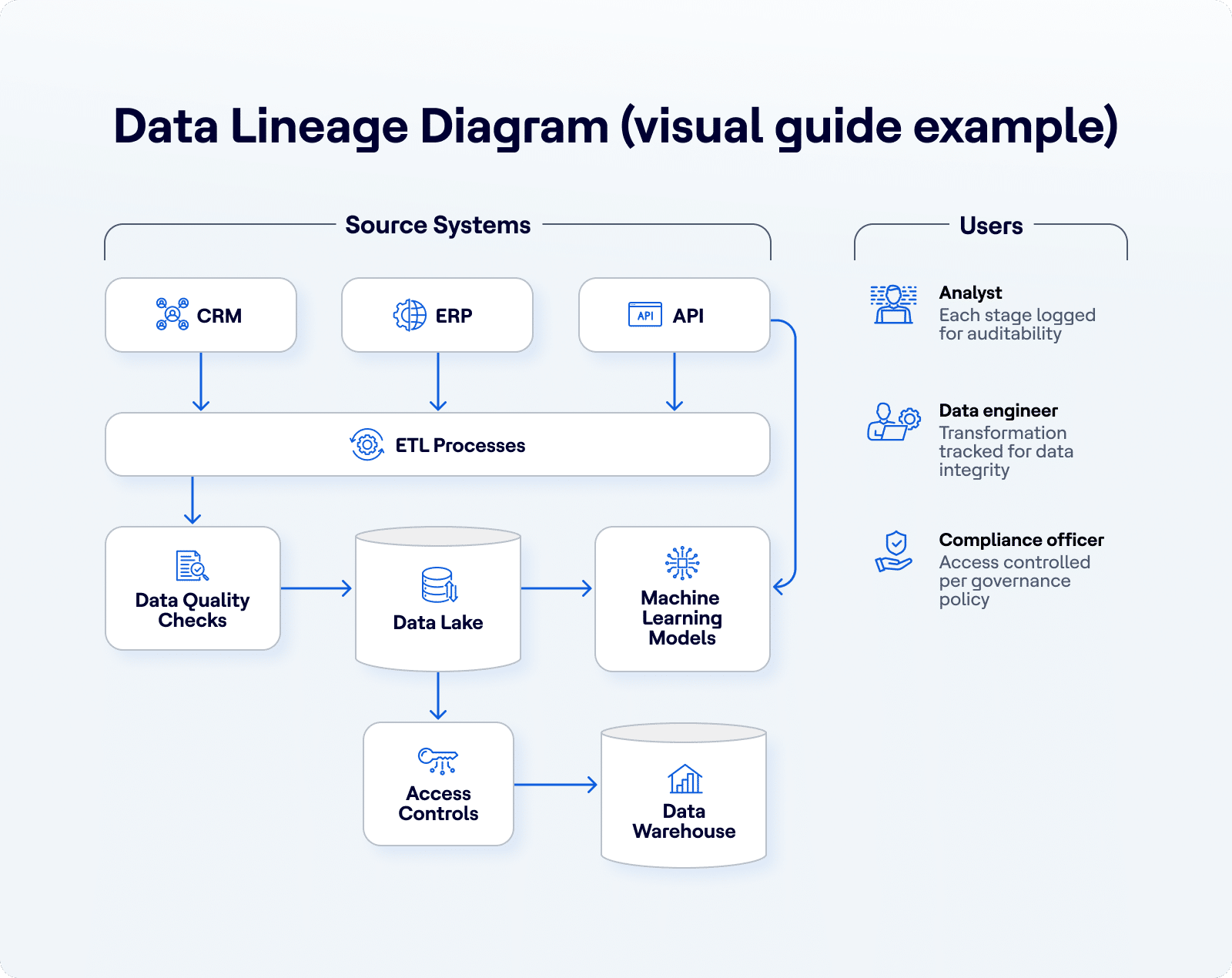
Data lineage diagrams offer a graphical representation of this journey, providing clarity on the flow and relationships of data across various systems, stakeholders, and processes. These diagrams make it possible to track how data is ingested, transformed, stored, and accessed, allowing organizations to manage data effectively and ensure it’s compliant with privacy laws and internal governance policies.
The Importance of Data Lineage Diagrams for Compliance and Governance
Let’s look at some of the reasons why data lineage diagrams are important for compliance and governance:
Regulatory Compliance
Regulations like General Data Protection Regulation (GDPR), California Consumer Privacy Act (CCPA), and other data protection laws require organizations to have transparency into their data. For instance, GDPR mandates that organizations must be able to track where personal data is stored, how it’s processed, and who has access to it. By using data lineage diagrams, organizations can quickly answer these questions and provide the necessary documentation for regulatory audits and data subject requests, such as the right to access data and the right to erasure.
Data Quality and Integrity
Data lineage diagrams help organizations visualize how data is transformed across systems, which allows them to pinpoint where data errors or inconsistencies might arise. By tracking the flow of data, organizations can ensure that it remains accurate, consistent, and high-quality throughout its lifecycle. This is particularly important for improving decision-making processes that rely on clean and reliable data.
Enhanced Security and Risk Management
By visualizing data lineage, organizations can identify where sensitive data resides, who is accessing it, and how it’s being processed. This helps ensure that proper data security protocols are in place, minimizing the risk of unauthorized access or data breaches. If an organization faces a data breach, the data lineage diagram can also be used to trace the affected data and assess the impact quickly.
Auditability and Accountability
Data lineage diagrams provide an auditable trail, helping organizations maintain a clear record of how data is processed, accessed, and altered. This documentation is essential for internal audits, external compliance reviews, and investigations. Clear visibility into data flows helps ensure accountability because it’s easier to identify who is responsible for any changes or errors in the data.
Improved Governance
A well-maintained data lineage diagram enables organizations to enforce data governance policies. By understanding how data is used across the organization, businesses can establish better data stewardship, set access control policies, and define clear ownership over data assets. This strengthens governance by ensuring that data is handled in accordance with organizational standards and best practices.
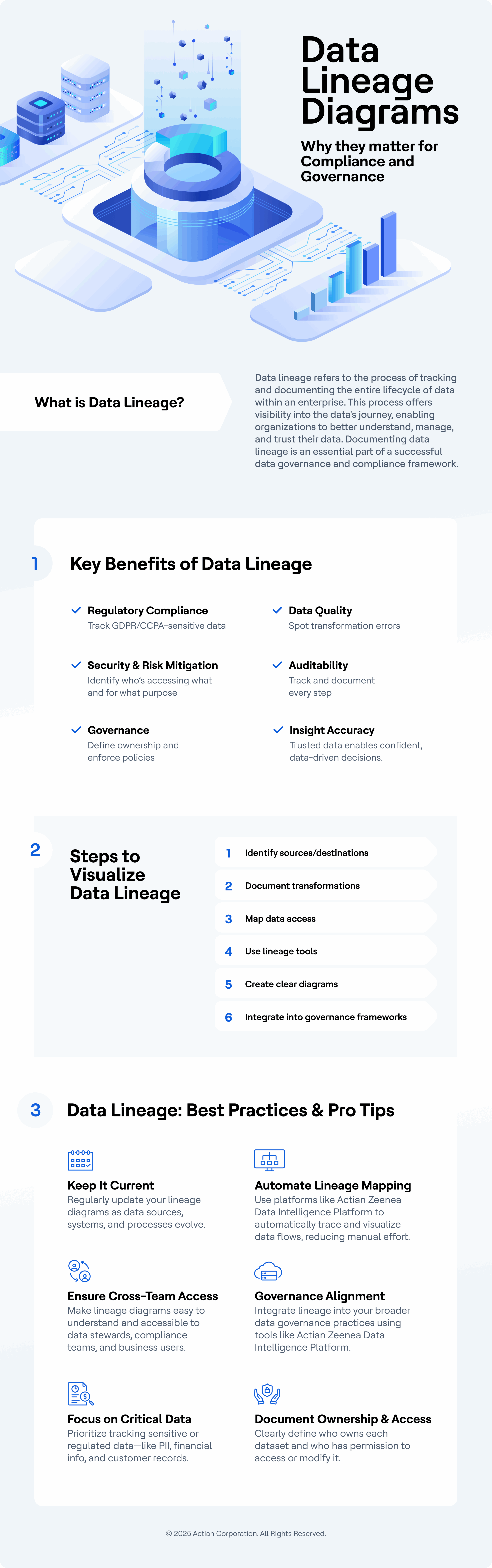
6 Steps to Visualize Data Lineage
Creating data lineage diagrams is an essential part of maintaining data governance and ensuring compliance. Here are the key steps for visualizing data lineage effectively:
1. Identify Data Sources and Destinations
The first step in building a data lineage diagram is identifying the sources and destinations for the data. These include databases, applications, external data sources, and data consumers. Data sources can be transactional systems, external APIs, or even user-generated data. Destinations may include data warehouses, data lakes, or business intelligence tools.
For compliance purposes, this step helps determine where sensitive or regulated data originates and where it ends up. This helps ensure that appropriate security and compliance measures are in place at each point in the data’s lifecycle.
2. Document Data Transformations and Processes
Data doesn’t remain static. Instead, it often undergoes various transformations as it moves across systems. In an organization’s data lineage diagram, data stewards will need to track how data is transformed, cleansed, or aggregated at each stage. This may involve the use of extract, transform, and load (ETL) processes, business rules, or machine learning algorithms.
Visualizing data transformations is particularly important for ensuring data integrity and quality. For example, if data is being aggregated or anonymized for privacy compliance, this step must be clearly documented.
3. Map Data Movement and Access
As data flows through various systems, it may be accessed by different teams or departments. Mapping out who accesses the data and for what purpose is vital for data governance because it helps ensure compliance with access control policies. For instance, certain data may only be accessible by authorized personnel or for specific business functions.
Data lineage diagrams can also help identify unauthorized data access, ensuring that sensitive or private information is only accessible to those who have the appropriate clearance.
4. Utilize a Data Lineage Tool
Visualizing data lineage manually for large and complex data environments can be a daunting task. Fortunately, there are several data lineage tools available that automate the process of tracking and visualizing data flows. These tools connect to data systems and map the relationships, transformations, and processes in real-time.
One popular tool is the Actian Data Intelligence Platform, which allows users to trace data transformations through automatic lineage. The platform’s data lineage capabilities enable data teams to get a complete view of their data’s lifecycle, from its collection to its use, storage, and preservation over time.
These types of tools integrate with existing systems, automatically documenting and visualizing data lineage across various data sources and processes.
5. Create Clear, Actionable Diagrams
When designing a data lineage diagram, the goal is to create a clear, easy-to-understand visualization that allows stakeholders such as compliance officers, data engineers, and business leaders to easily trace data flows and transformations. Using color codes, labels, and simple shapes to represent different data sources, systems, and transformations can make the diagrams simple to understand. The clearer the diagram is, the easier it is for users to follow the data’s journey and identify any potential risks or issues.
A good data lineage diagram should provide:
- Data Flow Representation: Arrows or lines that trace the path of data as it moves through systems.
- Transformation Details: Information about how data is altered, cleansed, or processed.
- Ownership and Access: Clear identification of data stewards, owners, and users who have access to the data.
6. Integrate Data Lineage into Governance and Compliance Frameworks
Once the data lineage diagrams are in place, integrate them into broader data governance and compliance frameworks. Use them to enforce access controls, data quality standards, and security protocols. Regularly update the diagrams to reflect changes in data flows or processes, ensuring that all compliance documentation stays current and accurate.
Additionally, lineage diagrams can be useful in responding to audits, data access requests, and other compliance-related tasks. The diagrams make it easier to demonstrate an organization’s commitment to data governance.
Best Practices for Creating and Using Data Lineage Diagrams
Below are some best practices for creating and using data lineage diagrams:
- Maintain Regular Updates: As data sources, systems, and processes evolve, make sure to update data lineage diagrams to reflect these changes.
- Incorporate Automation: Use automation tools to track data lineage in real time, reducing manual effort and improving accuracy.
- Ensure Accessibility: Make sure that stakeholders across the organization, including compliance teams and business users, can easily access and understand the data lineage diagrams.
- Focus on Critical Data: Prioritize data lineage visualization for sensitive or critical data elements, such as personally identifiable information (PII), financial data, and customer data.
Actian Data Intelligence Platform Can Help with Data Lineage Needs
Data lineage diagrams are an invaluable tool for organizations looking to improve their data governance and compliance practices. By having clear, visual representations of data movement and transformations, organizations can ensure their data is managed responsibly and meets regulatory requirements.
Whether for audit readiness, risk management, or ensuring data integrity, visualizing data lineage empowers businesses to make more informed decisions, enhance transparency, and minimize compliance risks. With the right tools and practices, data lineage diagrams are a cornerstone of effective data governance.
Companies can use the Actian Data Intelligence Platform to automatically map the relationships between systems, applications, and reports, providing a context-rich data ecosystem. Request a personalized demonstration of the platform today.

Stay connected
Data insights delivered to you.
(i.e. sales@..., support@...)
