
Estudio de BARC y Actian: Por qué las organizaciones están invirtiendo en productos de datos



Principales conclusiones
- Las organizaciones adoptan productos de datos principalmente para garantizar la fiabilidad de los datos destinados a la inteligencia artificial (60 %) y a la toma de decisiones (59 %), y no solo para mejorar el acceso.
- Las iniciativas de inteligencia artificial están aumentando la necesidad de disponer de datos fiables, coherentes y bien gestionados.
- Los productos de datos y los contratos de datos aportan estructura mediante la propiedad, las normas de calidad y las interfaces de datos estables.
- La presión normativa está acelerando la adopción, especialmente en sectores que exigen una sólida gobernanza y trazabilidad.
Conclusiones del estudio global realizado en 2026 por BARC y Actian entre más de 300 responsables de datos en empresas
Organizaciones de todos los sectores están realizando importantes inversiones en inteligencia artificial. Sin embargo, muchas iniciativas siguen teniendo dificultades para ir más allá de la fase experimental y generar un valor empresarial constante.
Para comprender mejor qué diferencia a las iniciativas de IA que prosperan de las que se estancan, Actian se asoció con BARC, una firma líder mundial en análisis de datos, para llevar a cabo un estudio de investigación global entre los responsables de datos de las empresas.
Basándose en las opiniones de más de 300 encuestados de diversos sectores y regiones, el estudio analiza cómo las organizaciones adoptan y ponen en práctica los productos y contratos de datos, y cómo estos enfoques influyen en el éxito de las iniciativas de inteligencia artificial.
Una de las conclusiones más reveladoras del estudio es por qué las organizaciones están adoptando productos de datos en primer lugar.
 Informe de investigación global de BARC × Actian (2026)
La fiabilidad de los datos es el principal factor que impulsa la adopción de productos de datos
La investigación revela que las organizaciones no están adoptando productos de datos principalmente para mejorar el acceso a los datos. Por el contrario, la motivación más importante es la confianza.
Cuando se preguntó a los encuestados cuáles eran los principales motivos para implementar productos de datos, dos factores destacaron claramente:
- Datos fiables para los sistemas de inteligencia artificial (60 %).
- Información fiable para la toma de decisiones (59 %).
Estos dos factores ocuparon un lugar mucho más destacado que los objetivos tradicionales, como mejorar el acceso a los datos o facilitar una mayor democratización de los mismos.
Este hallazgo refleja un cambio en la forma en que las organizaciones conciben la gestión de datos. Las primeras oleadas de modernización de datos se centraron principalmente en facilitar el acceso a los datos en toda la organización. Si bien la accesibilidad sigue siendo importante, las empresas reconocen cada vez más que, para obtener resultados fiables, se necesitan bases de datos fiables.
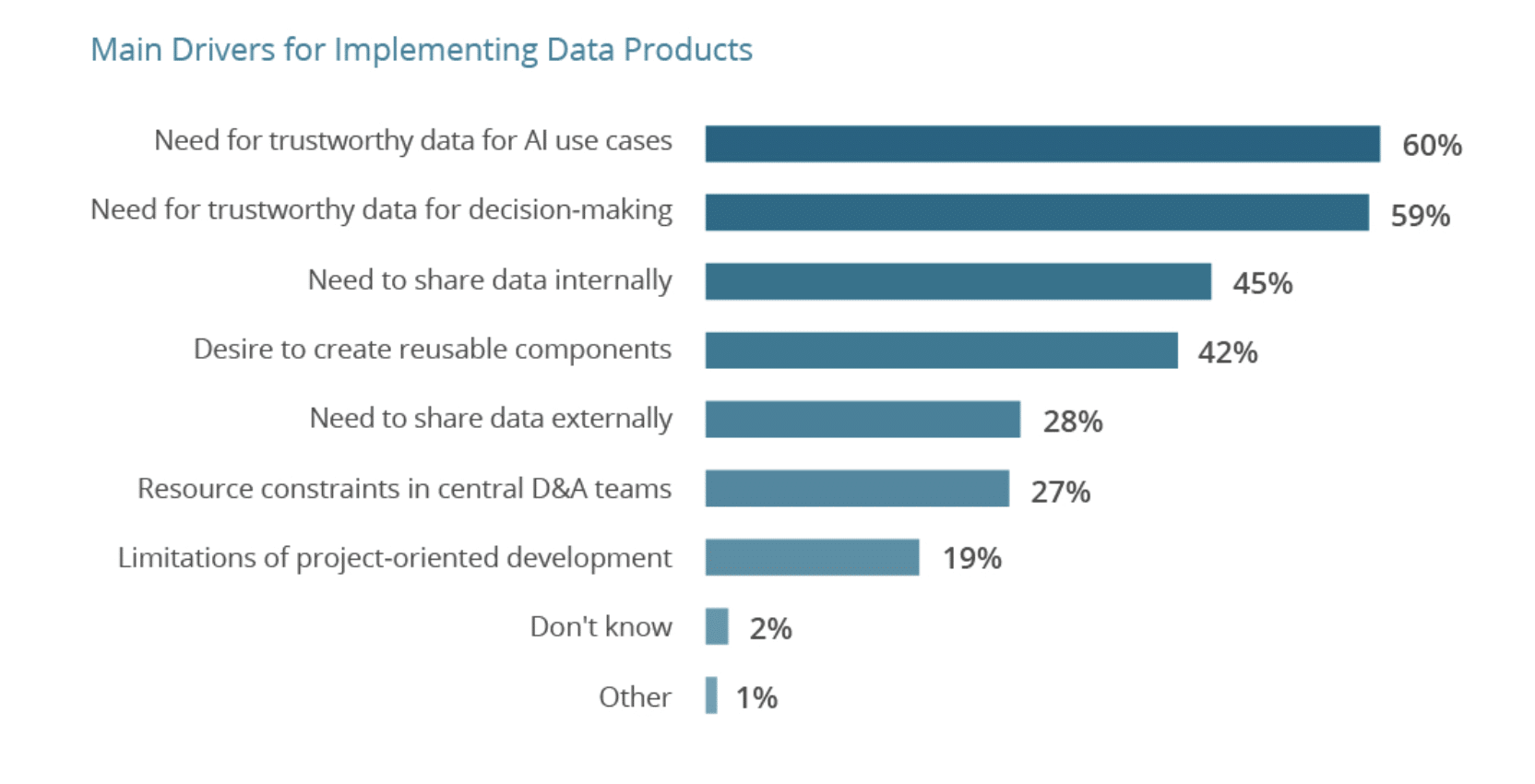
¿Cuáles son los principales factores que impulsan la implementación de productos de datos? – © BARC 2026
La IA está elevando el listón en cuanto a la fiabilidad de los datos
La creciente importancia de disponer de datos fiables está estrechamente relacionada con el rápido auge de las iniciativas de inteligencia artificial.
Los sistemas de IA son muy sensibles a la calidad y la coherencia de los datos que reciben. Los conjuntos de datos incoherentes, la falta de claridad sobre la propiedad de los datos o los cambios no documentados en las estructuras de datos pueden mermar rápidamente el rendimiento de los modelos y minar la confianza en las decisiones basadas en la IA.
A medida que las organizaciones amplían sus iniciativas de inteligencia artificial, necesitan cada vez más entornos de datos que ofrezcan:
- Responsabilidades y rendición de cuentas claras.
- Normas de calidad de los datos bien definidas.
- Interfaces estables entre los productores y los consumidores de datos.
En muchas organizaciones, los contratos de datos formalizan estas expectativas entre los productores y los consumidores, lo que contribuye a garantizar que los cambios en las estructuras de datos o en los estándares de calidad no afecten a los sistemas de inteligencia artificial y análisis de datos posteriores.
Los productos de datos contribuyen a proporcionar esta estructura al organizar los activos de datos como productos gestionados con una gobernanza definida, expectativas de calidad e interfaces reutilizables.
Estas características hacen que los productos de datos sean especialmente adecuados para respaldar los sistemas de inteligencia artificial que operan a escala empresarial.
La normativa está impulsando la adopción de productos de datos
Otro factor importante que influye en la adopción es la presión normativa.
Los sectores altamente regulados —como los servicios financieros, la sanidad y la energía— se encuentran entre los primeros en adoptar los enfoques basados en productos de datos. Estos sectores llevan mucho tiempo estando obligados a mantener estrictos controles de gobernanza de datos, trazabilidad y cumplimiento normativo.
A medida que siguen ampliándose los requisitos normativos en materia de uso de datos, privacidad y transparencia de la inteligencia artificial, muchas organizaciones están formalizando sus prácticas de gestión de datos. Los productos de datos ofrecen una forma práctica de satisfacer estas expectativas, al establecer una titularidad más clara, definiciones de datos estandarizadas y mecanismos de gobernanza más sólidos.
En este contexto, los requisitos normativos suelen actuar como catalizador para la adopción de enfoques estructurados de gestión de datos, como los productos de datos.
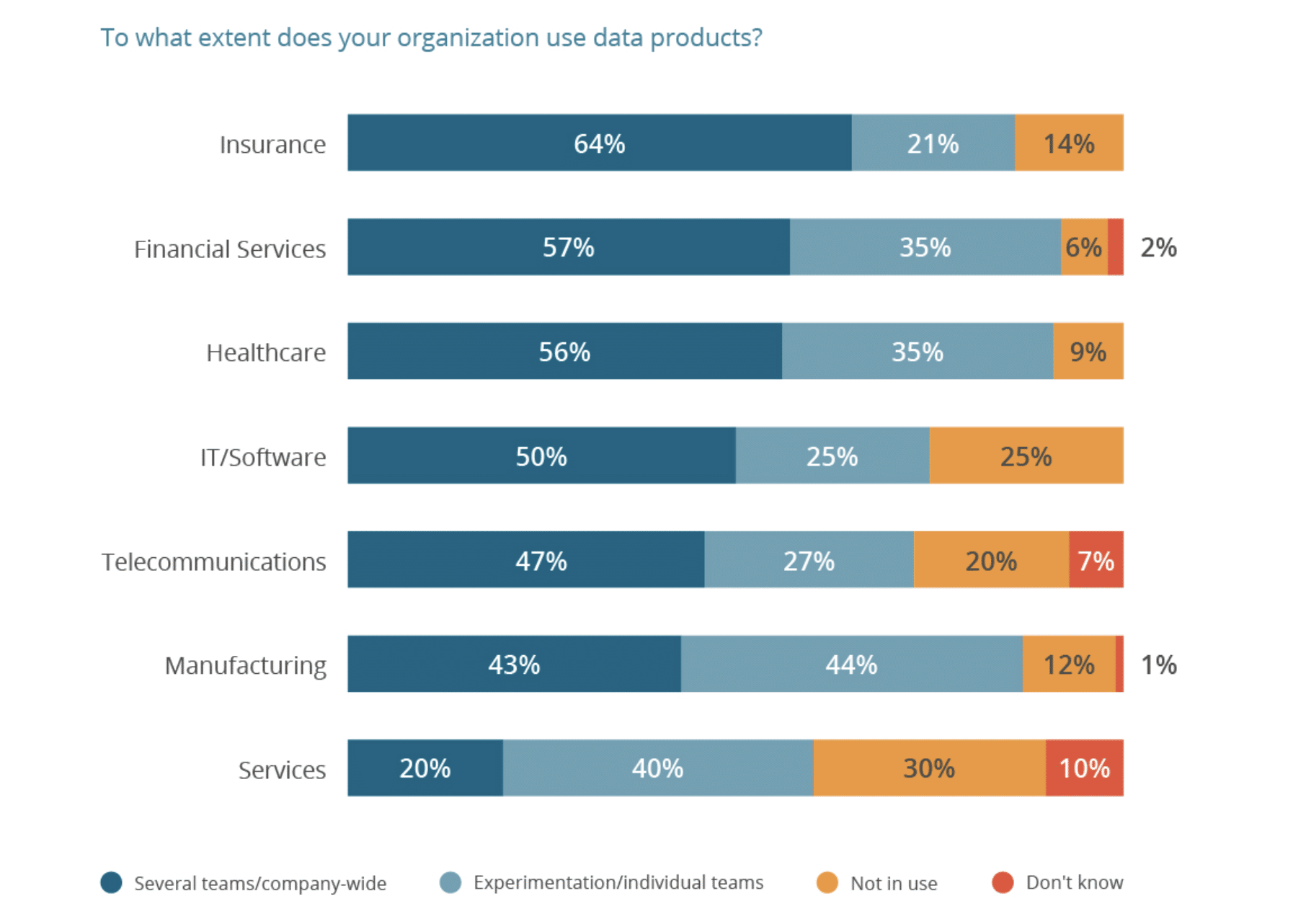
La adopción de productos de datos varía según el sector – © BARC 2026
Descargar el informe completo de investigación
Este artículo presenta varias conclusiones clave del estudio de investigación global realizado por BARC y Actian.
El informe completo, Productos de datos y contratos de datos en 2026: la base del éxito de la IA, analiza cómo las organizaciones de distintos sectores y regiones están adoptando y poniendo en práctica los productos de datos y los contratos de datos, y cómo estas prácticas influyen en la madurez de la IA, la gobernanza y los resultados en el mundo real.
Consigue el informe completo para conocer los resultados y descubrir cómo las organizaciones líderes están ampliando el uso de la IA mediante productos de datos.
Descargar el informe completo
Mantente conectado
Te ofrecemos información detallada sobre los datos.
(por ejemplo, sales@..., support@...)
