
Bases de datos vectoriales para la IA empresarial: por qué la recuperación semántica lo cambia todo


Principales conclusiones
- Los fallos de la IA suelen deberse a una recuperación de datos deficiente, y no a las limitaciones del modelo.
- Las bases de datos vectoriales permiten la recuperación semántica para el acceso a datos impulsado por la inteligencia artificial.
- Los proyectos piloto suelen tener éxito, pero la producción requiere escalabilidad y gestión.
- La calidad de la recuperación (incrustaciones, segmentación) influye directamente en la precisión de la IA.
- La búsqueda vectorial complementa las plataformas de datos existentes, no las sustituye.
El problema no es la IA, sino el acceso a los datos.
A pesar de los años de inversión en inteligencia artificial, análisis de datos y plataformas en la nube, muchos equipos empresariales siguen teniendo dificultades para pasar de prototipos prometedores a sistemas fiables y listos para su implementación. El problema no es el modelo, sino la forma en que los sistemas acceden a los datos y los recuperan.
Por qué las bases de datos vectoriales se están convirtiendo en un elemento fundamental de la IA
Durante décadas, las plataformas de datos empresariales se diseñaron partiendo de una premisa sencilla: las personas formulan preguntas. Los analistas escriben consultas. Las aplicaciones ejecutan lógica determinista. Los paneles de control reflejan métricas predefinidas.
La IA modifica ese modelo. En lugar de consultar los datos, los sistemas de IA los recuperan basándose en la similitud y el contexto. Y ese cambio tiene profundas implicaciones en cómo deben diseñarse los sistemas de datos empresariales.
Este cambio viene impulsado por tecnologías como las bases de datos vectoriales, la recuperación semántica y la generación aumentada por recuperación (RAG), que están redefiniendo la forma en que los sistemas de IA empresariales acceden a los datos y los utilizan.
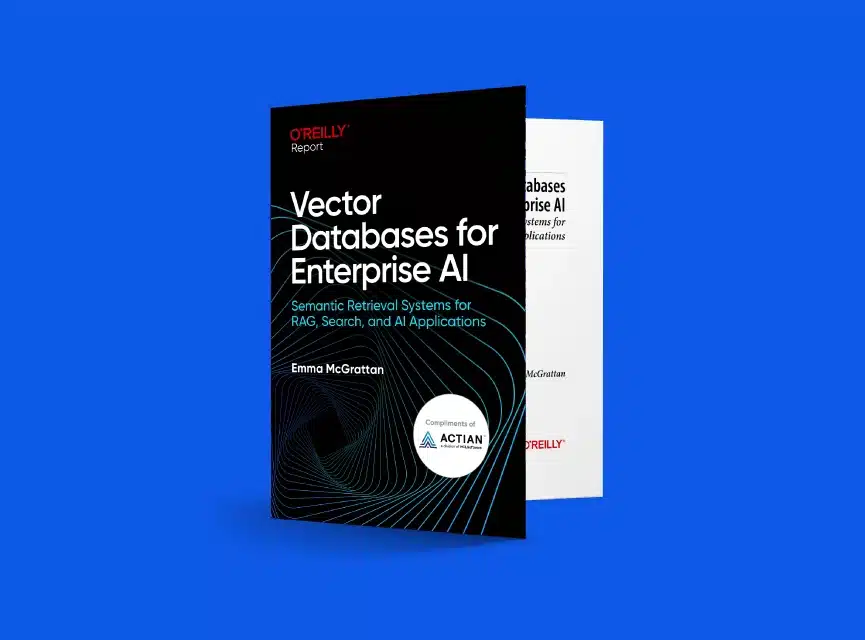
En su nuevo informe de O’Reilly, Bases de datos vectoriales para la IA empresarial, la directora de tecnología de Actian, Emma McGrattan, se basa en décadas de experiencia en la creación de sistemas de datos empresariales para analizar qué significa realmente este cambio y por qué las bases de datos vectoriales se están convirtiendo en una parte fundamental de la arquitectura de datos moderna.
De las consultas a la recuperación semántica
Los sistemas tradicionales se centran en la precisión. Se define un esquema, se escribe una consulta y se espera un resultado determinista. La recuperación semántica funciona de otra manera.
Los sistemas de IA buscan significado en datos estructurados y no estructurados. Devuelven aproximaciones, no respuestas exactas. Dependen de incrustaciones, métricas de similitud y estrategias de clasificación que introducen nuevas formas de variabilidad.
Esto cambia nuestra forma de concebir la fiabilidad. En muchos casos, lo que parece un fallo del modelo es, en realidad, un fallo en la recuperación de resultados. Una segmentación deficiente, incrustaciones débiles o umbrales mal alineados pueden degradar los resultados de forma imperceptible, incluso cuando el modelo en sí funciona correctamente.
Resulta fundamental comprender cómo funcionan la búsqueda vectorial y la recuperación semántica en el momento de la consulta.
Por qué los proyectos piloto de bases de datos vectoriales no llegan a la fase de producción
Es relativamente fácil crear una demostración de búsqueda semántica. Sin embargo, ponerla en marcha en un entorno de producción es mucho más complicado.
Una vez implementados, surgen nuevas limitaciones. Las expectativas en cuanto a la latencia se vuelven más exigentes. Los datos deben permanecer dentro de unos límites específicos. Los sistemas deben funcionar en entornos híbridos, locales o incluso sin conexión.
En ese momento, la recuperación deja de ser una simple función. Se convierte en parte de la arquitectura del sistema. Las bases de datos vectoriales deben integrarse con las plataformas existentes, cumplir los requisitos de gobernanza y funcionar de manera coherente en todos los entornos , no solo en entornos de nube controlados.
Como destaca el informe, muchas organizaciones se topan con bases de datos vectoriales a través de experimentos aislados, pero tienen dificultades para integrarlas en las plataformas de datos corporativas, los modelos de gobernanza y las expectativas operativas.
Lo que este informe te ayuda a comprender
En lugar de centrarse en las herramientas, el informe ofrece un marco práctico para comprender cómo se comportan las bases de datos vectoriales en los sistemas del mundo real.
En él se analiza cómo la recuperación semántica transforma la arquitectura empresarial y qué se necesita para pasar de la fase experimental a la de producción. Aprenderás:
- Cuándo son realmente necesarias las bases de datos vectoriales y cuándo no.
- En qué se diferencia la recuperación semántica de la búsqueda por palabras clave y de las consultas determinísticas.
- ¿Qué ocurre en el interior de la búsqueda vectorial en el momento de la consulta y en qué casos falla?
- Cómo los flujos de trabajo RAG recogen, filtran y organizan el contexto.
- Por qué muchos fallos de la IA se deben a la recuperación de datos, y no al modelo.
- Cómo debe funcionar la gobernanza dentro de los flujos de trabajo de recuperación.
- Qué se necesita para pasar de proyectos piloto a sistemas escalables y listos para la producción.
Ampliar —no sustituir— tu plataforma de datos
Las bases de datos vectoriales suelen presentarse como un sustituto de los sistemas existentes. Esa no es la forma correcta de enfocar la cuestión.
Introducen un nuevo modo de acceso, que complementa a las bases de datos relacionales, los motores de búsqueda y las arquitecturas existentes. Como deja claro el informe, las bases de datos vectoriales se entienden mejor como una respuesta arquitectónica a la forma en que los sistemas de IA consumen datos actualmente, y no como una innovación aislada.
Para los equipos empresariales, el reto consiste en diseñar sistemas que admitan tanto consultas estructuradas como la recuperación semántica, a gran escala y en entorno de producción.
De la experimentación a los sistemas de IA en el mundo real
El verdadero cambio no es técnico, sino operativo. Muchos equipos demuestran que la recuperación semántica funciona. Sin embargo, son muy pocos los que logran que sea fiable, controlada y observable en producción. Para ello se necesita algo más que añadir una base de datos vectorial. Se requiere:
- Considerar la recuperación como una capacidad fundamental del sistema.
- Diseño de flujos de trabajo que proporcionan el contexto adecuado para los sistemas de inteligencia artificial.
- Integrar la gobernanza directamente en los flujos de trabajo de recuperación.
- Gestionar el equilibrio entre rendimiento, coste y precisión.
A medida que los sistemas de inteligencia artificial se convierten en los principales consumidores de datos empresariales, la recuperación de datos se convierte en la base sobre la que se sustenta todo lo demás.
Obtenga el informe completo
Si estás desarrollando o ampliando sistemas de IA, comprender cómo se comportan las bases de datos vectoriales y la recuperación semántica en entornos de producción ya no es opcional. Bases de datos vectoriales para empresas IA ofrece una perspectiva clara y práctica sobre cómo diseñar sistemas que recuperen el contexto adecuado.
Descarga el informe para comprender cómo se comportan las bases de datos vectoriales y la recuperación semántica en entornos de producción, y cómo diseñar sistemas que funcionen de forma fiable en condiciones reales.
Obtenga su ejemplar gratuito
Mantente conectado
Te ofrecemos información detallada sobre los datos.
(por ejemplo, sales@..., support@...)
